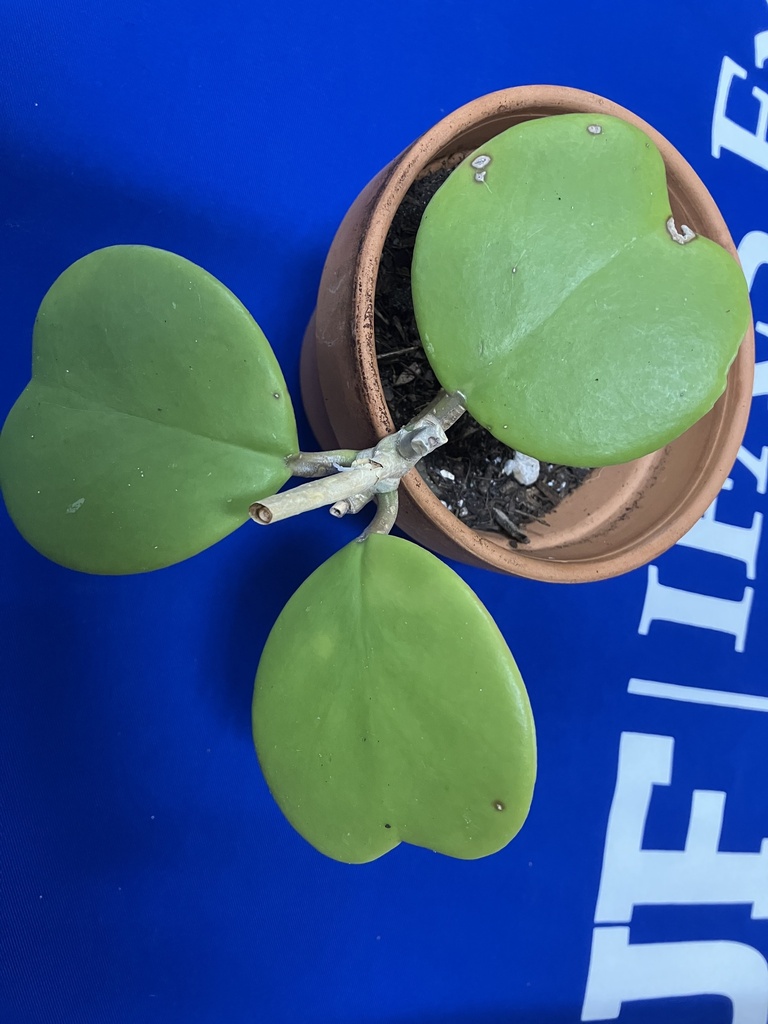
Madagascar jasmine
The main mistake is treating Madagascar jasmine (Stephanotis floribunda) like an ordinary vine for a warm windowsill. It reacts strongly to temperature swings and grows better in cooler, drier conditions in winter.
How the vine grows
The stems become woody and twine, so the plant cannot hold its shape without support. In the wild, it is a sparsely branched vine that can produce long stems. Indoors, it is often trained around a hoop or another frame.
- opposite leaves
- oval or elliptical leaf blades
- a glossy, leathery surface
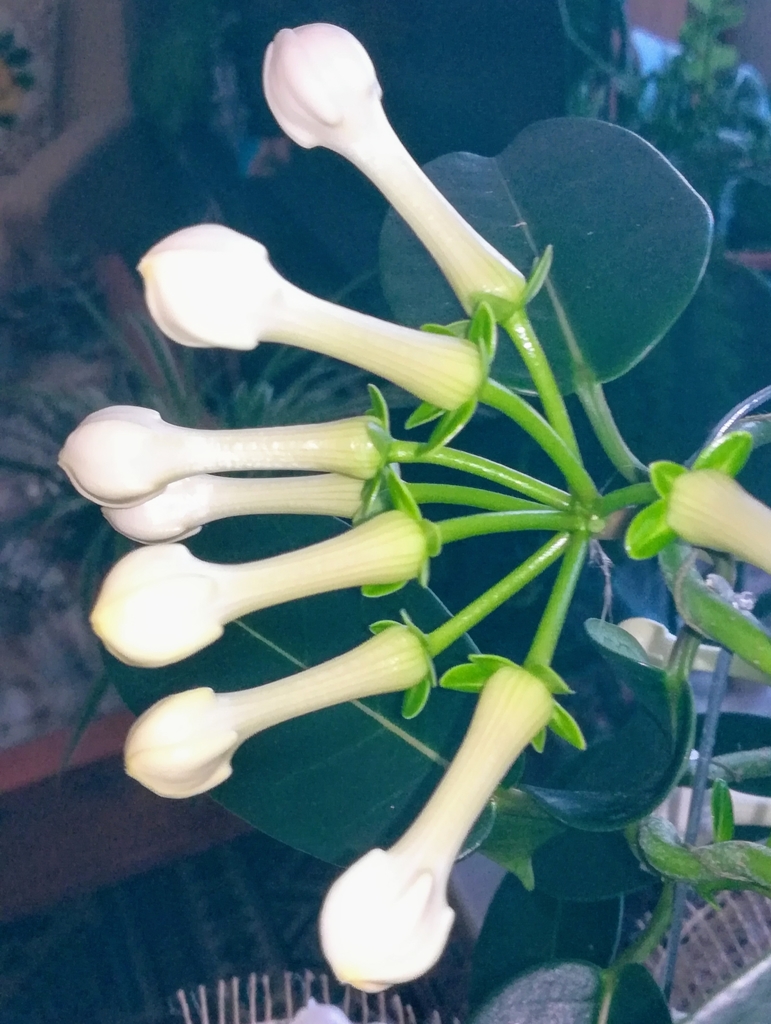
- tubular white flowers
- umbels in the leaf axils
The leaf blade is dark green and firm, about 5 × 9 cm. This structure helps the vine stay attractive between flowering periods, but it still needs a bright spot and stable conditions.
Origin and seasonal growth
The species is native to Madagascar. There, the vine grows in seasonally dry tropical biomes, where warmer, wetter periods alternate with cooler, drier ones.
| In its natural cycle | Indoors |
|---|---|
| warm, wet summer | active growth, more water and light |
| cooler, dry winter | slower growth, more cautious watering |
| long vining stems | support or training needed |
Because of this seasonal pattern, the plant responds poorly to sudden temperature changes. In winter, avoid exposing it to sudden cold, but constant overheating near a radiator does not suit its natural rhythm either.
Light and placement
A very bright spot is needed for growth and flowering. During active growth, the plant benefits from a sunny position, provided there are no sudden temperature swings and the roots do not dry out.
In fall and winter, place the pot in the brightest available spot. This does not guarantee flowering, but it helps preserve the stems and leaves when growth naturally slows.
Watering and potting mix
During the warm season, the vine needs more generous watering, as this is when it produces new stems and flowers. In winter, when growth slows, reduce watering and let the potting mix dry out more between waterings.
- a loam base
- peat as a component
- perlite or coarse sand
- a drainage layer
- a pot without too much extra room
The roots function better in a confined space, so an overly spacious pot is unnecessary. The potting mix should retain moisture but drain excess water quickly; otherwise, the stems weaken and the leaves lose their firmness.
Flowering and pruning
The white, waxy flowers are tubular and strongly fragrant. They grow in umbels in the leaf axils, appear on new stems, and may turn yellow a few days after opening.
Prune sparingly, especially during active growth. Removing too many young stems reduces the number of potential flowering sites.
Why the plant weakens
Problems are usually caused not by a single watering but by a combination of cold, dry air, insufficient light, and sudden changes in conditions. The vine may survive but stop growing actively and flower less often.
- sudden temperature swings
- constantly wet potting mix
- poor light in winter
- excessive pruning of young stems
- scale insect or mealybug infestation
Inspect the leaves and stems regularly, especially the leaf axils and the undersides of the leaves. The first signs of pests often appear there before the plant has lost much strength.
Propagation
Propagate the plant from cuttings or seed. Seed propagation indoors is less predictable because houseplants rarely set large fruits.
The fruits are egg-shaped and contain many seeds with tufts of hair, but fruiting is not a usual outcome of indoor growing. Vegetative propagation is therefore more common in home cultivation.
- Light
- sunny spot
- Temperature
- moderate warmth
- Watering
- generous during growth
- Soil
- loam, peat, drainage
- Difficulty
- high
- Cats and dogs
- mildly toxic
- Size indoors
- up to 6 m
- Leaves indoors
- about 5 × 9 cm
- Native range
- Madagascar
Care
Madagascar jasmine needs stable conditions: light, support, and a clear difference between active growth and a cooler, drier season. Sudden changes in conditions are especially hard on it.
- Light
- Choose a bright, sunny spot. It needs plenty of light during the growing season. In winter, put the pot in the brightest available spot; otherwise, growth weakens.
- Temperature
- Keep moderately warm, cooler in winter. Avoid sudden temperature changes. If the outdoor temperature falls below +4 °C, do not leave the plant outside.
- Watering
- Water more generously during growth. Water more in spring and summer. Growth slows during the cooler, dry season, so avoid excess water.
- Soil
- Use loam, peat, and drainage. The mix should retain some moisture while allowing excess water to drain. Perlite or coarse sand works well to loosen it.
- Feeding
- Use a balanced fertilizer. Feed during summer growth. Reduce feeding during the cooler period, when growth slows.
- Support
- Provide support. The stems twine and become woody. Train them around a hoop, trellis, or other frame without kinking the young growth.
- Leaves
- Inspect regularly. Check the leaves and leaf axils for scale insects and mealybugs. Early signs of pests are easier to remove before the stems weaken.
- Repotting
- Repot only when needed. The plant grows better when its roots do not have too much extra room. An oversized pot holds excess moisture.
Botany
1 ill.- Family
- Apocynaceae
- Genus
- Stephanotis
- Species
- Stephanotis floribunda
- Author and year
- Brongn.

Madagascar jasmine (Stephanotis floribunda) belongs to the family Apocynaceae. It is an evergreen woody vine with opposite, leathery leaves and long stems that need support.
The genus name Stephanotis comes from a Greek word associated with the shape of a crown. This is reflected in the flower's structure: the white, waxy tube opens into a star-shaped rim.
Indoors, the plant is valued mainly for its fragrant flower clusters, but biologically it remains a vine with a pronounced seasonal response. It grows best where light, moisture, and cooler winter conditions do not change abruptly.
How it differs from similar plants
Wax plant Hoya carnosa
- Hoya needs a bright spot with shade in summer, while Madagascar jasmine needs a sunny spot.
Brazilian jasmine Mandevilla sanderi
- Dipladenia needs bright indirect light, while Madagascar jasmine needs a sunny spot.
Oleander Nerium oleander
- Oleander is easy to identify by its narrow, leathery leaves with a pale midrib, while Madagascar jasmine has leaves about 5 × 9 cm.
Frequently asked questions
- Why isn't it flowering?
- The most common causes are insufficient light or pruning off the young stems on which flowers form. Growth also naturally slows in winter.
- Why do the flowers turn yellow?
- Yes, this is a normal change after a few days of flowering. As the flowers turn yellow, their scent may become slightly sour.
- Can I keep it at home if I have a cat?
- The plant is mildly toxic to cats and dogs. Do not let them chew the leaves, stems, or flowers.
- Does it need support?
- Yes, without support the long stems become tangled and kink easily. They are usually trained around a hoop or trellis.
- When should I prune it?
- Keep pruning to a minimum, especially during growth. Excessive cutting back reduces the number of new stems available for flowering.