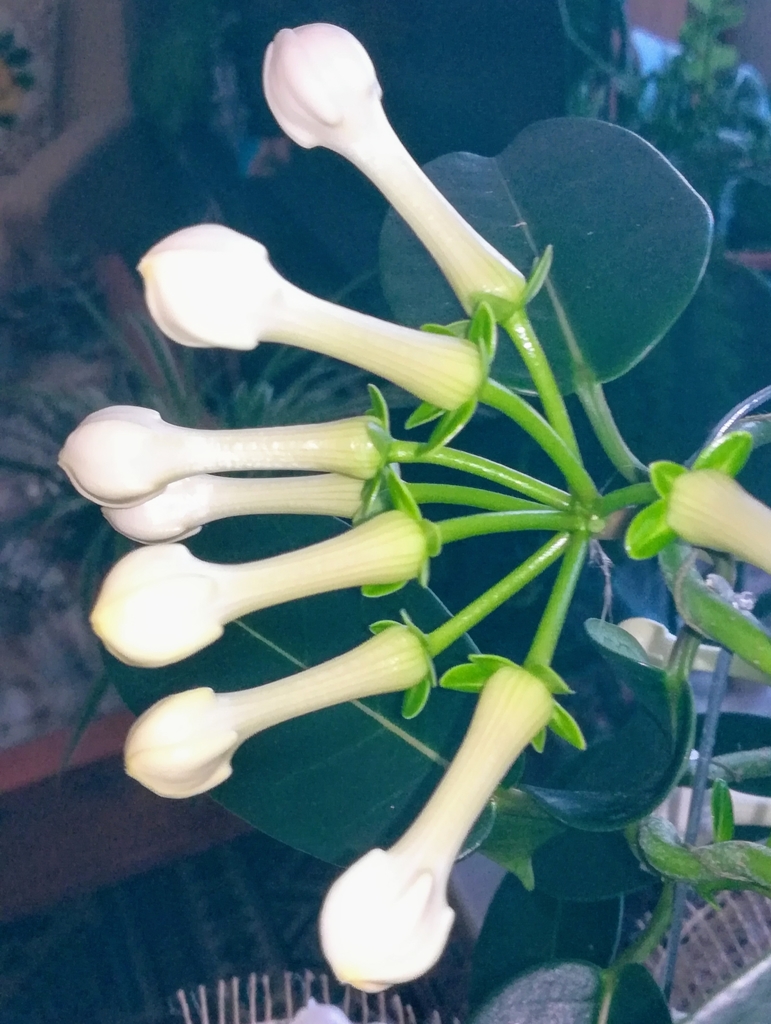
Desert rose
Desert rose is not a rose: Adenium obesum belongs to Apocynaceae, has poisonous sap, and stores water in its swollen stem base. As a houseplant, it is valued for its combination of a caudex, leathery leaves, and spring and summer flowers.


Caudex and leaves
The stem base is swollen and fleshy: this is the caudex, where the plant stores water. The grayish-brown trunk is woody and branches near the top, giving the plant the appearance of a small tree.
The leaves cluster near the branch tips. Each leaf blade is elongated, leathery, grayish-green, and up to 10 cm long; in the wild, leaf shape and caudex size can vary considerably between plants.
- swollen caudex at the base
- woody grayish-brown trunk
- branching near the top
- leathery, elongated leaf blades
- poisonous sap, a trait shared with oleander and pachypodium
Origin and seasonal growth
The species is native to the Sahel, eastern Africa, and Arabia. In cultivation, this explains its need for strong light, ventilation, and careful watering during the cooler season.
During the growing season, the plant makes use of warmth, sunlight, and regular watering once the potting mix has dried out. When days are shorter and temperatures lower, growth slows, and leaves may yellow and fall.
| Conditions | During growth | During dormancy |
|---|---|---|
| Light | as much sunlight as possible | shorter days slow growth |
| Watering | water thoroughly after the mix dries out | keep drier |
| Temperature | +25…+30 °C | +12…+15 °C |
Light and placement
Bright sunlight is needed for normal growth. After a cloudy winter, introduce direct sunlight gradually; otherwise, the trunk may become scorched.
The plant can be moved outdoors in summer, but its spot must be sheltered from rain. Some shade is acceptable during very hot summer months, especially if it receives direct sun for more than 5 hours a day.
- a south-facing window with direct sunlight
- gradual adjustment after winter
- a summer spot outdoors sheltered from rain
Watering and potting mix
During the warmer months, water thoroughly, but only after the potting mix has dried out completely. Constantly wet conditions around the base are dangerous because the caudex and roots are not adapted to standing water.
Reduce watering in winter. If the caudex becomes soft, the plant can be watered lightly, but only at temperatures no lower than +20 °C; in colder conditions, water very rarely or stop watering altogether.
| Situation | Watering | Comment |
|---|---|---|
| Active growth | after the mix dries out completely | watering can be thorough in hot weather |
| Winter conditions at +15…+20 °C | after the mix dries out | water carefully in small amounts |
| Cooler winter conditions | very rarely or not at all | do not let the roots get too cold |
Flowering and dormancy
Flowering occurs in spring and summer. The flowers form small, flat-topped clusters; the petals may be red, pink, or white.
Flowers of wild forms reach up to 4-6 cm in diameter, while hybrid forms are described as reaching up to 12 cm. Double-flowered hybrids with several layers of petals are found in cultivation.
Dormancy is usually associated with short days and cooler growing conditions. During this time, some or all of the leaves may fall, and watering becomes much more cautious.
Propagation and breeding
The plant is propagated by seed, cuttings, layering, and grafting. Use fresh seed for sowing, as viability declines quickly.
This species is often used in breeding: it flowers early and produces many hybrids with different flower shapes and colors. It is also used as a rootstock that develops a prominent caudex early.
- propagation by seed
- propagation by cuttings
- propagation by layering
- grafting
- growing hybrid forms
Problems and safety
Leaves may yellow and fall because of drafts, sudden changes in conditions, or a rapid drop in temperature. The plant is considered resistant to disease, but it often begins to weaken because of watering and temperature mistakes.
Reported pests include scale insects, mealybugs, and spider mites. Aphid infestations are possible outdoors in summer.
- soft caudex
- yellowing leaves
- leaf drop after a sudden change in conditions
- scale insects on shoots and leaves
- mealybugs or spider mites
The sap is toxic to cats and dogs. Do not place the plant where a pet can chew its shoots or leaves; wash your hands and tools after pruning or repotting.
- Light
- bright sunlight
- Temperature
- +25…+30 °C
- Watering
- after the mix dries out
- Soil
- loam with expanded clay
- Difficulty
- moderate
- Cats and dogs
- toxic
- Size indoors
- up to 35 cm
- Leaves indoors
- up to 10 cm
- Native range
- the Sahel, eastern Africa, and Arabia
Care
Desert rose grows slowly and responds well to strong light, warmth, and drier winter conditions. The main risk indoors is the combination of cool temperatures and wet potting mix.
- Light
- Provide bright sunlight. A south-facing window is suitable. After a cloudy winter, introduce direct sunlight gradually to avoid scorching the trunk.
- Temperature
- Keep at +25…+30 °C. This is the temperature range for the growing season. In winter, +12…+15 °C is preferable, with minimal watering and without letting the roots get too cold.
- Watering
- Water when the mix is completely dry. Water thoroughly during the warmer months, but only when the potting mix is dry. Reduce watering sharply in winter.
- Soil
- Use loam with expanded clay. The potting mix must drain quickly. Sources mention a loam-based mix with crushed brick or large expanded clay pellets.
- Feeding
- Feed once a month. During the growing season, use a mineral fertilizer for flowering houseplants.
- Support
- No support is needed. The plant develops a woody trunk and a caudex. No need for support is described for this species.
- Leaves
- Expect possible leaf drop in winter. Leaves may yellow and fall in response to short days, lower temperatures, drafts, or a sudden change in conditions.
- Repotting
- Repot young plants annually. Repot young plants every year and mature plants as needed, without burying the caudex or keeping it too wet.
Botany
3 ill.- Family
- Apocynaceae
- Genus
- Adenium
- Species
- Adenium obesum
- Author and year
- (Forssk.) Roem. & Schult.


Desert rose (Adenium obesum) belongs to the family Apocynaceae. It is a caudiciform plant with a swollen stem base that gives it a bottle-shaped silhouette.
The species is native to the Sahel, eastern Africa, and Arabia. It is variable in the wild: leaf blade shape, flower color, and the degree of caudex development differ between plants.
In cultivation, the species has become the basis for numerous hybrids with different flowers, including double-flowered forms. Like its relatives oleander and pachypodium, it has poisonous sap.
How it differs from similar plants
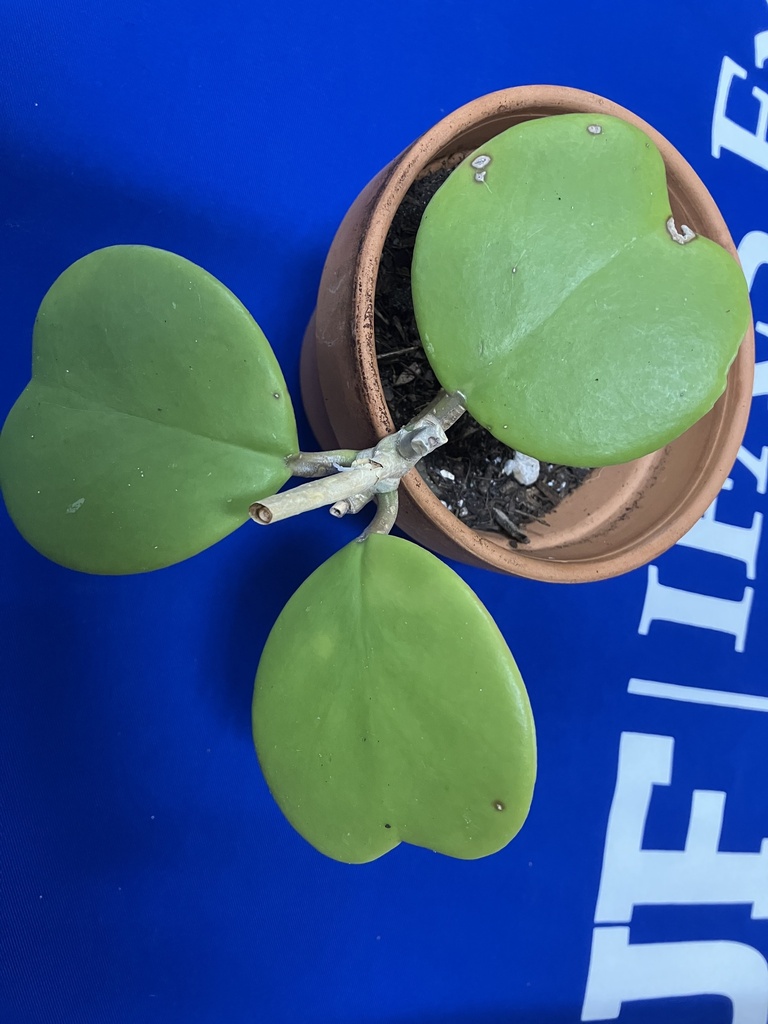
Wax plant Hoya carnosa
- Hoya has the appearance of a vine with fleshy oval leaves, while desert rose is recognized by its swollen stem base, the caudex.
Brazilian jasmine Mandevilla sanderi
- Dipladenia is distinguished by its woody, climbing shoots, while desert rose has a compact caudex with a swollen stem base.
Oleander Nerium oleander
- Oleander is easily distinguished by its narrow, leathery leaves with a pale midrib, while desert rose is recognized by its swollen stem base.
Frequently asked questions
- Why are the leaves yellowing and falling?
- This can be normal during dormancy. Leaves also fall after exposure to drafts, a sudden change in conditions, or a rapid drop in temperature.
- How often should I water it?
- Water only after the potting mix has dried out completely. Reduce watering in winter, and in cool conditions, water very rarely or stop altogether.
- Can I put it outdoors in summer?
- Yes, but the spot must be sheltered from rain. After winter, introduce direct sunlight gradually.
- Is it safe for cats and dogs?
- No. The sap is toxic, so it is best to keep the plant out of reach of cats and dogs.
- How do I propagate it?
- Use seed, cuttings, layering, or grafting. Fresh seed is best for sowing, as viability declines quickly.