Oleander
Narrow, leathery leaves with a conspicuous pale midrib make oleander (Nerium oleander) easy to recognize even before it flowers. Flat-topped clusters of white, pink, red, or yellowish flowers appear at the tips of the shoots.


Leaves, shoots, and flower clusters
The narrow leaves are lance-shaped or linear-lance-shaped and leathery, with smooth or slightly scalloped edges. A pale midrib is clearly visible, and the leaves grow in opposite pairs or whorls of 3 or 4.
The shoots are branched, and mature plants may have light gray or brown bark. Flower clusters form at the shoot tips; the flowers have five parts and are most often white or pink, less often red or yellowish. Some cultivars have double flowers.
- evergreen, leathery leaves
- a pale midrib on each leaf
- flower clusters at the shoot tips
- fruit consisting of two follicles
- seeds with feathery tufts
Indoors, the plant is usually shaped by pruning: without it, the shoots become elongated and the canopy less dense.
Origin and natural conditions
The species is native to the Mediterranean and southwestern Asia. In the wild, it grows in warm subtropical areas where sunny summers alternate with periods of limited moisture.
Wild plants often grow in riverbeds that dry out. This explains its two-sided care needs: oleander tolerates heat and drier air, but should not be left in excessively dry potting mix throughout the growing season.
| In the wild | Indoors |
|---|---|
| Plenty of direct sun | A very bright window is the best spot |
| Water availability varies | Water when the top layer dries out |
| Shoots grow freely | Maintain the shape by pruning |
In regions with colder winters, the plant is grown in a large container or as a houseplant so it can be brought indoors for winter.
Light and placement
Bright sunlight is needed for active growth and flowering. At a north-facing window, the plant may shed leaves because of insufficient light, so supplemental lighting is often needed there.
Gradually acclimate the plant to direct sun after purchase or winter dormancy. Ventilation is helpful in summer, but avoid cold drafts, especially when the plant is in a cool room.
- a south-facing or very bright window
- gradual acclimation to direct sun
- regular ventilation without cold drafts
If light is insufficient, watering and feeding will not make up for it: growth weakens and flowering becomes unlikely.
Watering, potting mix, and feeding
In spring and summer, water after the top layer of potting mix dries out. In very hot weather, excess water is sometimes left in the saucer, but persistent waterlogging around the roots is undesirable.
In fall and winter, let the potting mix dry out more deeply as growth slows. A well-drained mix reduces the risk of rot: sources give a recipe of sand, leaf mold, peat, well-rotted manure, and a larger proportion of loam.
| Season | Watering and feeding |
|---|---|
| Spring-summer | Water when the top layer dries out; feed 2-4 times a month |
| Fall-winter | Water less often and let the potting mix dry out a little more deeply |
Apply a mineral fertilizer for flowering plants in spring and summer. It is better to pour the solution onto already moist potting mix rather than dry roots.
Pruning and repotting
Prune after flowering has finished. Pruning does more than control size: shortened shoots branch more readily, helping the shrub stay compact for longer.
Repot young plants annually and mature plants every 2-3 years. For very large specimens, you can replace the top layer of potting mix in spring instead of repotting the whole plant.
- prune after flowering
- repot young plants every year
- repot mature plants every 2-3 years
- replace the top layer of potting mix in large containers
- protect your hands when working with shoots
Remove all prunings immediately, especially if there are animals at home. The sap and leaves are toxic, so do not move from pruning to preparing food or caring for other plants without washing your hands.
Toxicity and safe handling
Oleander is toxic to cats and dogs. All parts of the plant contain cardiac glycosides, including oleandrin; if swallowed, these can cause severe digestive, heart, and nervous system problems.
This is not a plant for a spot where animals or children might chew the leaves. Wash tools after pruning, and do not leave leaves, flowers, or pieces of shoots within reach.
- keep out of animals' reach
- wear gloves when pruning
- wash your hands after contact with sap
- collect fallen leaves separately
- do not use the plant as a home remedy
Medicinal uses of oleander are mentioned in botanical and pharmacological sources, but this does not make the plant safe for self-treatment.
Flowering and propagation
Flowering time depends on the climate and growing conditions. In cultivation, the period is often given as June to October, while botanical descriptions of the species also give a shorter period, from June to August.
The main propagation methods are seeds and cuttings; layering is also used in summer. For indoor growing, cuttings are more common because they preserve the cultivar's traits.
- seeds in spring
- cuttings in spring
- layering in summer
Light, a seasonal drop in temperature, and pruning after flowering are important for bud formation. If the plant is kept in shade or too warm over winter, it may produce leaves without flower clusters.
- Light
- bright sunlight
- Temperature
- +20…+28 °C
- Watering
- when the top layer dries out
- Soil
- well-drained potting mix
- Difficulty
- moderate
- Cats and dogs
- toxic
- Size indoors
- up to 2 m
- Leaves indoors
- up to 10-15 × 3 cm
- Native range
- The Mediterranean and southwestern Asia
Care
Indoors, oleander needs a very bright spot, seasonal adjustments to watering, and cooler conditions in winter. Because it is toxic, keep it where cats, dogs, and children cannot reach the leaves or prunings.
- Light
- Provide bright sunlight. A north-facing window may not provide enough light; gradually acclimate the plant to direct sun after purchase.
- Temperature
- Keep at +20…+28 °C in spring and summer. Lower the temperature to +18 °C in fall and keep it cool at +8…+18 °C in winter; ventilate without exposing it to cold drafts.
- Watering
- Water when the top layer dries out. Water more often in hot weather, and let the potting mix dry out more deeply in fall and winter. Avoid persistent waterlogging.
- Soil
- Use a well-drained potting mix. A mix of loam, leaf mold, peat, well-rotted manure, and sand is suitable; water must be able to drain freely.
- Feeding
- Feed 2-4 times a month. In spring and summer, use a mineral fertilizer for flowering plants, applying the solution after watering.
- Support
- Grow without support. Maintain a shrub or small tree shape by pruning after flowering rather than tying up the shoots.
- Leaves
- Beware of toxic leaves and sap. Wear gloves when pruning; do not leave fallen leaves or prunings where animals can reach them.
- Repotting
- Repot every year or every 2-3 years. Repot young plants annually and mature plants every 2-3 years; replace the top layer of potting mix for large specimens.
Botany
1 ill.- Family
- Apocynaceae
- Genus
- Nerium
- Species
- Nerium oleander
- Author and year
- L.

Oleander (Nerium oleander) belongs to the family Apocynaceae and is a species of the genus Nerium. It is an evergreen plant with branched shoots, narrow leathery leaves, and flower clusters at the shoot tips.
The natural range confirmed for this profile is the Mediterranean and southwestern Asia. In the wild, the species is often associated with warm sites and riverbeds that dry out, so in cultivation it combines a preference for sun with a need for controlled watering.
The fruit consists of two follicles, and the seeds have feathery tufts. Its toxicity comes from cardiac glycosides, so the plant's ornamental appeal does not remove the need to handle its leaves, sap, and prunings carefully.
How it differs from similar plants
Wax plant Hoya carnosa
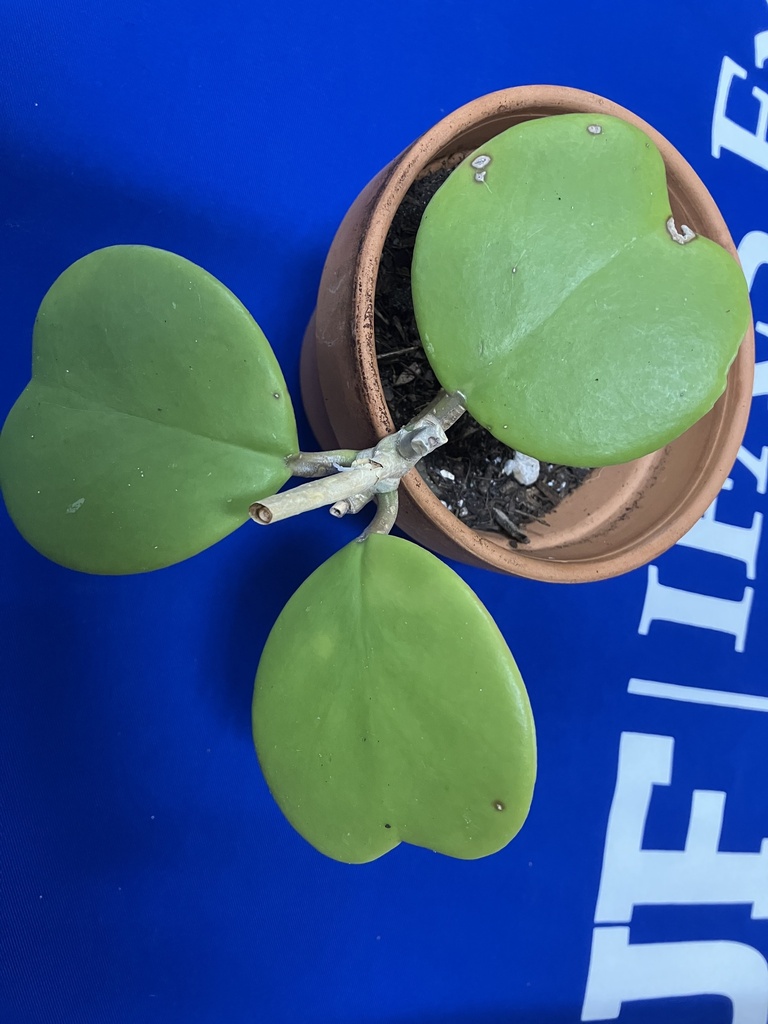
- Oleander is recognizable by its narrow, leathery leaves with a pale midrib, while hoya has fleshy, oval leaves.
Brazilian jasmine Mandevilla sanderi
- Dipladenia needs bright indirect light, while oleander needs bright sunlight.
Madagascar periwinkle Catharanthus roseus
- Potted Catharanthus is much shorter at 30–60 cm, while oleander can grow up to 2 m.
Frequently asked questions
- Can I keep it at home if I have a cat or dog?
- The plant is toxic to cats and dogs. Place the pot where your pet cannot reach the leaves, flowers, or prunings.
- Why isn't it flowering?
- The most common cause is insufficient bright sunlight or winter conditions that are too warm. Flowering also declines if the plant is not pruned after its previous flowering.
- Why are the leaves falling off?
- Sources explicitly state that indoor oleander may shed leaves when light is insufficient. Moving it to a brighter spot is usually more important than extra feeding.
- How often should I water it?
- In spring and summer, water after the top layer of potting mix dries out. In fall and winter, let it dry out a little more deeply.
- When should I repot it?
- Repot young plants every year and mature plants every 2-3 years. In large containers, you can replace only the top layer of potting mix in spring.