Brazilian jasmine
Strictly speaking, Brazilian jasmine (Mandevilla sanderi) is not a distinct “indoor flower” but a vine in the family Apocynaceae. It produces woody, twining stems and flowers on new growth after support and pruning.

Structure of the vine
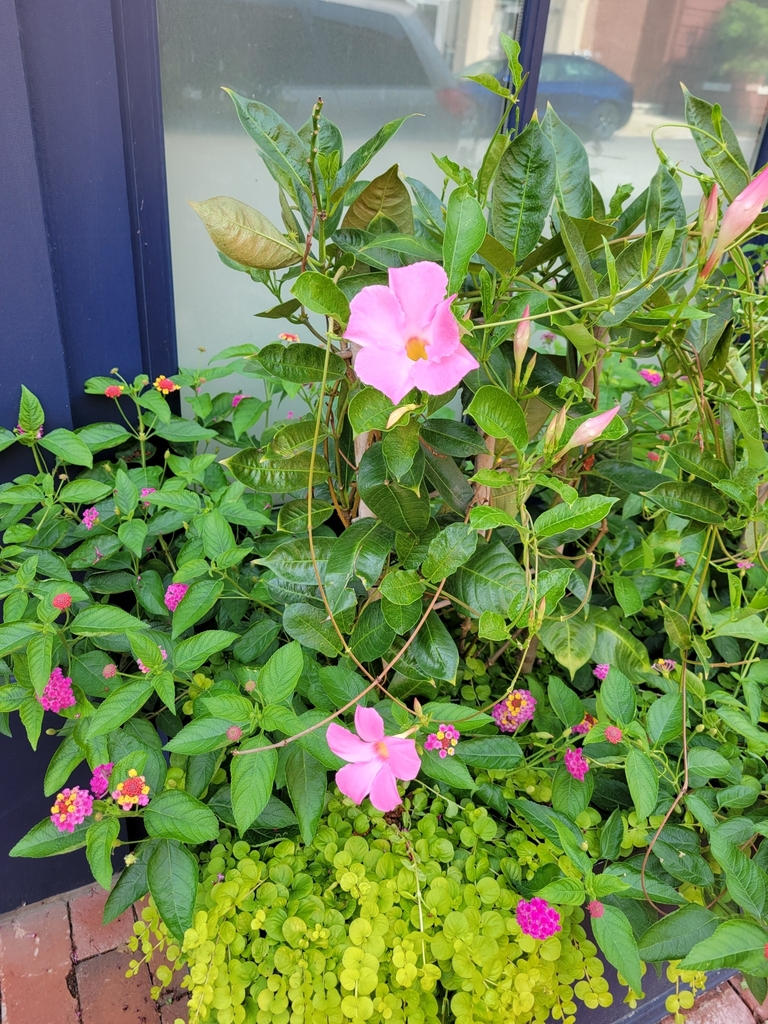
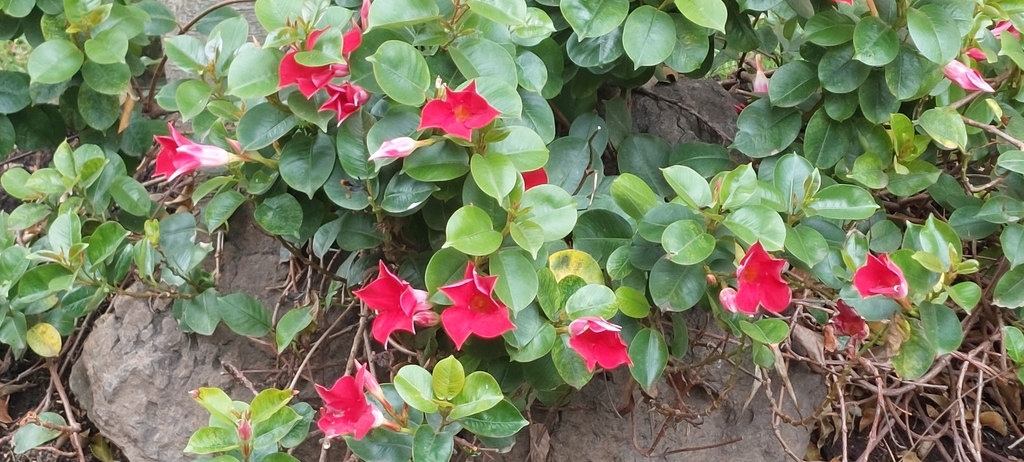
The stems become woody and need training indoors. This is naturally a twining or climbing plant, so without support its stems flop and become tangled, making less effective use of light.
The leaves are opposite and oval, with glossy, bright green blades. The tissues contain white, milky sap that is mildly toxic and can irritate the mucous membranes of cats, dogs, and people if chewed.
- twining or climbing shoots
- woody stems
- opposite, oval leaves
- white, milky sap
- tubular flowers
The name mandevilla comes from the scientific genus name Mandevilla, named after Henry J. Mandeville, an English diplomat and gardener in Buenos Aires. Reference books also use the older name Dipladenia, meaning “having double glands,” referring to the nectaries.
Light and placement
Flowering requires a very bright spot, but not direct midday sun. When light is insufficient, internodes lengthen and flowers become scarce or barely appear at all.
Bright indirect light with shade during the hottest hours works best. In an enclosed plant window, the plant copes better with dry indoor air because higher humidity is easier to maintain there.
Temperature and dormancy
During active growth, the plant can grow at room temperature. It needs a cooler spot for winter: +12…+15 °C is suitable during dormancy.
Cool winter conditions do not mean letting the potting mix dry out completely. Reduce watering, but do not leave the roots dry for long periods; excess water in the pot is especially dangerous at this time.
| Period | Conditions |
|---|---|
| Active growth | Room temperature, plenty of light |
| Dormancy | +12…+15 °C, reduced watering |
Watering and potting mix
The potting mix should be loose and moderately moist. Consistent moisture without waterlogging is not the same as a soggy pot: the roots need both air and a steady supply of moisture.
Water with a low lime content is preferable. With hard water, salt deposits form more quickly on the surface of the potting mix, and roots function less effectively in the upper layer.
Support and pruning
Stems grow more vigorously with support than without it. Rather than trying to restrict the vine completely, train young stems around a support, since flowers form on young shoots once they reach sufficient length.
Prune in fall after flowering or in early spring. Remove weak stems and overly long, unbranched stems, or shorten them to about 1/3 of their original length; select the 3-5 strongest young stems as the main framework.
- provide support for twining shoots
- shorten overly long stems
- remove weak shoots
- retain 3-5 main stems
- prune in fall or early spring
Flowering and propagation
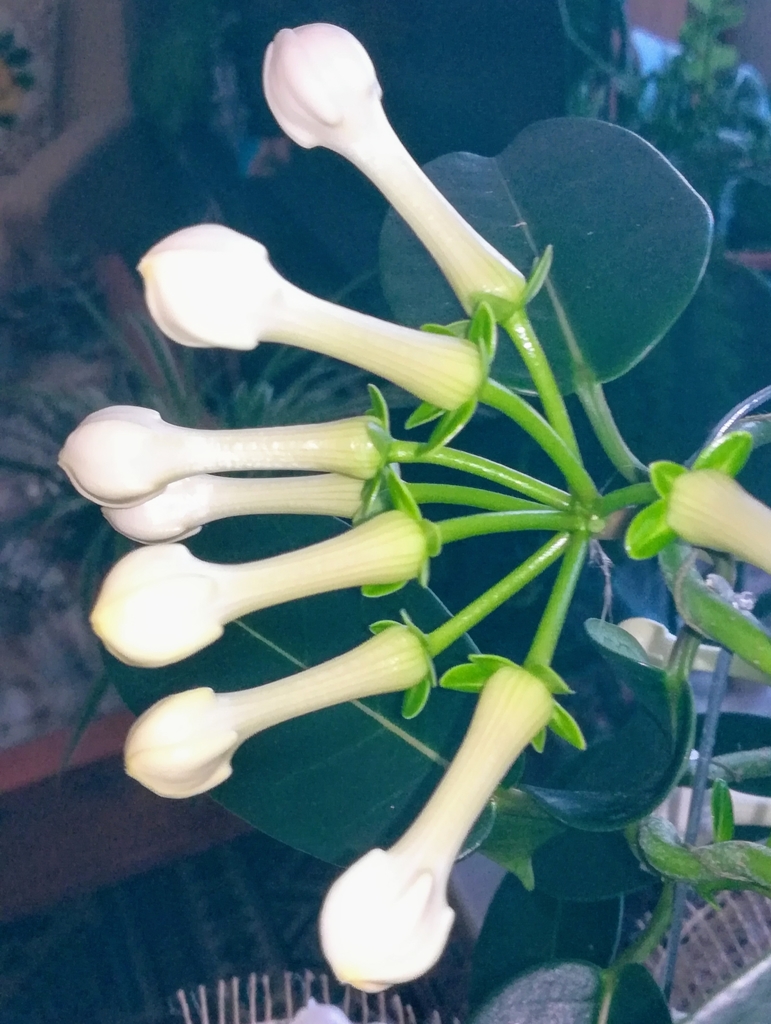
The flowers are tubular and white, pink, or deep pink; in some species of the genus, they are fragrant. In cultivation, the flowers are described as large trumpets up to 10 cm across, while botanical descriptions of the genus give a diameter of up to 10-12 cm.
Under good conditions, flowering can last from May to November, and an individual flower can last more than two weeks. Constant pruning to maintain a bush shape may prevent flowering, since buds do not form immediately on young shoots.
Propagate by taking tip cuttings from young shoots. Root them in a mini greenhouse or under plastic film; sow seeds in spring at +18…+23 °C.
- Light
- bright indirect light
- Temperature
- room temperature
- Watering
- moderate
- Soil
- loose potting mix
- Difficulty
- moderate
- Cats and dogs
- mildly toxic
- Native range
- Brazil
Care
Brazilian jasmine is sensitive to low light and waterlogging but responds well to support and timely pruning. Its basic needs are a bright spot, a loose potting mix, and a cooler period of dormancy.
- Light
- Provide plenty of bright indirect light. Shade the plant from direct midday sun. In shade, internodes lengthen and flowering declines.
- Temperature
- Keep at room temperature. Room conditions are suitable during growth. In winter, provide a cool spot at +12…+15 °C for dormancy.
- Watering
- Water moderately. Keep the potting mix moist but not waterlogged. Reduce watering during dormancy.
- Soil
- Use a loose potting mix. The roots need air, so avoid a dense potting mix. Use water with a low lime content.
- Support
- Provide support. Stems grow faster and more neatly on a support. They are easy to train around a hoop or trellis.
- Leaves
- Provide humid air. In dry air, the plant is more likely to lose leaves and buds. An enclosed plant window helps retain humidity.
Botany
4 ill.- Family
- Apocynaceae
- Genus
- Mandevilla
- Species
- Mandevilla sanderi
- Author and year
- (Hemsl.) Woodson


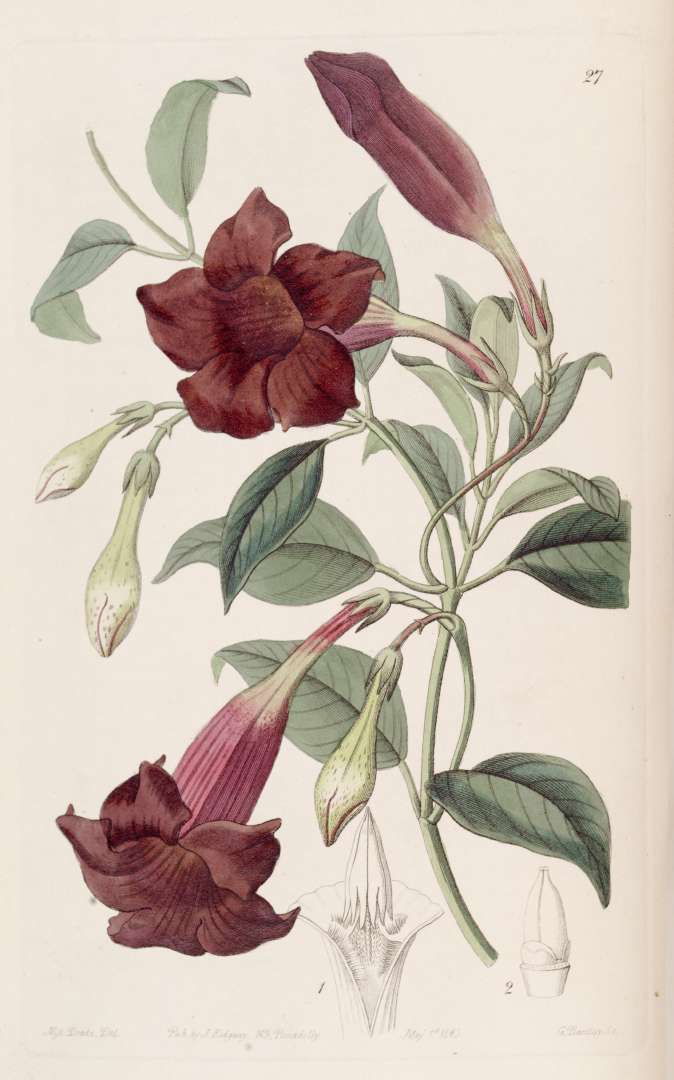

Brazilian jasmine (Mandevilla sanderi) belongs to the family Apocynaceae. It is a member of the genus Mandevilla, characterized by twining or climbing shoots with woody stems and opposite, oval leaves.
The species is native to Brazil. Indoors, it is grown in a container, usually with support to accommodate its vining growth habit.
White, milky sap is typical of this group of plants. It does not make the plant “deadly,” but it explains its mildly toxic status: chewing can cause irritation of the mucous membranes.
How it differs from similar plants
Wax plant Hoya carnosa
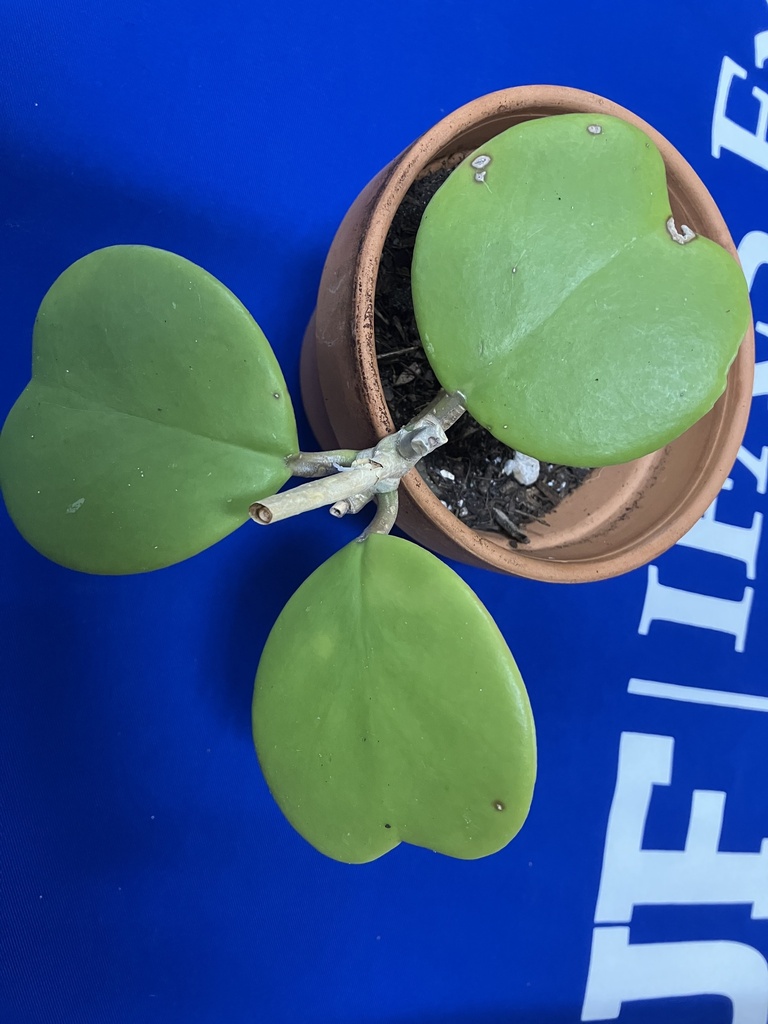
- Hoya stands out for its fleshy, oval leaves, while Brazilian jasmine is distinguished here by its woody, twining shoots.
Oleander Nerium oleander
- Oleander is recognized by its narrow, leathery leaves with a pale midrib and corymb-like flower clusters at the shoot tips, while Brazilian jasmine is described as a twining vine.
Madagascar periwinkle Catharanthus roseus
- Catharanthus is a compact subshrub, 30–60 cm tall, while Brazilian jasmine is a twining vine with woody shoots.
Frequently asked questions
- Why isn't it flowering?
- The most common causes are insufficient light or shoots pruned too short. Flowers appear on young shoots after they have grown for a while.
- Does it need support?
- Yes, support is recommended. Without it, the stems become tangled; with support, the plant grows faster and more evenly.
- Can I keep it at home if I have a cat?
- The plant is mildly toxic to cats and dogs. Its white, milky sap can irritate mucous membranes if chewed.
- When should I prune it?
- Prune in fall after flowering or in early spring. Weak and overly long shoots are usually shortened.
- How should I care for it in winter?
- During dormancy, reduce watering and keep the plant cool at +12…+15 °C. Do not let the potting mix dry out completely.