Heart hoya
A notch at the tip of its fleshy leaves gives heart hoya (Hoya kerrii) its recognizable heart shape. This is a slow-growing climber with thick, hairless stems that need support as they mature.
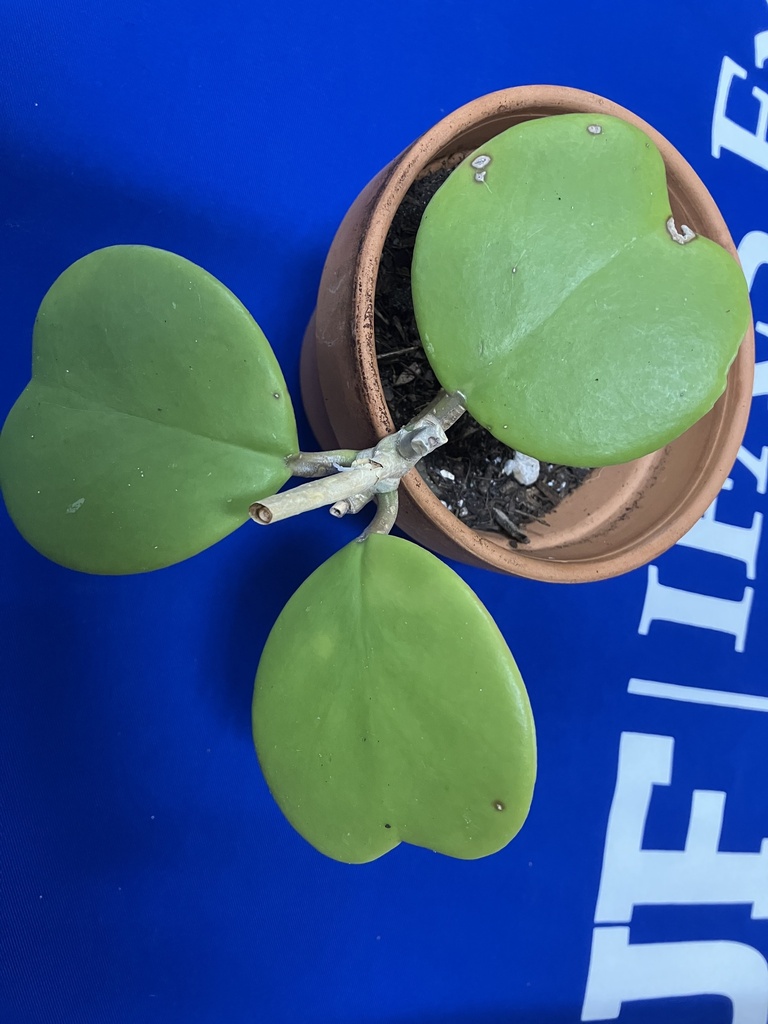

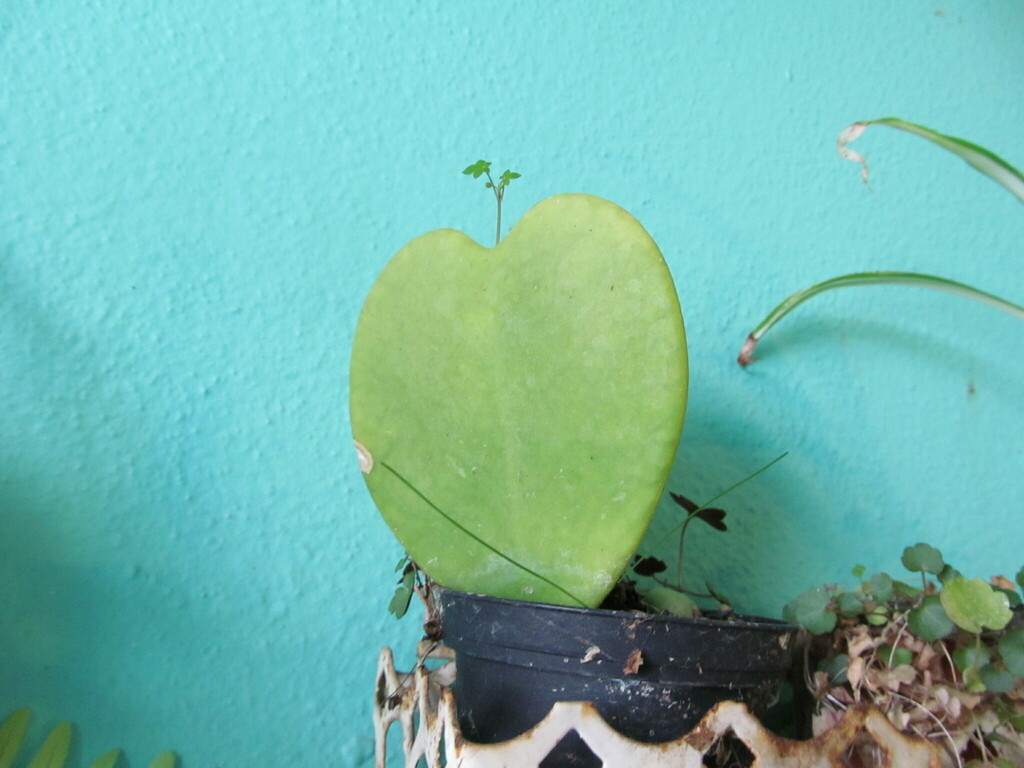
Leaves and stems
The most distinctive feature is the thick leaf blade, which ranges from egg-shaped with the wider end toward the tip to almost round, measuring 4-6 × 5-6 cm. The petiole is short and sturdy, 0.5-2 cm long.
The stems are thick and hairless, eventually reaching several meters indoors. The plant grows as a climbing hoya: it needs support or a spot where its stems can trail freely.
- fleshy leaf blades
- short, sturdy petioles
- thick, hairless stems
Origin and growth in the wild
The species is native to Indochina (Thailand, Laos, Cambodia, Vietnam), the Malay Peninsula, and Java. In the wild, this hoya is associated with humid tropical biomes, where it does not grow as a terrestrial herbaceous plant.
It is a climbing epiphyte or lithophyte: its stems attach to other plants or rocky surfaces without parasitizing the host tree.
| Feature | In the wild | Indoors |
|---|---|---|
| Growth habit | epiphyte or lithophyte | climber on a support or in a planter |
| Light | indirect light in a tropical environment | bright indirect light |
| Roots | need access to air | sensitive to standing water |
Names and single-leaf sales
The Ukrainian folk and trade names meaning “heart hoya” and “valentine” arose from the shape of the leaf blade: a single rooted leaf is easily seen as a ready-made miniature gift plant. These are names used in trade and everyday speech, not distinct botanical forms.
The genus name Hoya is associated with the English gardener Thomas Hoy. The specific epithet kerrii honors Arthur Francis George Kerr, an Irish physician and botanist who studied the flora of Thailand.
A single rooted leaf can stay green for a long time and even produce roots. A full vine develops when the cutting includes a piece of stem with a node from which new growth can emerge.
Light and placement
Bright indirect light is needed for steady growth. Near an east- or west-facing window, the plant usually gets enough light without prolonged direct sun.
In shade, stems grow more slowly and flowering becomes less likely. Sudden exposure to strong sun after a dim location can damage the fleshy leaves, so changes of location are best made gradually.
- an east- or west-facing window
- indirect light without overheating
- support for mature stems
Watering and potting mix
The main care risk is constantly wet potting mix. The fleshy leaves tolerate brief drying better than standing water around the roots.
Water when the top 2-3 cm of potting mix has dried. In summer, this is often no more than once a week; in winter, increase the intervals because growth slows.
- an airy potting mix
- fast drainage
- a pot with drainage holes
- partial drying between waterings
- reduced watering in winter
Flowering and feeding
Mature plants may flower indoors after 2-3 years, but this does not happen on a schedule. The flower cluster consists of star-shaped flowers in shades of white or pink with a red center, which produce nectar.
Feed in spring and summer, about once a month. Stop feeding or reduce it substantially in winter, because the plant uses nutrients less actively in low light.
Propagation and common problems
Stem cuttings with a node are the more reliable way to propagate this plant. A leaf cutting can root, but without an axillary bud it often remains a single leaf and does not produce a stem.
Yellowing leaves are most often linked to excess water or poor drainage. Slow growth with normal watering usually points to insufficient light.
- scale insects
- aphids
- spider mites
- whiteflies
- mealybugs
- Light
- bright indirect light
- Temperature
- +15…+29 °C
- Watering
- after the mix has partly dried
- Soil
- fast-draining potting mix
- Difficulty
- moderate
- Cats and dogs
- safe
- Size indoors
- stems up to several meters long
- Leaves indoors
- 4-6 × 5-6 cm
- Native range
- Indochina (Thailand, Laos, Cambodia, Vietnam), the Malay Peninsula, and Java
Care
Heart hoya grows slowly and responds better to stable conditions than to frequent changes of location. Bright indirect light, an airy potting mix, and careful watering are key to its care.
- Light
- Provide bright indirect light. An east- or west-facing window works well. Prolonged direct sun can damage the leaves, while shade slows growth.
- Temperature
- Keep at +15…+29 °C. This is the range for the growing season. A cooler spot is possible in fall and winter, without sudden temperature changes or drafts.
- Watering
- Water when the top 2-3 cm is dry. In summer, watering is often needed no more than once a week. Reduce watering in winter so the roots do not sit in wet potting mix.
- Soil
- Use an airy potting mix. The mix needs to drain quickly. A loose succulent or cactus potting mix with good drainage works well.
- Feeding
- Feed once a month during the growing season. Feed in spring and summer. In winter, fertilizer is not needed or is applied much less often because growth is slow.
- Support
- Provide support or use a hanging planter. The stems climb and eventually need guidance. They can be trained along a support or left to trail from a planter.
- Leaves
- Wipe dust off the leaves. The thick leaves collect dust. Inspecting the foliage also helps you spot scale insects or spider mites early.
- Repotting
- Repot every 2-3 years. Repot in spring into a slightly larger pot. An oversized pot increases the risk of waterlogging.
Botany
- Family
- Apocynaceae
- Genus
- Hoya
- Species
- Hoya kerrii
- Author and year
- Craib
Heart hoya belongs to the genus Hoya and the family Apocynaceae. It is a climbing plant with thick, hairless stems, short petioles, and fleshy leaf blades whose shape makes the species easy to recognize.
Its natural range extends from Indochina to the Malay Peninsula and Java. There, the plant lives on trees and rocks as an epiphyte or lithophyte, without rooting in the ground.
The species has a chromosome number of 2n = 22. The specific epithet is associated with Arthur Kerr, a researcher of the flora of Thailand.
Frequently asked questions
- Is heart hoya safe for cats and dogs?
- Yes, the plant is safe for cats and dogs.
- Why does a single leaf not grow any further?
- A rooted leaf without a node often does not produce a stem, although it can stay alive for a long time.
- How often should I water it?
- Water when the top 2-3 cm of potting mix has dried; in summer, this is often no more than once a week.
- Why are the leaves turning yellow?
- The most common cause is excess water or poor drainage. The potting mix should partly dry between waterings.
- When does it flower indoors?
- Mature plants may flower after 2-3 years, but they need enough light and consistent care.


