String of hearts
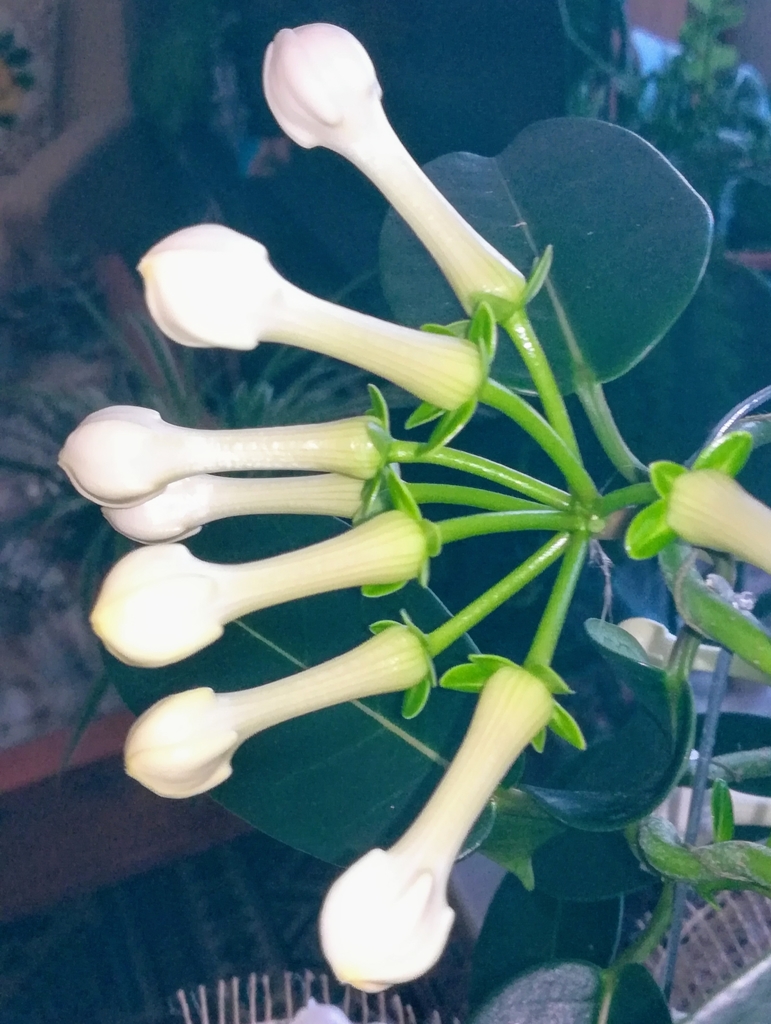
The waxy, tubular flowers of string of hearts (Ceropegia woodii) look nothing like ordinary petals: they resemble upside-down vases, while the plant itself grows as a slender trailing vine with heart-shaped leaves.


Stem and leaf structure
The slender, trailing stems grow as a vine. Indoors, they are usually left to hang from a suspended pot, but in the wild they can weave through other vegetation. According to the descriptions provided, the plant reaches 2-5 cm tall, with stems 2-4 m long.
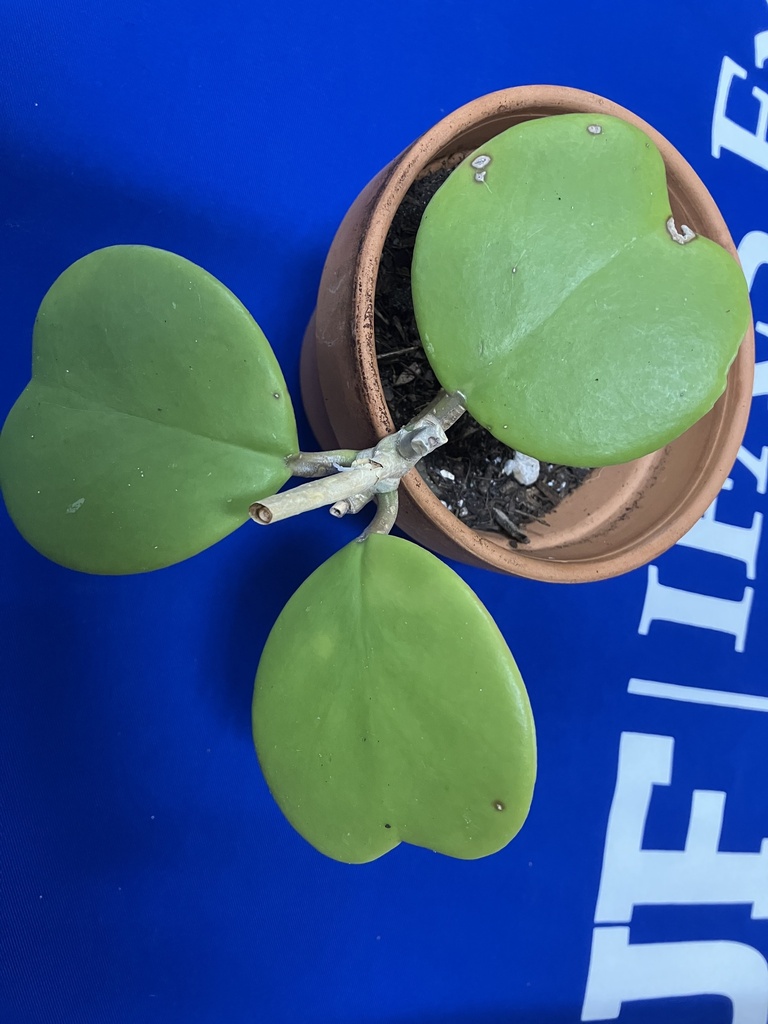
The leaf blade is heart-shaped, with an outline reminiscent of cyclamen leaves. The upper surface has silvery-green tones, while the underside can be green or purple, so the plant looks different depending on the viewing angle.
- slender, trailing stems
- heart-shaped leaf blades
- silvery-green markings on the upper surface
- green or purple undersides
- tubers on the roots and sometimes at the nodes
The tubers are not an accidental deformity but part of the plant's structure. They store resources and can play a role in vegetative propagation, especially when they form at stem nodes.
Where it grows in the wild
The species is native to South Africa and Zimbabwe. In the wild, it is associated with the subtropical biome and is often found on rocky ledges in forests, where the tubers anchor in crevices containing a thin layer of growing medium.
| In the wild | Indoors |
|---|---|
| Rocky ledges and crevices | A pot with a very loose potting mix |
| Shaded spots around the base of plants | Bright indirect light without overheating |
| Humus-rich, loamy or sandy growing media | A mix that does not retain water for long |
Its natural habitats are nothing like a dry desert. The base of the plant is usually shaded and in a relatively moister environment, while the stems receive more light among shrubs.
Light and placement
The stems need a bright spot, but avoid excessive heat near window glass. In the wild, the plant mostly grows in shaded places, so a sudden move into intense sun can damage the leaves.
The most practical indoor position is a hanging pot or a shelf where the stems can trail freely. For an upright shape, the slender stems can be guided onto a light support.
- a bright spot without excessive midday heat
- a hanging pot for the long stems
- a light support to guide the stems
A spot that is too dark usually produces weaker, more stretched growth. Assess this by looking at the new internodes and the overall density of the stems rather than a single leaf.
Watering and potting mix
The root tubers help the plant tolerate brief dry spells better than constantly wet potting mix. Water after the upper part of the mix dries out, rather than on a fixed schedule.
In the wild, the roots often occupy crevices with a thin layer of humus-rich, loamy or sandy growing medium, which may be rocky or gravelly. In a pot, this means the plant needs a loose mix and reliable drainage of excess water.
- a loose-textured potting mix
- drainage holes in the pot
- moderate watering after the mix dries out
- no standing water around the tubers
- careful handling of the slender stems
If the leaves lose firmness, the cause may be either excessive drying or root damage in wet potting mix. Before watering, check not only the surface but also conditions in the pot: a heavy pot with damp mix does not need more water.
Flowers and fruit
The flowers are waxy and narrow, with a widened base, and resemble tiny upside-down vases. Their colors are described as dingy white and pale purple, with dark violet or brown parts of the petals.
The flowers are about 2.5-3 cm long. Flowering occurs in late summer and fall, and in suitable conditions individual flowers may appear until midwinter.
After pollination, horn-shaped seed pods form. Inside are flat seeds with a small "parachute" that allows them to be carried by the wind.
Propagation and repotting
The most obvious route to vegetative propagation involves the tubers that appear on the roots or at stem nodes. A node with a tuber is more likely to produce a new shoot than a random piece of slender stem without stored resources.
Repot when the roots and tubers become crowded or the potting mix loses its structure. Do not pull on the stems while working: they are slender, and the nodes are easily damaged.
- nodes with tubers
- cuttings with several nodes
- seeds after the pods ripen
Do not drench the plant immediately after repotting. A loose, slightly moist potting mix and steady indirect light allow the roots to recover without the risk of water pooling.
Common problems
Most visible problems arise from a mismatch between the plant's succulent structure and its growing conditions. The tubers can store moisture, but prolonged waterlogging makes them vulnerable to rot.
- soft tubers caused by standing water
- stretched stems in a dark spot
- leaf loss after an abrupt change in conditions
- stem damage when moving the plant
- poor flowering without enough light
The plant is safe for cats and dogs, but that does not mean its stems should be left as toys. Physical damage quickly spoils the vine's appearance, and broken-off nodes reduce the number of growing points.
- Light
- bright indirect light
- Temperature
- +16…+26 °C
- Watering
- after the potting mix dries out
- Soil
- loose, rocky potting mix
- Difficulty
- moderate
- Cats and dogs
- safe
- Size indoors
- 2-4 m long
- Leaves indoors
- heart-shaped leaf blade
- Native range
- South Africa and Zimbabwe
Care
String of hearts combines slender, vine-like stems with succulent tubers. The key to its care is not to treat it like a plant that needs constantly moist potting mix.
- Light
- Provide bright indirect light. In the wild, the base of the plant is usually shaded, while the stems receive light among shrubs. Indoors, avoid overheating near window glass.
- Temperature
- Keep at +16…+26 °C. This is a guide for the growing season. In winter, the plant must not be exposed to frost, as its natural habitats are described as frost-free.
- Watering
- Water after the potting mix dries out. The tubers store moisture, so constantly wet potting mix is more dangerous than a brief dry spell. Adjust watering according to conditions in the pot.
- Soil
- Use a loose, rocky potting mix. A mix based on a humus-rich, loamy or sandy component is suitable, with additions that keep water from pooling around the tubers.
- Support
- Let it trail or provide a light support. The stems are slender and trailing, and in the wild they may weave through shrubs. Indoors, let them hang down or gently guide them.
- Repotting
- Repot when the tubers are crowded. Repot without tugging on the stems: the nodes and slender stems are easily damaged. The pot must have drainage holes.
Botany
4 ill.- Family
- Apocynaceae
- Genus
- Ceropegia
- Species
- Ceropegia woodii
- Author and year
- Schltr.


String of hearts (Ceropegia woodii) belongs to the family Apocynaceae and the genus Ceropegia. It is a succulent evergreen vine with slender, trailing stems, heart-shaped leaf blades and tubers on the roots, sometimes also at stem nodes.
The species is native to South Africa and Zimbabwe. In the wild, it grows in subtropical conditions, often on rocky ledges in forests, where the tubers sit in crevices containing a thin layer of growing medium.
The genus name Ceropegia is linked to Greek words referring to wax and a gathered or fountain-like form, which fits the unusual flower structure of many members of the genus. The specific epithet woodii honors the British botanist John Medley Wood.
How it differs from similar plants
Wax plant Hoya carnosa
- Hoya has fleshy, oval leaves, while string of hearts has heart-shaped leaves on a slender, trailing vine.
Brazilian jasmine Mandevilla sanderi
- Dipladenia has twining, woody stems, while string of hearts is described as a slender, trailing vine.
Oleander Nerium oleander
- Oleander is recognized by its narrow, leathery leaves with a pale midrib and flower clusters at the stem tips, rather than the heart-shaped leaves of a trailing vine.
Frequently asked questions
- Is it safe for cats and dogs?
- Yes, the plant is safe for cats and dogs. However, its slender stems are easily damaged if an animal pulls or chews on them.
- Why are the leaves turning yellow?
- This is most often caused by overwatering or an abrupt change in conditions. Check whether the potting mix stays wet for too long.
- How long do the stems grow?
- The stems can reach 2-4 m long, so the plant needs room to trail or a light support.
- When does it flower?
- Flowering usually occurs in late summer and fall. In suitable conditions, individual flowers may appear until midwinter.
- Can it be propagated from tubers on the stems?
- Yes, tubers at the nodes can be used for vegetative propagation. It is best not to detach a node without a section of stem.