Frangipani
Its fragrant flowers produce no nectar: frangipani (Plumeria rubra) attracts insects with its scent but offers no sweet reward. Indoors, it grows as a small deciduous tree with milky sap and leathery leaves.


Shoot and leaf structure
The plant develops woody shoots and a thick, succulent trunk. It has characteristic milky sap, which appears at cuts and damaged areas, as in many members of the family Apocynaceae.
The leaves are leathery, glossy, usually dark green, and clustered at the shoot tips. After they fall, distinct scars remain on the cylindrical stems, giving the plant a recognizable appearance even without its leafy canopy.
Flowers without nectar
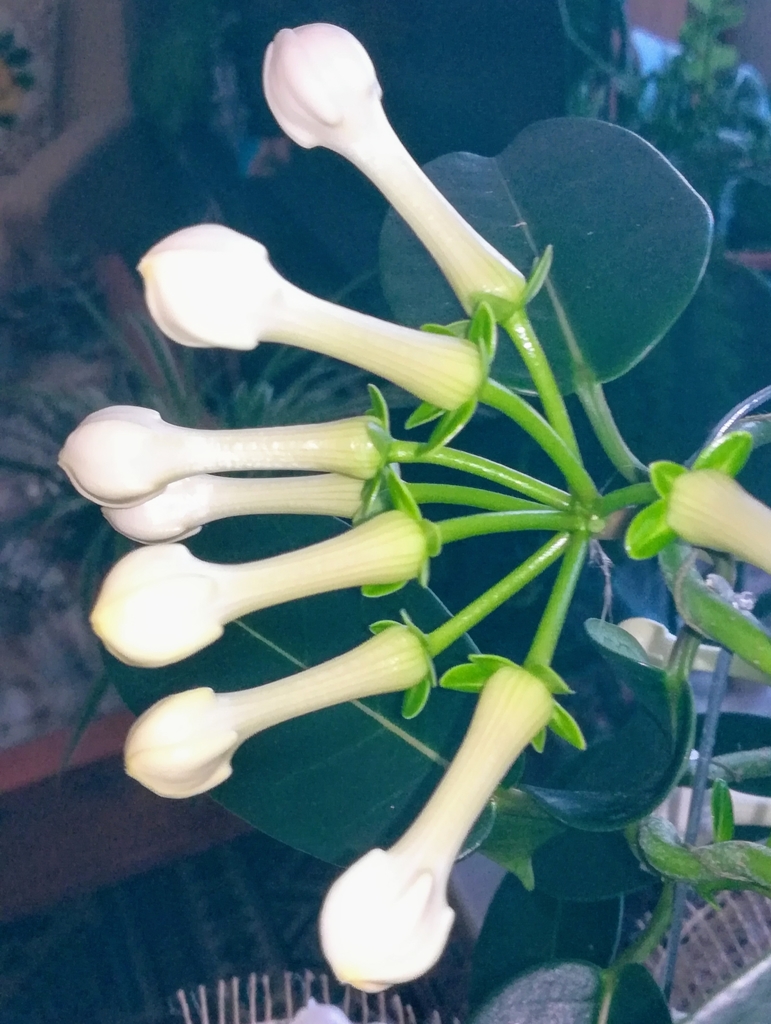
The flowers have five petals and can be red, pink, yellow, or white. Their scent is often strongest in the morning, but its character varies with conditions.
- five petals in each flower
- flowers in flat-topped or branching clusters
- flower clusters sometimes appearing before the leaves
The flowers contain no nectar, although their scent attracts pollinating insects. This is a plant strategy in which fragrance acts as a signal without offering a food reward.
Origin and sensitivity to cold
The species is native to an area extending from Mexico to Central America. It evolved in warm conditions within its natural range, so it tolerates cold poorly in cultivation.
| Conditions | What this means for growing |
|---|---|
| Mild climate | Can be grown in the ground |
| Cool climate | Best kept in a container with protection from cold |
| Tropics | Widely grown as an ornamental plant |
Indoors, this calls for seasonal adjustments to growing conditions rather than complicated care. A container allows the plant to be moved to a warmer, brighter spot when outdoor conditions become unfavorable.
Light, containers, and potting mix
Flowering requires a very bright spot. In shade, the plant may retain its shoots and leaves, but it usually produces fewer flower clusters.
- heavy, compacted potting mix
- standing water around the roots
- a cold spot when grown in a container
The potting mix must drain excess water quickly without compacting. This is especially important for a plant with succulent shoots: storing water in its tissues does not make it suited to constantly wet roots.
Watering and seasonal leaf drop
The thick trunk stores moisture, so water carefully. Use the condition of the potting mix as your guide: it should have time to partially dry between waterings, and water should not sit in the container.
Leaf drop alone does not mean this species is dying. When the plant sheds its leaves and stops actively growing, reduce watering and hold off on feeding until new shoots or leaves appear.
Propagation and fruit
The plant is propagated from cuttings and seeds. Vegetative propagation has the advantage of producing a plant with the same traits as its parent, while seedlings may differ in flower appearance.
Narrow, cylindrical fruits with pointed ends may form after flowering. They are inedible; the seeds are winged, and their germination rate gradually declines during storage.
Toxicity to pets
The plant is mildly toxic to cats and dogs. Its milky sap can irritate skin and mucous membranes, and chewing plant parts may cause drooling, vomiting, or diarrhea.
After pruning, do not leave sap on your hands or tools. There is no need to treat the plant as a deadly danger, but pets should have limited access to its leaves, shoots, and fallen plant parts.
Origin of the name
The genus is named after the French botanist Charles Plumier. The name retains this Latinized form rather than describing a visible feature of the plant.
The specific epithet rubra refers to red coloration, although cultivated plants do not always have red flowers. Ornamental forms can have pink, yellow, or white flowers, so the name does not always match the actual color of the flower clusters.
- Light
- bright light
- Watering
- after the potting mix has partially dried
- Soil
- well-drained potting mix
- Difficulty
- moderate
- Cats and dogs
- mildly toxic
- Native range
- from Mexico to Central America
Care
In a container, the plant needs warmth, strong light, and careful watering. The main risk indoors is the combination of cold and wet potting mix.
- Light
- Choose the brightest possible spot. Flowering requires strong light; in deep shade, the plant is more likely to produce shoots and leaves than flower clusters.
- Temperature
- Keep warm. The plant is sensitive to cold; in cool climates, keep it in a container that can be moved to a sheltered spot.
- Watering
- Water carefully. The thick, succulent trunk stores water, so let the potting mix partially dry out; the roots should not stay constantly wet.
- Soil
- Use a well-drained potting mix. In a container, the plant needs a mix that does not compact and drains excess water quickly, especially when growth is slow.
- Feeding
- Feed during active growth. Feed while shoots and leaves are actively growing; stop after the leaves drop and resume when growth starts again.
- Leaves
- Expect seasonal leaf drop. The genus includes deciduous shrubs and trees; after the leaves fall, noticeable scars remain on the cylindrical shoots.
- Repotting
- Repot when the container is cramped. In cool climates, the plant is grown in a container, so repotting depends on the condition of the roots and potting mix.
Botany
4 ill.- Family
- Apocynaceae
- Genus
- Plumeria
- Species
- Plumeria rubra
- Author and year
- L.


Frangipani (Plumeria rubra) belongs to the family Apocynaceae. It is a deciduous woody plant with milky sap, leathery leaves, and thick shoots that give it a succulent appearance.
The flowers grow in clusters and have five petals. They are fragrant but contain no nectar, so pollinators are attracted mainly by their scent.
The species' natural range extends from Mexico to Central America. In cool climates, it is usually kept in a container because it is sensitive to cold.
How it differs from similar plants
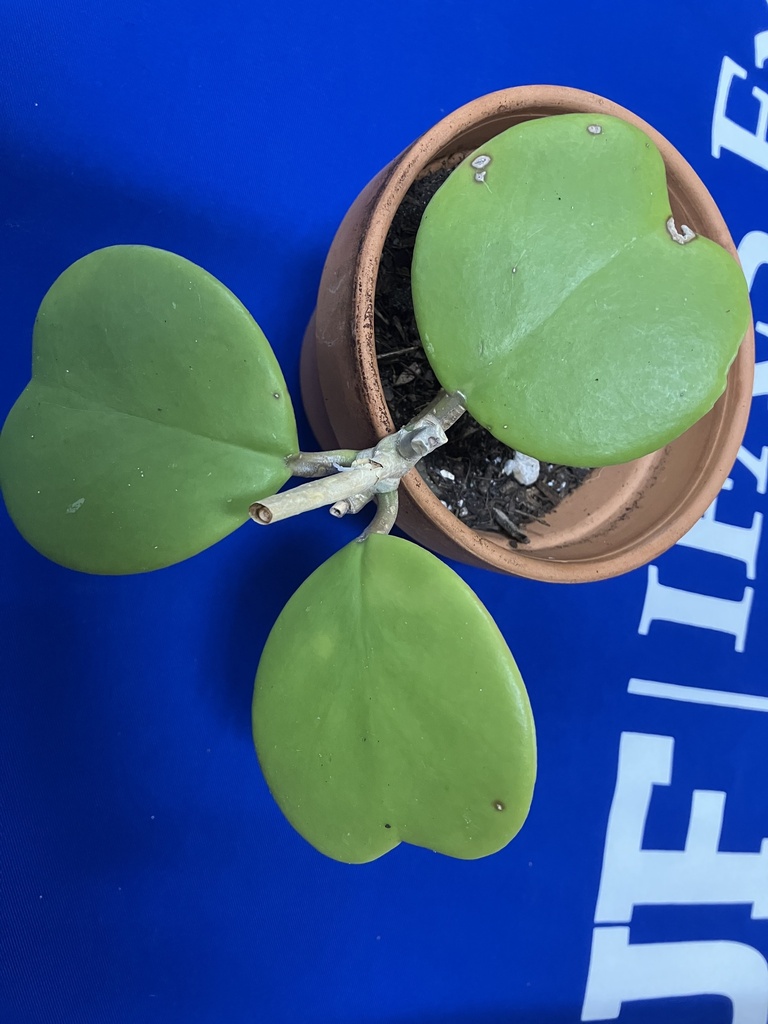
Wax plant Hoya carnosa
- Hoya is an epiphytic vine with fleshy, oval leaves, while frangipani is a small deciduous tree with leathery leaves.
Brazilian jasmine Mandevilla sanderi
- Dipladenia forms a vine with woody, climbing shoots, while frangipani grows as a small deciduous tree.
Oleander Nerium oleander
- Oleander is distinguished by narrow, leathery leaves with a pale midrib and flat-topped flower clusters at the shoot tips, while frangipani has the form of a small deciduous tree with fragrant flowers.
Frequently asked questions
- Why are the leaves falling off?
- This is a deciduous plant, so seasonal leaf drop can be normal. If the shoots are firm and not rotting, adjust care according to the condition of the potting mix.
- Is it safe for cats and dogs?
- The plant is mildly toxic to cats and dogs. Its milky sap and ingested plant parts can cause irritation, drooling, vomiting, or diarrhea.
- Why isn't it flowering?
- The most common causes are insufficient strong light or consistent warmth. Indoors, flowering depends on active growth and the plant's overall condition.
- How do I propagate it?
- The plant is propagated from cuttings and seeds. Cuttings retain the parent plant's traits, while seedlings may differ.
- What should I do about milky sap at a cut?
- Wash it off skin and tools after pruning. Keep the sap away from mucous membranes and pets' mouths.