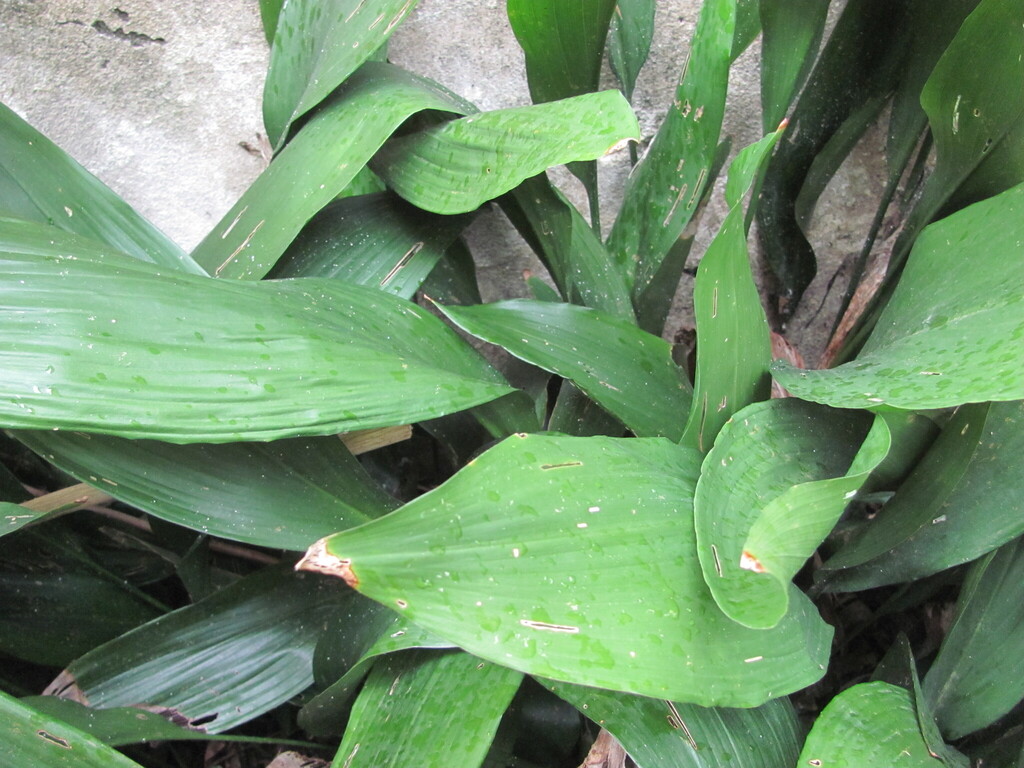
Spineless yucca
This shrub or small tree with stiff, sword-shaped leaves evolved in the dry, open habitats of Mexico and Guatemala. Indoors, spineless yucca (Yucca elephantipes) needs plenty of light and careful watering.

Structure and growth habit
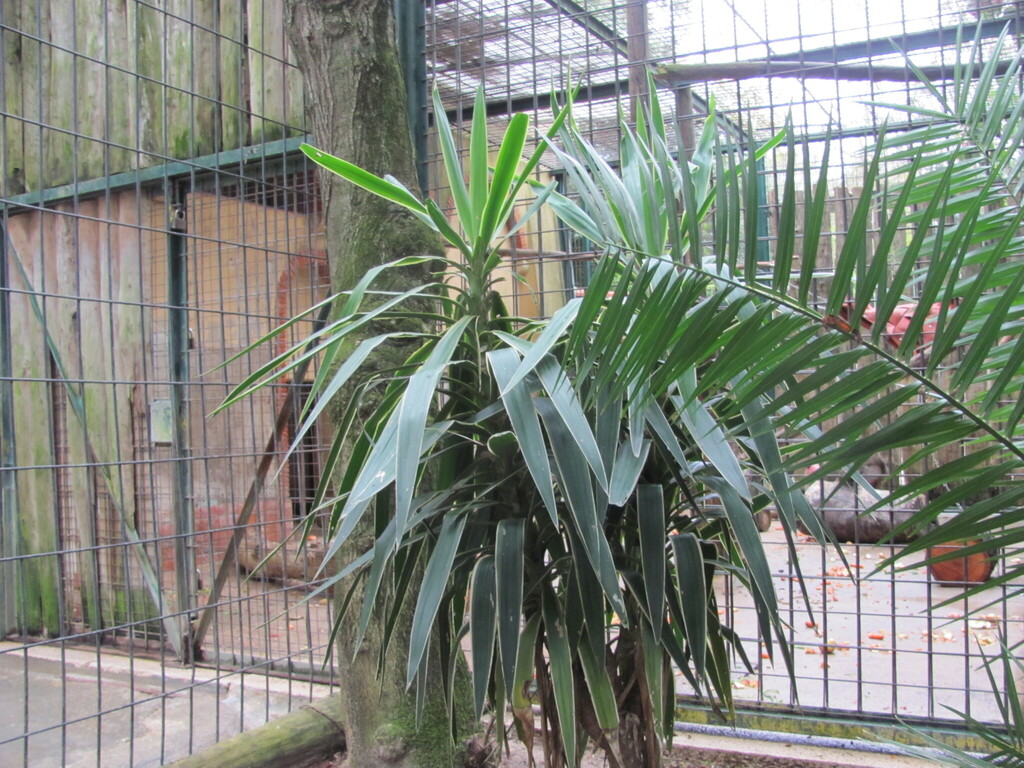
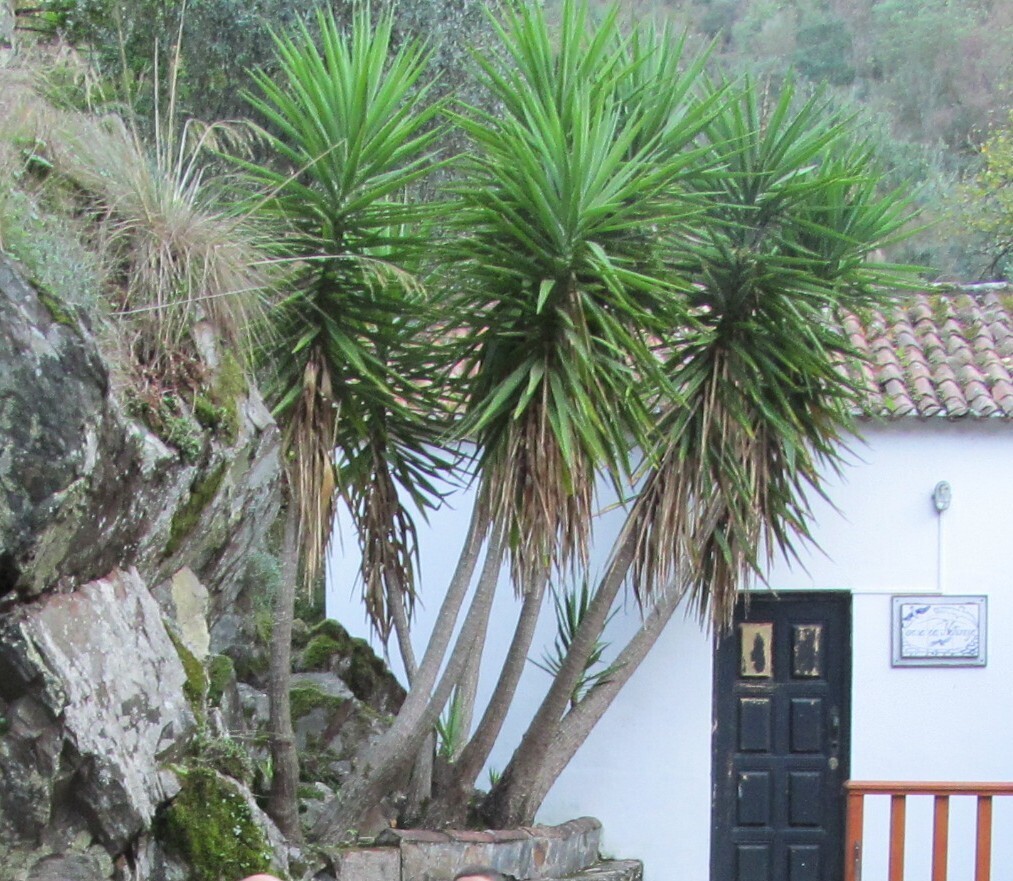
As a houseplant, it is often regarded as what is called a "false palm" in Ukrainian, but botanically it is a shrub or small tree with a woody stem. The leaves cluster at the tips of the trunk or branches, concentrating the foliage in rosettes.
The leaf blade is stiff, linear-lanceolate, and pointed. The leaves are arranged spirally, making the rosette look dense even without many shoots.
- woody stem
- rosettes at the shoot tips
- large, sword-shaped leaves
- spiral leaf arrangement
- pointed leaf blade
This structure means the plant needs plenty of room: the leaves extend outward and may brush against walls, furniture, or neighboring pots.
Origin and natural conditions
The species is native to Mexico and Guatemala. The genus Yucca generally grows in dry, open habitats where the soil is often sandy, rocky, or calcareous.
These conditions explain its main indoor requirements: plenty of light and no standing water around the roots. The plant tolerates dry air better than a constantly wet potting mix.
| In the wild | Indoors |
|---|---|
| dry, open habitats | the brightest available spot |
| sandy, rocky, or calcareous soils | a loose, well-drained potting mix |
| seasonal drought | watering after the top layer dries out |
Light and placement
Bright sunlight is needed for normal growth. A spot near a south-facing window provides conditions closer to its natural, open habitat than a spot farther inside the room.
In shade, growth slows and the rosette may become less dense. During the short days of winter, care references recommend supplemental lighting to provide at least 16 hours of light.
Position the pot so the leaves do not press against the glass. The tips of the stiff leaf blades can easily dry out after physical damage or contact with a cold surface.
Watering and potting mix
Water thoroughly, not on a fixed schedule, but when the potting mix has dried to a depth of 5-7 cm. This matters for a plant from dry habitats: the roots should not remain constantly wet.
- check that the mix has dried before watering
- empty the saucer
- keep the potting mix loose, not compacted
- use a pot with a drainage hole
- reduce watering during dormancy
The structure of the potting mix matters more than its nutrient content alone. The sandy, rocky, and calcareous soils of its natural habitats point to the need for a mix that drains excess water quickly.
Feeding and repotting
Feed during active growth, from April to August. Indoor growing references recommend applying a dilute solution of compound mineral fertilizer every 2-3 weeks.
Repot in spring once the roots have filled the pot. For mature plants, repotting every 2-4 years is usually sufficient.
- feed only during growth
- use a weaker fertilizer solution
- apply to the undersides of the leaves
- repot in spring
- keep the heavy pot stable
Do not overwater after repotting: damaged roots are more sensitive to excess water. Return to the usual watering routine once the plant has adjusted.
Flowering and pollination
Members of the genus produce a large, upright panicle from the center of the leaf rosette. Botanical descriptions of the genus list flower clusters up to 200 cm long, white, nodding, bell-shaped flowers up to 7 cm, and a capsule fruit up to 10 cm.
Flowering is rare indoors; care references explicitly describe spineless yucca as a foliage plant that usually does not bloom at home. A lack of flowers indoors is therefore not a sign of disease.
In the wild, yuccas are pollinated by specialized moths: the female carries sticky pollen between flowers and lays eggs in the ovary. Without these pollinators, cultivated plants often fail to set fruit.
Why leaves turn yellow or dry out
Yellowing, dry leaf edges, and the loss of some leaves are most often linked to growing conditions. First check the light, watering routine, and condition of the potting mix.
- not enough bright light
- constantly wet potting mix
- compacted soil that does not drain
- winter temperatures below +10 °C
- scale insects, mites, aphids, or thrips
If yellowing leaves are accompanied by a softening trunk or an unpleasant smell from the potting mix, rot may be the cause. In this case, reduce watering and inspect the roots when repotting.
- Light
- bright sunlight
- Temperature
- normal room temperature
- Watering
- after the top 5-7 cm dries out
- Soil
- sandy, rocky
- Difficulty
- easy
- Cats and dogs
- mildly toxic
- Size indoors
- up to 4 m
- Leaves indoors
- large, sword-shaped
- Native range
- Mexico and Guatemala
Care
Spineless yucca is adapted to bright light and drier conditions, so the priorities indoors are to keep it out of dark corners and avoid keeping the roots constantly wet. The most common mistakes involve watering and light.
- Light
- Provide bright sunlight. The best spot is near a south-facing window. Supplemental lighting may be needed during the short days of winter.
- Temperature
- Keep at normal room temperature. Normal room temperature is suitable during the growing season. Do not let temperatures fall below +10 °C in winter.
- Watering
- Water when the top 5-7 cm is dry. Water thoroughly, but only after the top layer has dried out. Empty the saucer so the roots do not sit in water.
- Soil
- Use a loose, well-drained potting mix. In the wild, yuccas grow in sandy, rocky, or calcareous soils, so the potting mix must drain quickly.
- Feeding
- Feed from April to August. Apply a dilute solution of compound mineral fertilizer every 2-3 weeks, usually to the undersides of the leaves.
- Support
- No support needed. The woody stem supports the rosettes on its own. Support is needed only for an unstable pot or a damaged plant.
- Leaves
- No misting needed. The plant tolerates dry air better than excess moisture. Dust can be removed from the leaves without regular misting.
- Repotting
- Repot in spring every 2-4 years. Repot when the roots have filled the pot. For large plants, a stable pot and a drainage hole are important.
Botany
4 ill.- Family
- Asparagaceae
- Genus
- Yucca
- Species
- Yucca gigantea
- Author and year
- Lem.
- Life form
- shrub or small tree


Spineless yucca (Yucca elephantipes) belongs to the genus Yucca in the family Asparagaceae. It is an evergreen woody plant with a growth habit described as a shrub or small tree.
The genus is characterized by stiff, linear-lanceolate leaves clustered at the tips of the trunk or branches. The flower cluster is a large panicle of white, nodding, bell-shaped flowers.
A distinctive feature of yuccas is their relationship with pollinating moths. The insect carries sticky pollen between flowers, while its larvae feed on some of the seeds, leaving enough for the plant to reproduce.
How it differs from similar plants
Snake plant Dracaena trifasciata
- Spineless yucca needs bright sunlight, while sansevieria tolerates partial shade.
Corn plant Dracaena fragrans
- Dracaena has elongated leaves clustered in rosettes at the tips of woody stems, while spineless yucca is distinguished by its large, stiff, sword-shaped leaves.
Spider plant Chlorophytum comosum
- Chlorophytum has a rosette of narrow leaves about 300 × 20 mm, while spineless yucca grows as a shrub or small tree with large, sword-shaped leaves.
Frequently asked questions
- Does spineless yucca bloom indoors?
- No, it rarely flowers indoors and is often grown as a foliage plant.
- Why are the leaves turning yellow?
- Check the light, watering, and condition of the potting mix. Common causes include insufficient light, overwatering, or pests.
- How often should I water spineless yucca?
- Water thoroughly, but only when the potting mix has dried to a depth of 5-7 cm. Do not leave water in the saucer.
- Can I keep it at home if I have a cat?
- Yes, but the plant is mildly toxic to cats and dogs. Chewing the leaves can irritate mucous membranes.
- When should I repot spineless yucca?
- Repot in spring, usually every 2-4 years. A large plant needs a stable pot with drainage.