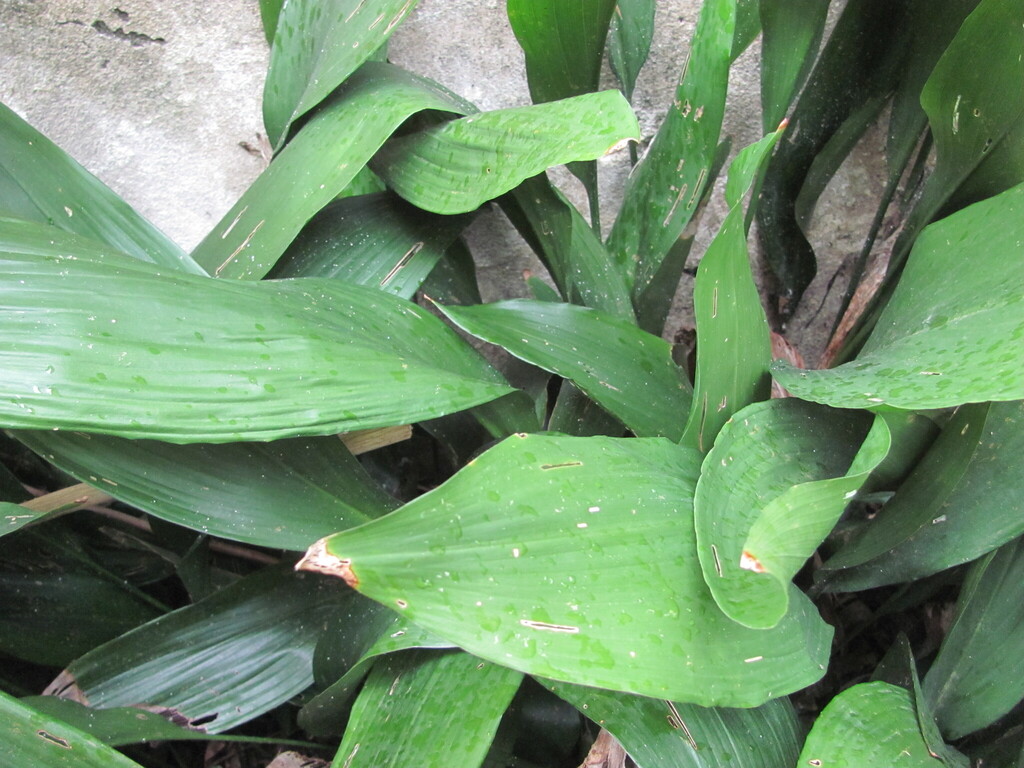
Ponytail palm
Beaucarnea recurvata is easily mistaken for a palm because of its silhouette, but it belongs to Asparagaceae and has an enlarged caudex that stores water. A tuft of narrow, arching leaves grows at the top.


Caudex and leaf rosette
The swelling at the base of the trunk is not merely decorative: it is a water-storage organ. In young plants, it looks almost spherical; with age, it lengthens and forms the characteristic silhouette with a narrow upper section.
- an enlarged caudex that stores moisture
- a sparsely branched, palm-like trunk
- tufts of narrow, arching leaves
Indoors, the stem can reach 150 cm, while the leaves can grow 100-200 cm long. They are narrow, pointed at the tips, and gathered in a tuft at the top, giving the plant a palm-like appearance even though it is not a palm.
The name "nolina" and the Ukrainian folk names meaning "elephant's foot" and "bottle tree" arose from everyday descriptions of its shape: the swollen base resembles the foot of a large animal or a bottle. These are trade and folk names, not separate botanical taxa.
Origin and natural conditions
The species is native to eastern Mexico. In the wild, it is associated with low-growing deciduous forests where the average temperature is around +20 °C and the dry season lasts 7-8 months.
The plant grows in rocky, nutrient-poor soils, on cliffs and steep slopes. These conditions explain its slow growth, need for drainage, and ability to withstand a lack of water for long periods.
| In the wild | Indoors |
|---|---|
| poor, rocky soils | a very free-draining potting mix |
| full sun or partial shade | the brightest spot, with no standing moisture |
| a dry season lasting 7-8 months | water after the potting mix dries out |
Light and placement
This species naturally grows in full sun or partial shade, so it needs a very bright spot indoors. In deep shade, the trunk and leaf rosette become less compact, and new growth is weaker.
- bright indirect light
- direct sun after acclimation
- light partial shade without constant darkness
Avoid placing the pot where people constantly brush against the plant: its long leaves are easily creased in a walkway. If the crown leans to one side, light coming from only one direction is often the cause.
Watering and potting mix
The caudex stores water, so constantly wet potting mix is more dangerous for this plant than a short dry spell. Water after the mix dries out, and do not allow excess water to remain around the roots.
The potting mix must let water and air pass through quickly. In the wild, the roots grow in a rocky, nutrient-poor environment, so a heavy, wet mix is at odds with the species' natural structure.
- a well-drained mineral potting mix
- drainage holes
- moderate feeding without excess organic matter
Leaves and crown shape
The leaves are narrow, leathery, and arching. Their tips may curl, forming a loose tuft above the trunk.
To preserve the natural shape, do not trim healthy leaf tips. Trimming changes the outline of the crown and leaves a visible cut that never regains its original appearance.
- do not trim healthy tips
- do not crease the long leaves
- do not crowd the crown into a tight corner
Repotting and roots
Keep all roots intact when repotting. For a slow-growing species, damage to the root system noticeably delays recovery.
- move the plant without disturbing the root ball
- use a well-drained potting mix
- carefully position the caudex above the surface
After repotting, do not try to compensate for stress by overwatering. The caudex already holds a reserve of moisture, and the roots are especially sensitive to standing water after being moved.
Flowering and growth rate
Mature plants can produce panicles of small white flowers; sources mention an age of around 10 years for this. Indoors, flowering should not be treated as a regular sign of good care.
Growth is slow, which is why the trunk changes shape gradually. Excess feeding or frequent watering will not enlarge the caudex quickly, but will increase the risk of root problems.
In the wild, the species is threatened by habitat destruction and the removal of plants and seeds for commercial use. For indoor growing, it is important to choose a plant from cultivated stock rather than wild populations.
Care
This species is adapted to a dry season and poor, rocky soils. Indoors, the essentials are plenty of light, careful watering, and a potting mix that does not hold water.
- Light
- Provide sun or partial shade. This plant needs a very bright spot. In the wild, it grows in full sun or partial shade, so deep shade weakens growth.
- Temperature
- Keep warm and frost-free. Aim for warm conditions; descriptions of its natural habitat mention tolerance down to +10 °C. Avoid chilling an indoor plant.
- Watering
- Water after the potting mix dries out. The caudex stores water, so a short dry spell is better than constantly wet roots. Do not leave excess water standing after watering.
- Soil
- Use a very free-draining mix. In the wild, it grows in poor, rocky soils. The potting mix must drain quickly and allow air through.
- Feeding
- Feed moderately or minimally. Excess feeding does not reflect its naturally poor soils and does not safely speed up caudex growth.
- Support
- No support needed. The trunk supports the leaf rosette on its own. Support is usually unnecessary if the plant stands upright and gets enough light.
- Leaves
- Do not trim leaf tips. To preserve the natural shape, do not trim healthy leaf tips: the cuts remain visible.
- Repotting
- Keep all roots intact. Keep all roots intact when repotting. Carefully moving the intact root ball into a well-drained mix is the best approach.
Botany
- Family
- Asparagaceae
- Genus
- Beaucarnea
- Species
- Beaucarnea recurvata
- Author and year
- (K.Koch & Fintelm.) Lem.
Beaucarnea recurvata belongs to the family Asparagaceae and the genus Beaucarnea. The species is recognizable by its swollen caudex, sparsely branched trunk, and tufts of narrow, arching leaves at the top.
The species is native to eastern Mexico. In its natural habitat, it grows in poor, rocky soils in forests with a pronounced dry season, making it well adapted to a lack of water.
Small white flowers are borne in panicles on mature plants. Indoors, the species is grown mainly for the shape of its trunk and leaf rosette rather than its flowers.
How it differs from similar plants
Snake plant Dracaena trifasciata
- Ponytail palm is recognizable by its enlarged caudex and a tuft of narrow, arching leaves at the top, while sansevieria has long, stiff leaves.
Spineless yucca Yucca gigantea
- Yucca has stiff, sword-shaped leaves on a shrub or small tree up to 4 m tall, while ponytail palm is shorter and carries a tuft of narrow, arching leaves above an enlarged caudex.
Corn plant Dracaena fragrans
- Dracaena is recognizable by its woody stem topped with rosettes of elongated leaves; ponytail palm has an enlarged caudex and a tuft of narrow, arching leaves at the top.
Frequently asked questions
- Is the plant safe for cats and dogs?
- Yes, the plant is safe for cats and dogs. Still, it is best to protect the long leaves from chewing to keep the crown intact.
- Why are the leaves turning yellow?
- The most common causes are overwatering or insufficient light. The potting mix needs to dry out, and the plant needs a very bright spot.
- How often should I water?
- Water after the potting mix dries out. The caudex stores water, so constant moisture around the roots is dangerous.
- Can I trim the leaf tips?
- Do not trim healthy tips, as this changes the crown's natural shape and leaves a visible cut. Remove only completely dry parts.
- Why has the trunk become soft?
- A soft trunk is often linked to excess water and root problems. Reduce watering and check the potting mix for standing moisture.