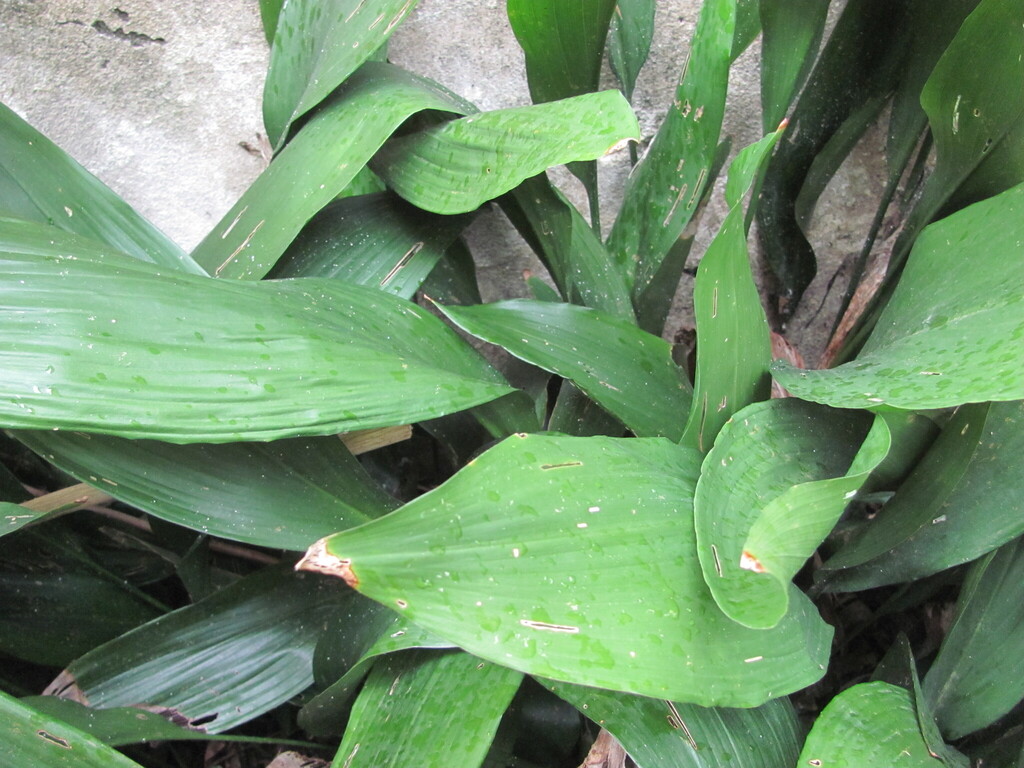
Asparagus fern
Despite its fernlike foliage, asparagus fern (Asparagus setaceus) is not a fern: its “needles” are cladodes, modified shoots that do the work of leaves. They give the plant its lacy green appearance.


Not a fern, but a relative of asparagus
Its fernlike appearance is misleading: the plant does not produce fronds or reproduce by spores. Its lacy foliage consists of fine shoots that take on the role of leaves.
It belongs to the family Asparagaceae, not to the ferns. Care therefore depends not on rules for ferns, but on consistent moisture without waterlogging, indirect light, and room for the rhizome.
- has no fronds like those of true ferns
- photosynthesizes mainly through modified shoots
- produces flowers and berries, unlike ferns
This structure explains why the plant can look fragile yet grow as a climbing perennial with tough stems.
Shoot structure and cladodes
The fine greenery that resembles soft needles consists of cladodes: leaflike shoots. Sources describe this species as having cladodes up to 7 mm long and about 0.1 mm in diameter.
They grow in clusters on thin, flexible, mostly twining stems. The stems can reach 1.5 m and develop sharp, prickly thorns.
- fine, needlelike cladodes
- flexible climbing stems
- sharp, prickly thorns
- shoots arranged in clusters
- a rhizome beneath the surface of the potting mix
After pruning, an old shoot will not resume growth from the cut. New shoots emerge from the rhizome, so shaping is best limited to removing dry or unwanted stems.
Light and placement
Indoors, the plant is usually kept in bright indirect light. Sources also describe its ability to grow in dimly lit rooms, though growth may be slower in these conditions.
Direct afternoon sun is unsuitable for the fine cladodes. The best spot provides enough light without scorching the foliage during the brightest hours of the day.
| Condition | Effect |
|---|---|
| Bright indirect light | Supports denser foliage |
| Low light | The plant survives but grows more slowly |
| Direct afternoon sun | The fine greenery may dry out |
Its flexible stems allow the plant to grow beside a support or with its shoots trailing freely. Give it room: climbing stems quickly spread over nearby surfaces.
Watering, temperature, and potting mix
During active growth, use the top layer of the potting mix as a guide: once it has dried out, the plant needs water again. Avoid letting the root ball dry out completely, as the fine cladodes quickly respond by drying out.
The potting mix should be loose, nutrient-rich, and well-draining. In an overly dense mix, the rhizome gets less air and excess moisture lingers around the roots.
| Period | Watering | Temperature |
|---|---|---|
| Active growth | When the top layer dries out | No higher than +25 °C |
| Fall and winter | Less often and in smaller amounts | No higher than +15 °C |
| Cool conditions | Do not let the mix dry out completely | Minimum +1 °C |
The plant cannot tolerate frost. If the pot is moved into the garden or onto a balcony in summer, bring it indoors before temperatures drop dangerously low.
Pruning and repotting
Pruning does not work as it does with many bushy plants: a shortened shoot will not continue growing. If a stem no longer looks good, remove it completely; the rhizome will produce its replacement.
Repot when the roots have filled the pot and begin emerging through the drainage holes. Choose a deeper container, as the roots and rhizome vigorously fill the space inside.
- remove dry shoots at the base
- repot once the roots fill the pot
- use a loose, well-draining potting mix
Do not drench the plant immediately after repotting. The roots need to resume functioning in the new mix, so keep watering moderate and wait for the top layer to dry out.
Flowers, berries, and toxicity
Flowering is uncommon indoors. The flowers are described as small, greenish-white, and bell-shaped, about 0.4 cm long, and may appear from spring through fall.
Flowers are followed by berries that darken as they ripen; a Ukrainian source notes that flowers and blue-black berries appear only on old shoots at least 10 years old and soon fall off. The plant is toxic to cats and dogs.
- do not let pets chew the shoots
- keep berries out of reach of children and pets
- remove fallen fruit from the surface of the potting mix
Toxicity does not mean the plant is dangerous simply to be near. The risk comes from eating parts of the plant, especially the berries, which sources report can cause abdominal pain and diarrhea.
Propagation
For indoor growers, the most straightforward method is to divide the rhizome during repotting. This gives each plant its own underground portion from which new shoots can emerge.
Propagation from seeds and cuttings is also mentioned. The seeds are inside the berries, but because the fruit is toxic, handle it carefully and keep it out of reach of pets.
- dividing the rhizome
- growing from seed
- rooting cuttings
After division or any other propagation method, the same conditions matter as for a mature plant: indirect light, moderate moisture, and a loose potting mix. Avoid an overly wet mix during this period.
- Light
- bright indirect light
- Temperature
- up to +25 °C
- Watering
- when the top layer dries out
- Soil
- loose, well-draining potting mix
- Difficulty
- moderate
- Cats and dogs
- toxic
- Size indoors
- stems up to 1.5 m
- Leaves indoors
- cladodes up to 7 mm
- Native range
- southern Africa
Care
The plant looks delicate, but it has a vigorous rhizome and climbing stems. Care comes down to three things: indirect light, even moisture, and a loose potting mix.
- Light
- Provide bright indirect light. It can also grow in lower light, but direct afternoon sun is unsuitable for its fine cladodes.
- Temperature
- Keep at or below +25 °C. Keep it cooler in winter, no higher than +15 °C. It cannot tolerate frost; the stated minimum is +1 °C.
- Watering
- Water when the top layer dries out. During the growing season, water when the top layer dries out. Water less often in fall and winter, but do not let the potting mix dry out completely.
- Soil
- Use a loose, well-draining mix. A nutrient-rich potting mix that lets water and air pass through freely is suitable. A dense mix increases the risk of water collecting around the roots.
- Feeding
- The sources provided give no exact feeding schedule. Feed only during active growth, without overfertilizing.
- Support
- Provide support as needed. The stems are flexible and climb, so they can be trained onto a support or left to trail if there is enough space.
- Leaves
- Do not shorten the shoots. A cut shoot will not continue growing. Remove dry or unwanted stems completely; new ones will emerge from the rhizome.
- Repotting
- Repot when the roots are crowded. Repot when the roots fill the pot or emerge from the drainage holes. Choose a deeper pot.
Botany
4 ill.- Family
- Asparagaceae
- Genus
- Asparagus
- Species
- Asparagus setaceus
- Author and year
- (Kunth) Jessop


Asparagus fern (Asparagus setaceus) belongs to the family Asparagaceae. Despite Ukrainian common names such as “asparagus fern,” it is not a fern: its ornamental greenery consists of cladodes, modified shoots that perform the function of leaves.
The species is native to southern Africa. Both in the wild and indoors, the plant has thin, flexible stems that can climb, along with a rhizome from which new shoots emerge.
Older shoots may produce small flowers and berries as they age. The plant is toxic to cats and dogs, so keep its foliage and fruit out of reach to prevent them from being eaten.
How it differs from similar plants
Snake plant Dracaena trifasciata
- Asparagus fern has lacy foliage made up of small, needlelike cladodes up to 7 mm, while sansevieria is recognizable by its long, stiff leaf blades.
Spineless yucca Yucca gigantea
- Yucca has large, stiff, sword-shaped leaves and a shrub or small-tree growth habit, while asparagus fern has thin stems with small cladodes that create fernlike foliage.
Corn plant Dracaena fragrans
- Dracaena resembles a small tree with a woody stem and rosettes of elongated leaves at the tips, while asparagus fern produces lacy greenery made up of short cladodes.
Frequently asked questions
- Is asparagus fern a true fern?
- No. Its fernlike appearance comes from cladodes—modified shoots—not the fronds of true ferns.
- Why is the foliage turning yellow and falling off?
- This is most often a response to drying out, overly bright sun, or aging shoots. Remove dry stems completely, as they do not regrow after cutting.
- Does asparagus fern flower indoors?
- Yes, but it is uncommon indoors. Flowers and berries are described mainly on old shoots at least 10 years old.
- Can I keep it at home if I have a cat?
- The plant is toxic to cats and dogs. Eating the berries and shoots is especially undesirable.
- How do I propagate asparagus fern?
- The easiest method is to divide the rhizome during repotting. Seeds and cuttings are also possible, but handle berries carefully because they are toxic.