Cast iron plant
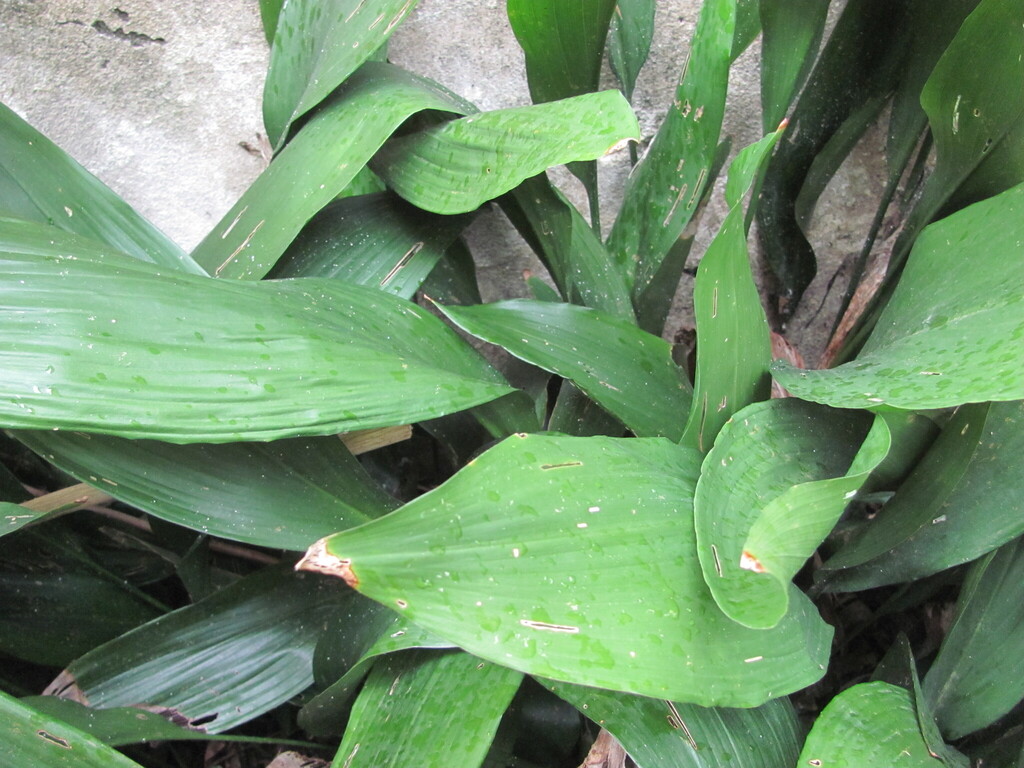
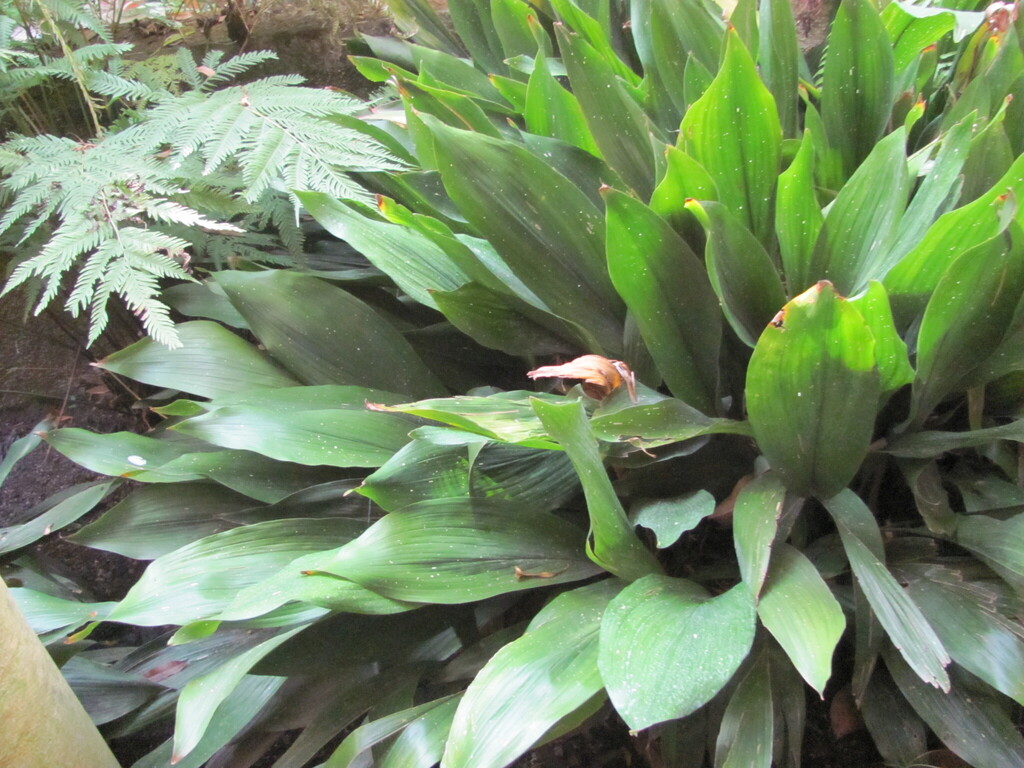
Broad, lance-shaped leaves on long stalks emerge directly from the rhizome: the cast iron plant (Aspidistra elatior) has almost no visible aboveground stem, so it looks like a dense clump of dark green leaves.

Leaf and rhizome structure
There is almost no visible aboveground stem: the leaves rise on long stalks from a creeping underground rhizome. This gives the plant the appearance of a clump of leaves rather than a bush with branching shoots.
The leaves are dark green, glossy, and broadly oval or lance-shaped. Reference descriptions give leaf dimensions for the cast iron plant of about 50-60 cm long and about 15 cm wide.
- Creeping underground rhizome
- Long leaf stalks
- Glossy, dark green leaves
- Stemless clump
- Broadly oval or lance-shaped leaves
Origin and natural conditions
The species is native to Japan. This helps explain how it behaves indoors: the cast iron plant is not a desert succulent, but its rhizome allows it to tolerate substantial gaps between waterings.
The genus Aspidistra belongs to the family Asparagaceae and comprises small rhizomatous herbaceous plants. The species grown indoors is Aspidistra elatior, which grows well in a pot without complicated pruning to shape it.
| Feature | Indoors |
|---|---|
| Light | Prefers indirect light, without direct sun |
| Rhizome | Lies below the surface of the potting mix |
| Leaves | Held on long stalks |
| Watering | Tolerates long gaps between waterings |
Light and placement indoors
The cast iron plant tolerates shade but grows better in a well-lit spot out of direct sunlight. In deep shade, it may retain its leaves, but growth usually slows.
The best spot gives the leaves gentle light rather than midday sun through glass. Direct sun is particularly undesirable for the glossy leaf surfaces: they lose their even, dark green appearance more quickly.
There is no need to turn the pot often: the plant has no climbing shoot searching for support. If the leaves lean to one side, you can reposition the pot occasionally to give it more even light.
Watering and potting mix
The rhizome explains why the plant can go a long time without watering. This does not mean the potting mix should always dry out to dust, but a short drought is less risky than a wet pot with no air around the roots.
Use a soil-based potting mix, not bark or an inert mix for epiphytes. The main aim is to hold the rhizome securely while preventing water from stagnating after watering.
- Constantly wet potting mix
- Direct sun after wetting the leaves
- Heavy, compacted soil
- A pot with no drainage for excess water
- Frequent watering without letting the top layer dry
Flowers at soil level
Cast iron plant flowers are stalkless and sit low at the base of the plant, so they are easy to miss between the leaf stalks and the potting mix. The perianth is described as brownish purple, without a bright ornamental display.
Flower structure is especially varied in the genus Aspidistra: the number of perianth segments can range from two to twelve. These details are important in the classification of the genus, though indoor growers tend to focus on the leaves.
Pollination is associated mainly with flies, including fungus gnats. Artificial pollination can produce large, pear-shaped berries, but indoors this is more a botanical feature than a regular occurrence.
Pet safety and routine care
The plant is safe for cats and dogs. That does not make its leaves pet food: physical damage spoils their appearance, and pets generally do not need access to the pot.
Dust shows clearly on the glossy leaves, so wipe them periodically with a soft, damp cloth. Misting does not replace watering or solve rhizome problems if the potting mix is waterlogged.
No support is needed: the leaves are held on their own stalks. If older leaves become unsightly, remove them at the base without damaging the rhizome below the surface of the potting mix.
Care
The cast iron plant tolerates shade and gaps between waterings, but looks better with consistent indirect light. The main risk in its care is not drought but a potting mix that stays wet around the rhizome.
- Light
- Provide partial shade or indirect light. Tolerates shade but grows better in a well-lit spot out of direct sunlight.
- Temperature
- Keep at +13…+15 °C. The temperature range for growth indoors. Avoid overheating in direct sunlight.
- Watering
- Water infrequently. The rhizome tolerates long periods without water; water again after the potting mix has dried somewhat, rather than keeping it constantly damp.
- Soil
- Use a soil-based potting mix. Use a mix suited to a rhizomatous herbaceous plant: it should hold the plant securely without becoming a wet, compacted mass.
- Support
- No support needed. The plant is stemless: its leaves are held on long stalks, not on climbing shoots.
- Leaves
- Wipe off dust. The glossy, dark green leaves collect noticeable dust; clean them with a soft, damp cloth.
Botany
2 ill.- Family
- Asparagaceae
- Genus
- Aspidistra
- Species
- Aspidistra elatior
- Author and year
- Blume


The cast iron plant (Aspidistra elatior) belongs to the family Asparagaceae. It is a stemless, rhizomatous plant with glossy, dark green leaves on long stalks.
The species has broad, lance-shaped or broadly oval leaves. Indoors, the foliage is its main ornamental feature, while the flowers sit low at the surface of the potting mix.
In the genus Aspidistra, flowers vary in their perianth structure, and these features are used in classification. Pollination is associated with flies, including fungus gnats.
How it differs from similar plants
Snake plant Dracaena trifasciata
- The cast iron plant has broad, lance-shaped leaves on long stalks, while sansevieria stands out for its long, stiff leaves.
Spineless yucca Yucca gigantea
- The cast iron plant has a dense clump of leaves with almost no visible stem, while yucca forms a shrub or small tree with stiff, sword-shaped leaves and needs bright sunlight.
Corn plant Dracaena fragrans
- The cast iron plant looks like a stemless clump of leaves emerging from a rhizome, while dracaena has a woody stem topped with rosettes of elongated leaves.
Frequently asked questions
- Can I keep it at home if I have a cat?
- Yes, the plant is safe for cats and dogs.
- Why are the leaves turning yellow?
- First check for direct sun and constantly damp conditions in the pot: this species grows better out of direct sunlight and does not need frequent watering.
- Does it grow in shade?
- Yes, it tolerates shade, but grows better in a well-lit spot out of direct sunlight.
- Does it need support?
- No support is needed: the leaves emerge from the rhizome on their own stalks.
- Why can't I see the flowers?
- The flowers are stalkless, brownish purple, and sit low near the potting mix, so they often go unnoticed.


