Myrtle
Glossy, leathery leaves scented with essential oil are a hallmark of myrtle (Myrtus communis). This Mediterranean woody plant has fluffy white flowers and dark blue berries.
Leaves, shoots, and bark
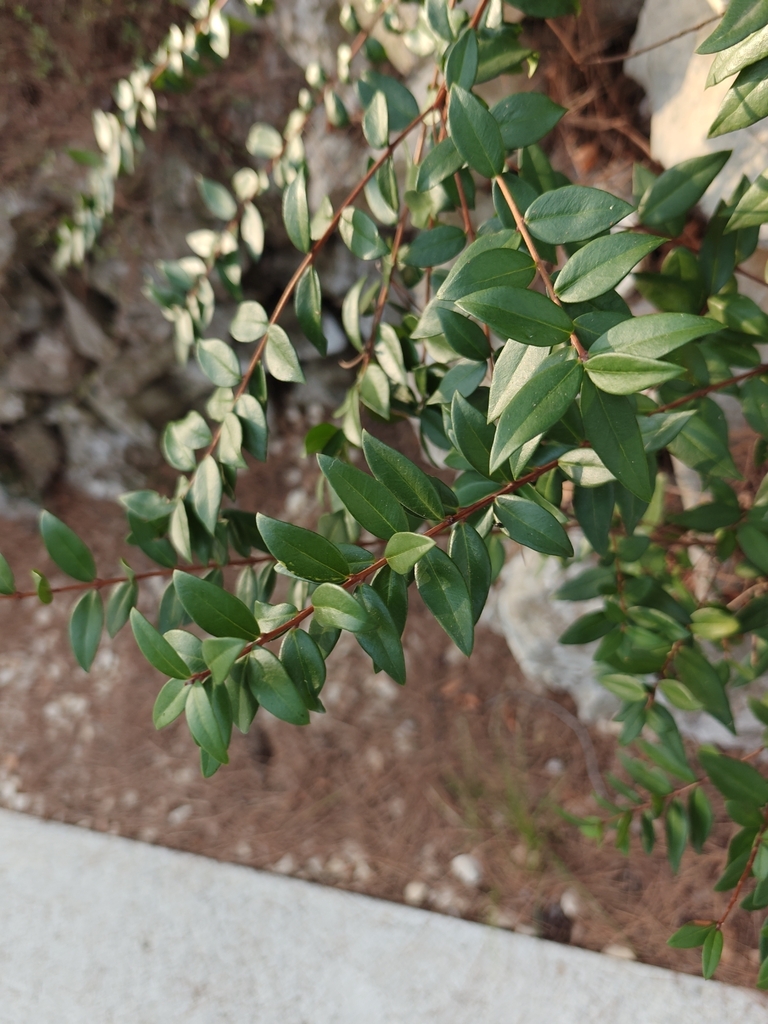
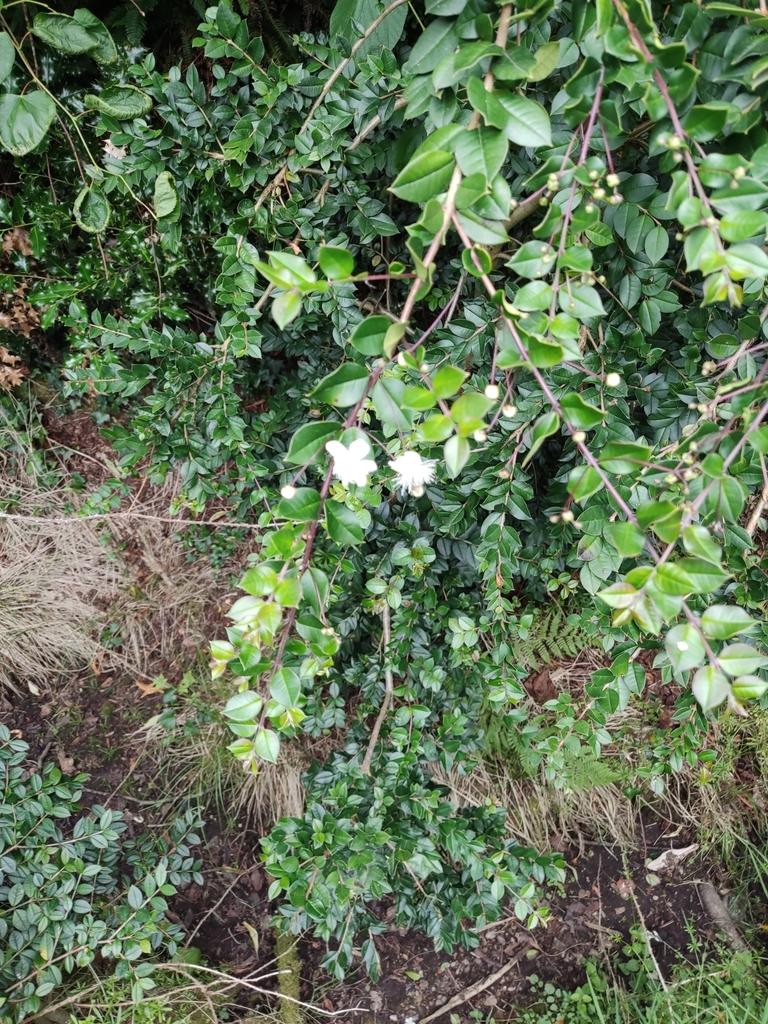
The leaves are opposite, leathery, and glossy, with an ovate or lanceolate shape. They are 2-5 cm long and 1-2 cm wide; the dark green surface contains essential oil, making the foliage aromatic.
Young shoots are four-sided and slightly hairy, becoming almost round in cross section as they age. Older parts are gray or gray-brown and hairless, with brown bark; this explains why the plant looks good both as a shrub and as a small tree.
- opposite leaf arrangement
- leathery leaves with smooth margins
- scent from essential oil
- four-sided young shoots
- gray or gray-brown older bark
Flowers and fruit
The flowers are white, solitary, and borne in the leaf axils, up to 2 cm in diameter. Their many threadlike stamens make them look fluffy, although botanically this is not a distinct “fluffy flower” type but a result of the structure of the perianth and stamens.
The fruit is a dark blue berry about 1 cm long. Botanical descriptions list it as edible but unpalatable; when grown indoors, the fruit is usually more useful for identification than for any practical purpose.
| Plant part | Feature |
|---|---|
| Flower | in the leaf axils, solitary, white, up to 2 cm |
| Fruit | dark blue berry about 1 cm |
| Leaf | 2-5 cm long, 1-2 cm wide |
Origin and natural conditions
The species is native to the Mediterranean. In natural plant communities, it is associated with a warm climate and is a characteristic plant of Mediterranean maquis.
This origin explains its need for light and the need to avoid constantly wet roots. The plant prefers light and warmth and is relatively drought-tolerant, but growing it in a pot differs from growing it in the ground: there is less potting mix, so the effects of drying out and standing water become apparent sooner.
| In nature | Indoors |
|---|---|
| light-loving maquis plant | needs a very bright spot |
| warmth-loving species | avoid sudden drops in temperature |
| relatively drought-tolerant | water after the potting mix starts to dry |
Light, watering, and placement
Bright light is needed for a dense canopy. In a shaded spot, the plant may retain its leaves, but branching and growth usually weaken, and the internodes lengthen.
Watering should take its woody structure and Mediterranean origin into account. The roots must not sit constantly in wet potting mix, but prolonged drying in a pot also depletes the plant, especially in a bright, warm spot.
- the brightest spot in the room
- allowing the top layer to dry before watering
- drainage of excess water from the pot
- gradual acclimation to direct sun
- regular inspection of leaf undersides
Shaping the canopy
In warm regions, the plant is used for hedges, specimen planting, and topiary. Indoors, its suitability for shaping is useful for maintaining a compact canopy, especially when it is grown as a small tree.
Think of pruning as a way to shape the plant, not to “save” a weakened one. Adequate light and proper watering must come first; only then will shortening the shoots produce more even growth.
- removing weak shoots
- shortening overly long growth
- keeping the center of the canopy open to light
- preserving the woody base
- checking cuts after pruning
Pests and leaf spot
Typical pests include whiteflies, mealybugs, and scale insects. All can hide well on shoots, leaf stalks, and leaf undersides, so early inspection matters more than widespread treatment later.
Leaf spot is among the diseases reported for this species. In practice, any spots on the leaves should be assessed alongside growing conditions: standing moisture, poor airflow through the canopy, and weakness caused by insufficient light make the problem more apparent.
- whiteflies on leaf undersides
- mealybugs at shoot nodes
- scale insects on bark and leaf stalks
- leaf spot
- weakness following watering mistakes
Name and cultural associations
The word “myrtle” once referred not only to the plant itself but also to a wreath or branch of its leaves and flowers. This gave rise to the cultural image of the branch as a symbol of quiet, peace, and pleasure; it is a historical meaning of the name, not advice on where to place the plant at home.
In classical tradition, the plant was associated with Venus, and during the Renaissance with eternal love and marital fidelity. These beliefs belong to culture and mythology; the plant's biological care needs are determined by light, warmth, watering, and root health.
- Light
- bright light
- Watering
- after the potting mix starts to dry
- Difficulty
- moderate
- Cats and dogs
- safe
- Leaves indoors
- 2-5 × 1-2 cm
- Native range
- Mediterranean
Care
Myrtle comes from Mediterranean conditions, so it grows best in bright light and dislikes constantly wet roots. Indoors, the main mistakes involve too little light, exposure to cold, and uneven watering.
- Light
- Give it bright light. A light-loving Mediterranean species; it needs the brightest available spot to develop a dense canopy.
- Temperature
- Keep it warm. This plant prefers warmth. Sudden drops in temperature and cold drafts are undesirable for an indoor specimen.
- Watering
- Water after the mix starts to dry. The species is relatively drought-tolerant, but in a pot it should neither stay dry for long periods nor sit in standing water.
- Soil
- Use an airy potting mix. It needs a potting mix that drains excess water well so the roots do not stay constantly wet.
- Feeding
- Feed moderately. Feed during active growth; avoid excess feeding, which can encourage weak growth.
- Support
- No support needed. This is a woody plant with its own branches and bark; support is needed only temporarily to straighten a young trunk.
- Leaves
- Inspect and keep it clean. Whiteflies, mealybugs, and scale insects may appear on leaves and shoots; check the undersides of leaves regularly.
- Repotting
- Repot when the pot is crowded. Repot once roots have filled the root ball, preserving the woody base and avoiding unnecessary damage to the canopy.
Botany
4 ill.- Family
- Myrtaceae
- Genus
- Myrtus
- Species
- Myrtus communis
- Author and year
- L.


Myrtle (Myrtus communis) belongs to the family Myrtaceae. It is an evergreen woody plant that can grow naturally as a tree or shrub up to 3-4 m tall; indoors, it is usually shaped by pruning.
The leaves are opposite, glossy, leathery, and dark green, 2-5 cm long and 1-2 cm wide. The leaf tissue contains essential oil, making the plant easy to recognize by its scent when a leaf is lightly damaged.
The flowers are white, solitary, and borne in the leaf axils, up to 2 cm in diameter, with numerous stamens. The fruit is a dark blue berry about 1 cm long; botanically, it is edible but has no notable food value.
How it differs from similar plants
Spineless yucca Yucca gigantea
- Yucca is easy to distinguish by its large, stiff, sword-shaped leaves, while myrtle has small, glossy, leathery leaves.
Corn plant Dracaena fragrans
- Dracaena has a woody stem topped with rosettes of long leaves, while myrtle looks like a woody plant with small, glossy leaves.
Avocado Persea americana
- Avocado leaves are much larger, up to 35 cm, while myrtle leaves are small—2–5 cm long.
Frequently asked questions
- Is myrtle safe for cats and dogs?
- Yes. The plant is safe for cats and dogs.
- Why are the leaves falling off?
- This is most often caused by the potting mix drying out too much, standing water, or insufficient light. Check the moisture in the potting mix and the plant's placement.
- Does it flower indoors?
- Yes, the species produces solitary white flowers up to 2 cm in diameter. Indoors, flowering depends on light and the plant's overall condition.
- How do I shape the canopy?
- The canopy can be shaped by pruning, but the plant first needs light and consistent watering. It is best to remove weak shoots gradually.
- Which pests appear most often?
- Typical pests are whiteflies, mealybugs, and scale insects. Leaf spot also occurs.