Weeping fig
Glossy oval leaves with pointed tips and drooping branches are the defining features of the weeping fig (Ficus benjamina). Indoors, this tree develops a dense crown and is sensitive to sudden changes in conditions.


Crown and leaf structure
The branches of this species often droop, giving the crown a soft outline even when the plant grows as a small indoor tree. In the wild, it is an evergreen tree or shrub; indoors, it usually stays much shorter but retains its woody growth habit.
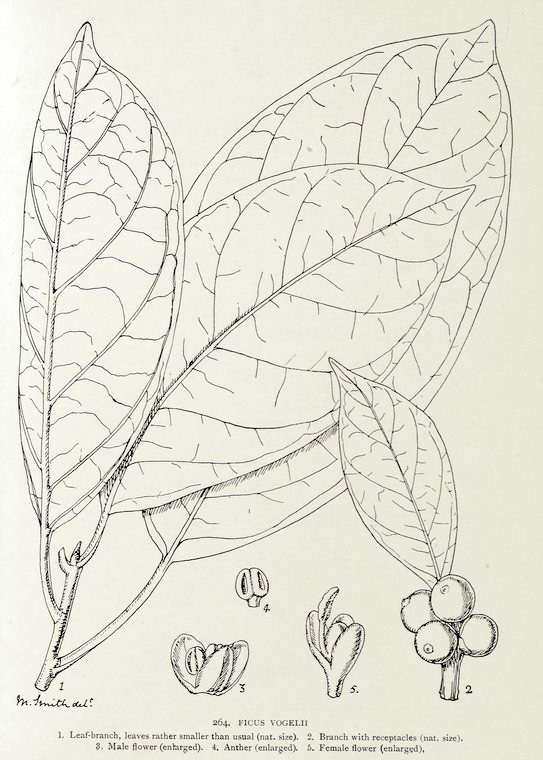
The leaf blades are smooth, glossy, oval to elongated oval, with pointed tips. They measure 6-13 cm long and 2-6 cm wide; the petiole is about 2 cm long. The leaf margins are entire, and the veins form a network with a prominent midrib and lateral veins.
- glossy leaf blades
- pointed leaf tips
- drooping branches
- gray bark with brown streaks
- broad crown
Origin and natural conditions
The species is native to tropical Asia and northern Australia. In the wild, weeping fig grows not as a compact potted plant but as a tree or shrub that can reach 20-30 m tall.
Its tropical origins explain its sensitivity to cold, drafts, and sudden temperature changes. Chilling of the root ball is especially dangerous: the roots react before the leaves show signs of a problem.
The species has cultural significance beyond indoor cultivation: it is the symbolic tree of Bangkok. Indoors, its potential size is evident in its tendency to develop a trunk, a crown, and long shoots rather than just a few ornamental leaves.
Light and placement
Indirect light and partial shade suit green-leaved cultivars. Variegated forms need more light; otherwise, their color contrast fades and new growth may be less distinct.
Avoid moving the plant frequently unless necessary. A change in light, a cold draft, or a sudden temperature shift can quickly affect the crown.
- bright indirect light for variegated cultivars
- indirect light or partial shade for green-leaved cultivars
- no cold drafts
- a stable position without sudden changes in conditions
- protection for the roots from chilling
Watering, temperature, and humidity
A rigid watering schedule does not work well for this species: its water needs change with light, temperature, and humidity. Base watering on the condition of the root ball, not on a fixed day of the week.
Overwatering is just as dangerous as letting the plant dry out. If the potting mix stays wet for a long time, the roots receive less air and the plant weakens even with adequate light.
| Condition | What to consider |
|---|---|
| Growing season | +25…+30 °C |
| Winter | +16…+20 °C |
| Minimum temperature | no lower than +14 °C |
| Misting | soft or demineralized water |
Leaves, water, and clean foliage
The glossy leaf surfaces readily show dust and water marks. Misting the foliage with hard water leaves whitish marks, so soft or demineralized water is preferable.
Misting does not replace watering the roots or correct problems with the potting mix. It is useful only as part of foliage care, especially during warm periods when the plant loses moisture more actively.
- whitish marks left by hard water
- dust on glossy surfaces
- drying leaf edges
- loss of gloss after stress
- uneven coloring in variegated cultivars
Common problems
Problems most often begin with a combination of cold, wet potting mix, and insufficient light rather than a single factor. For a tropical tree, this is especially dangerous in winter, when root activity slows and the root ball takes longer to dry out.
Abrupt changes in location, drafts, and temperature swings quickly affect the crown. If leaves turn yellow or drop, first check the moisture in the potting mix, the temperature near the pot, and whether there is a cold draft.
- overwatering
- cold drafts
- sudden temperature changes
- chilling of the root ball
- insufficient light for variegated cultivars
Shaping and cultivars
Many cultivars with different leaf sizes, shapes, and colors are grown indoors. Common ones include Naomi, Danielle, and Exotica; the small-leaved Natasja, Wiandi, and Too Little are used for bonsai.
To create a thicker trunk with more texture, 2-3 plants are sometimes planted together and their trunks braided. As they grow, the trunks may fuse, forming a sculptural base for the crown.
- Naomi
- Danielle
- Exotica
- Natasja
- Wiandi
Syconia and the origin of the name
Fig fruits are syconia, a specialized structure characteristic of the genus Ficus. In this species, they are round or elongated, up to 2 cm in diameter, red or orange, and inedible.
The specific epithet benjamina is most often linked to the word “benjamin,” a name for benzoin resin that Europeans mistakenly attributed to this fig. Another explanation links the name to words for the banyan, another member of the genus Ficus with a spreading crown.
- Light
- indirect light
- Temperature
- +25…+30 °C
- Watering
- according to root ball moisture
- Difficulty
- moderate
- Cats and dogs
- toxic
- Size indoors
- up to 2-3 m
- Leaves indoors
- 6-13 × 2-6 cm
- Native range
- tropical Asia and northern Australia
Care
Weeping fig maintains its shape well indoors but is sensitive to sudden changes in conditions. The key factors are consistent warmth, careful watering, and protection from drafts.
- Light
- Provide bright indirect light. Variegated cultivars need more light; green-leaved cultivars tolerate indirect light and partial shade.
- Temperature
- Keep at +25…+30 °C. This is the range for the growing season. In winter, +16…+20 °C is suitable; temperatures should not fall below +14 °C.
- Watering
- Water according to root ball moisture. Do not water on a fixed schedule: base watering on the moisture in the root ball and conditions in the room.
- Soil
- Avoid waterlogging. Overwatering damages the roots. The potting mix should not stay wet and cold for long.
- Leaves
- Use soft water. Use soft or demineralized water to mist the foliage to avoid whitish marks.
- Support
- Use support only for shaping. Support is not essential; several plants are sometimes planted together and their trunks braided for decorative effect.
Botany
4 ill.- Family
- Moraceae
- Genus
- Ficus
- Species
- Ficus benjamina
- Author and year
- L.



Weeping fig (Ficus benjamina) belongs to the family Moraceae and the genus Ficus. It is an evergreen tree or shrub with a broad crown, drooping branches, gray bark, and glossy oval leaf blades.
In the wild, the species occurs in tropical Asia and northern Australia and can grow to 20-30 m. Indoors, it usually forms a small tree up to 2-3 m tall if it receives enough light, warmth, and consistent care.
The syconia of this species are red or orange, round or elongated, and up to 2 cm in diameter. They have no food value for humans; the plant's ornamental appeal lies primarily in its crown and foliage.
How it differs from similar plants
Fiddle-leaf fig Ficus lyrata
- Ficus lyrata is recognizable by its lyre-shaped leaves, narrow in the middle and wider toward the tip, while weeping fig has much smaller, oval leaves with pointed tips.
Rubber plant Ficus elastica
- Ficus elastica has larger, leathery, glossy leaves up to 20–30 × 10–20 cm, while weeping fig has smaller oval leaf blades measuring 6–13 × 2–6 cm and drooping branches.
Indian laurel fig Ficus microcarpa
- Aerial roots and smooth elliptical leaves distinguish Ficus microcarpa, while the main identifying feature of weeping fig is its drooping branches with oval, pointed leaf blades.
Frequently asked questions
- Can I keep it near a window?
- Yes, but choose a spot with indirect light. Variegated cultivars need brighter light than green-leaved ones.
- Why are the leaves turning yellow or falling off?
- The most common causes are overwatering, cold drafts, sudden temperature changes, or chilling of the root ball.
- How often should I water it?
- Water according to the condition of the root ball, not a fixed schedule. The potting mix should not stay wet for long.
- Is it safe for cats and dogs?
- The plant is toxic to cats and dogs. Its sap can irritate mucous membranes when leaves or shoots are chewed.
- Is it suitable for bonsai?
- Yes, small-leaved cultivars, including Natasja, Wiandi, and Too Little, are used for bonsai.


