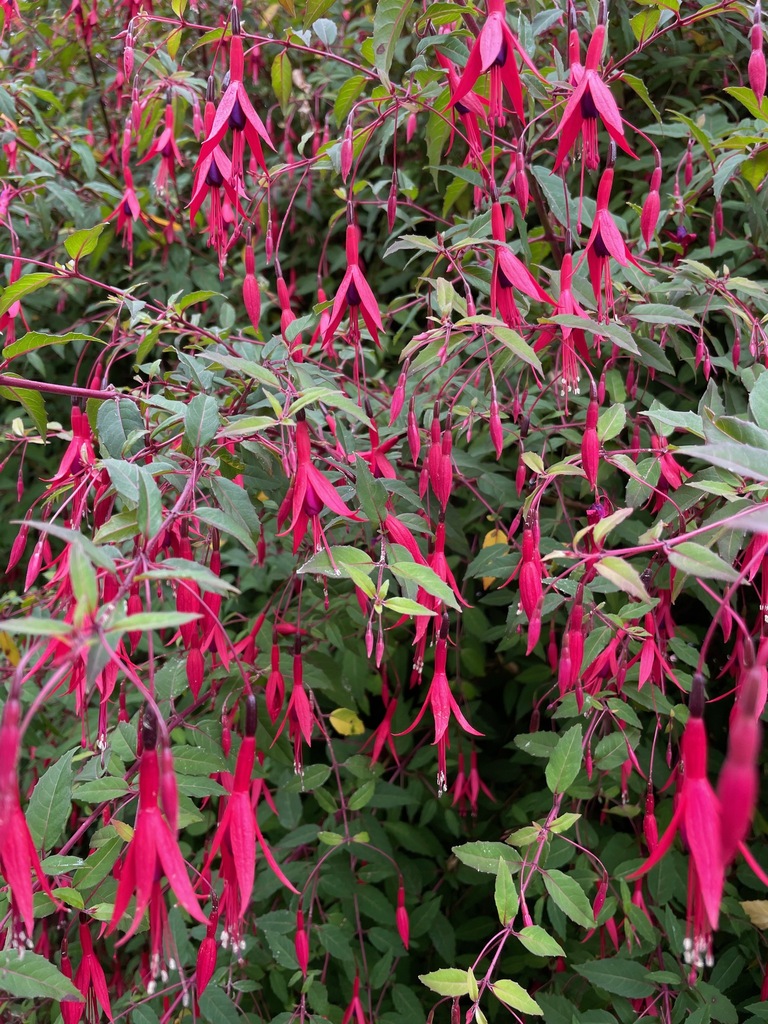
Horseshoe geranium
What often looks like one large flower on a windowsill is actually an umbrella-shaped flower cluster: in the horseshoe geranium (Pelargonium zonale), individual flowers are grouped above the leaves, while the shrub retains its green canopy.


Shrub and leaf structure
Indoors, this is an evergreen shrub with a woody stem and young succulent shoots. The young shoots are covered in hairs, so the plant does not look like a typical delicate herbaceous plant, although it belongs to the family Geraniaceae.
The leaves are simple, with a distinct zone of color on the leaf blade. The horseshoe-shaped bands can vary in shade from reddish to almost white; this feature gave the zonal group its name.
Origin and name
The plant is native to South Africa. In the wild, it grows on dry, rocky slopes, so it tolerates a short break from watering better than constantly wet potting mix.
The common name “geranium” became historically established for indoor pelargoniums, although Pelargonium and Geranium are different genera. This explains the confusion with outdoor plants that can overwinter outside.
The plant reached Europe through the Netherlands in the 16th century and later became widespread as an ornamental. The species is also known as one of the parents of the hybrid Pelargonium × hortorum.
Light and placement
Bright sunlight is needed for dense growth and flower cluster formation. In shade, shoots become leggy, internodes lengthen, and fewer flower stalks develop.
- a bright windowsill
- a balcony during the warm season
- a container with drainage holes
Outdoors, the plant is grown as a seasonal container plant. It does not overwinter in the ground because the genus needs warmth.
Watering and potting mix
Young succulent shoots help the plant withstand temporary moisture shortages but do not protect its roots from waterlogging. Water when the upper part of the potting mix starts to dry, without letting water collect in the outer pot.
- a light texture
- good drainage
- perlite or sand in the mix
- pH around 6.0-6.5
- drainage holes in the pot
An oversized pot with a small root system retains moisture for a long time. For this reason, repot according to how fully the roots have filled the pot rather than by the calendar.
Flowering and shaping
Flowers are gathered in umbrella-shaped clusters on flower stalks that rise above the leaves. With enough light, the plant can flower throughout the year, but the amount of flowering depends on conditions.
Remove spent flower clusters so the shrub does not spend resources maintaining them. Pruning helps keep the plant compact and renew its shoots, especially after periods of leggy growth.
Common problems
The most common mistake is persistent overwatering. The plant comes from dry, rocky places, so dense potting mix and water that drains away slowly put the roots at risk.
- leggy shoots from insufficient light
- few flower clusters in low light
- wet potting mix after watering
- smaller leaves on weakened shoots
- root rot in dense potting mix
Its toxicity to cats and dogs also needs to be considered. The plant should not be portrayed as deadly, but pets should not chew its leaves or shoots.
Propagation and repotting
Pelargoniums are propagated from seed and cuttings. Propagation from cuttings is useful when you want to preserve the traits of a particular plant, including its color and growth habit.
When repotting, do not bury the root crown, and firm the potting mix gently. Water lightly after planting: the mix should become moist, not turn into a soggy mass.
- Light
- bright sunlight
- Temperature
- +25…+30 °C
- Watering
- moderate
- Soil
- light and free-draining
- Difficulty
- easy
- Cats and dogs
- toxic
- Size indoors
- up to 90 cm
- Native range
- South Africa
Care
This plant needs plenty of light and responds better to moderate watering than to constant moisture. The main indoor risk is dense potting mix and water collecting around the roots.
- Light
- Provide bright sunlight. In low light, shoots become leggy, leaves grow smaller, and fewer flower stalks develop.
- Temperature
- Keep at +25…+30 °C. This is the range for spring and summer. In winter, keep the plant cooler, no higher than +14 °C.
- Watering
- Water when the potting mix starts to dry. It tolerates a short break from watering better than constantly wet roots. Do not leave water in the saucer.
- Soil
- Use a light, free-draining potting mix. A potting mix for pelargoniums or flowering houseplants with perlite or sand is suitable; pH around 6.0-6.5.
- Feeding
- Feed moderately. Excess nitrogen supports leaf and shoot growth but can reduce flowering.
- Leaves
- Remove spent flower clusters. This keeps the plant tidy and prevents it from spending resources on old flower stalks.
- Repotting
- Choose a pot to fit the roots. Increase the pot size gradually. An oversized pot takes a long time to dry out and raises the risk of waterlogging.
Botany
4 ill.- Family
- Geraniaceae
- Genus
- Pelargonium
- Species
- Pelargonium zonale
- Author and year
- (L.) L'Hér.
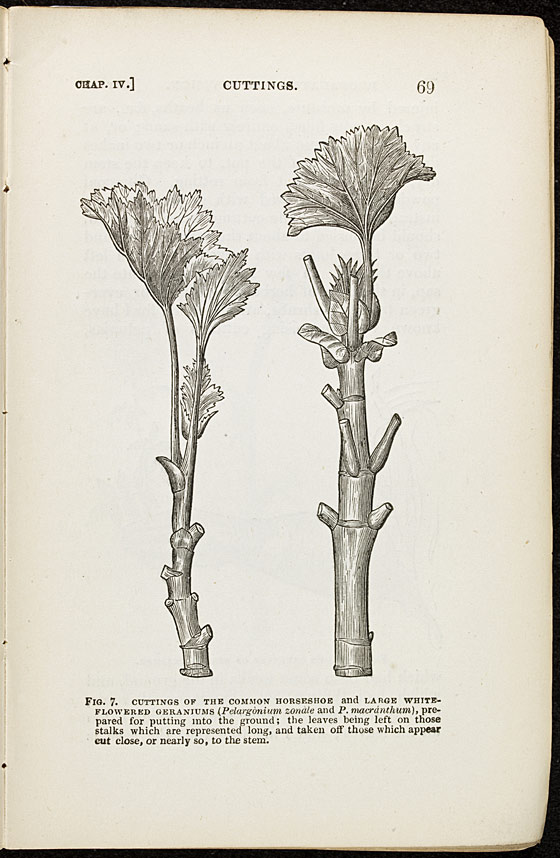


The horseshoe geranium (Pelargonium zonale) belongs to the family Geraniaceae. It is an evergreen shrub up to 90 cm tall, with a woody stem and young succulent shoots covered in hairs.
The leaf blade has characteristic horseshoe-shaped bands whose color varies from red to white. The flowers are not borne singly but gathered in umbrella-shaped clusters.
In the wild, the species is associated with dry, rocky slopes in South Africa. This ecology explains its sensitivity to standing water and its need for a free-draining potting mix.
How it differs from similar plants
Chinese hibiscus Hibiscus rosa-sinensis
- The horseshoe geranium remains a compact shrub up to 90 cm tall, while an indoor hibiscus can grow to 4.5 m.
African violet Streptocarpus ionanthus
- In Saintpaulia, flower stalks rise above a low, hairy rosette, while the horseshoe geranium forms a shrub with flower clusters above its green canopy.
Peace lily Spathiphyllum wallisii
- Spathiphyllum is recognizable by the white spathe beside its spadix and a clump of basal leaves without a visible stem, while the horseshoe geranium has individual flowers gathered in an umbrella-shaped cluster above its canopy.
Frequently asked questions
- Why isn't it flowering?
- Most often, it lacks bright light, or its shoots have been weakened by warm winter conditions. Excess nitrogen feeding also reduces flowering.
- How often should I water it?
- Water when the potting mix starts to dry. Constantly wet soil is more dangerous than a short break from watering.
- Can I keep it at home if I have a cat?
- Yes, but the plant is toxic to cats and dogs. Pets should not chew its leaves or shoots.
- Can I put it on a balcony?
- Yes, it can be grown in a container on a balcony during the warm season. Do not leave it outdoors for winter.
- How do I propagate it?
- Propagate it from seed or cuttings. Cuttings are used when you want to preserve the traits of a particular plant.
- Is it the same as a geranium?
- That is its common name, but botanically, geranium (Geranium, cranesbill) is a different genus that overwinters in the garden. The “zonal geranium” sold in stores is the hybrid Pelargonium × hortorum, not the pure species.