Hardy fuchsia
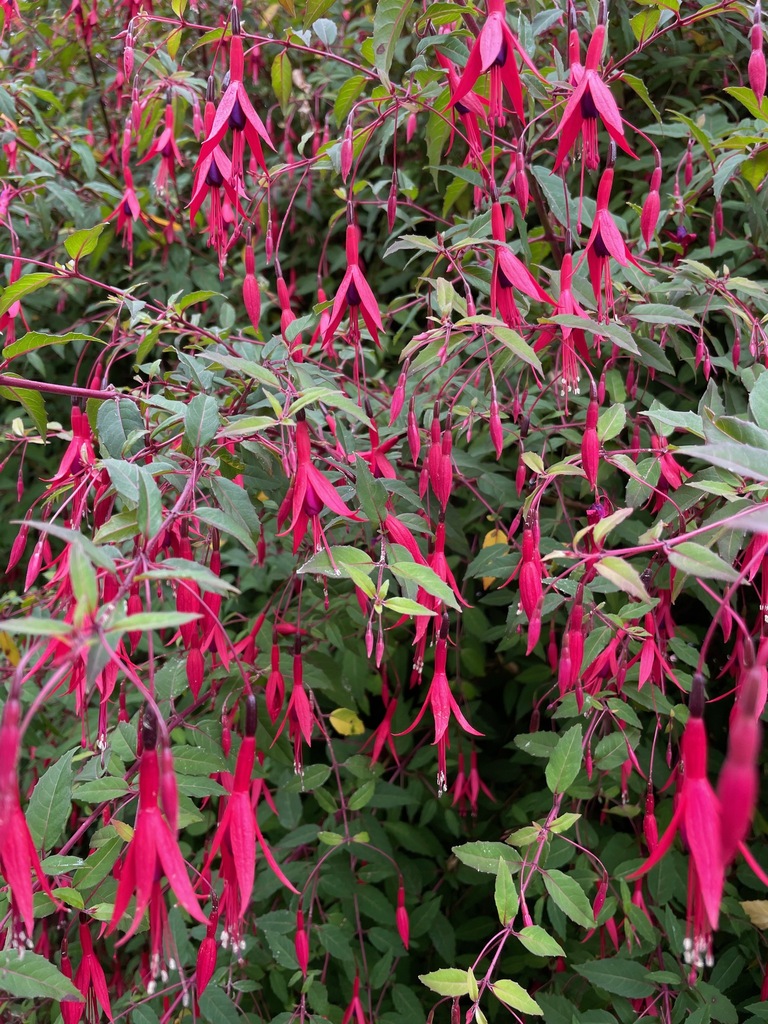
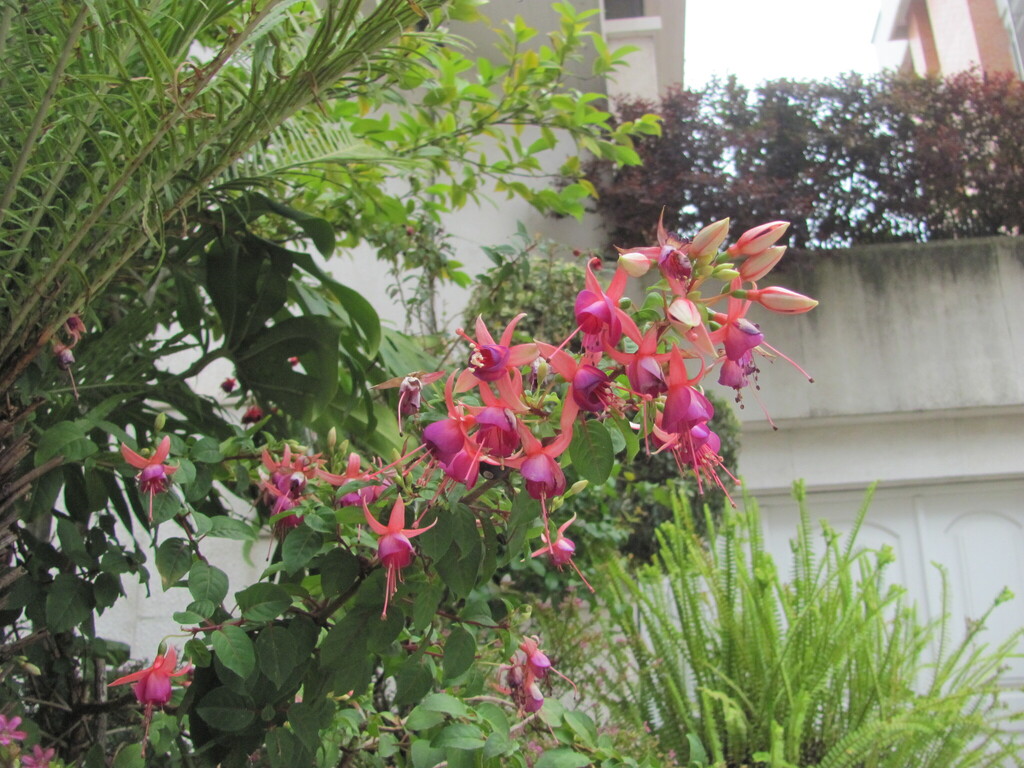
What looks like the main “petal” portion of a hardy fuchsia (Fuchsia magellanica) flower is mostly its brightly colored calyx: the petals are shorter than the sepals, and a fruit forms after flowering.

Shoot and flower structure
The plant produces flexible shoots with opposite leaves. The leaf blades are oval to lance-shaped, 4-5 cm long, with pointed tips and slightly toothed edges.
The flower consists of a brightly colored calyx and a tubular corolla with petals that curve back. The petals are shorter than the sepals, and the stamens extend beyond the calyx, giving the flower its distinctive elongated outline.
Origin and cool growing conditions
The species is native to southern Chile and Argentina. For indoor growing, this is more than a geographical detail: it offers a guide to the conditions the plant needs. It retains its leaves and buds better in moderate or cool temperatures.
| Conditions | What to consider |
|---|---|
| Growing season | Keep temperatures moderate, preferably avoiding heat above +18…+20 °C |
| Winter | Dormancy at +6…+10 °C |
| Hot weather | May cause flowers and leaves to drop |
If the plant suddenly wilts in moist potting mix, lack of water is not always the cause. Overheating of the roots or the entire canopy often produces this response.
Light and placement
Flowering requires a bright spot without prolonged direct sun during the hottest hours. Indoor growing guides most often recommend an east- or west-facing windowsill, where morning or evening light is gentler.
- bright indirect light in the morning
- shade in the afternoon
- a cool, well-ventilated spot without abrupt changes in placement
During flowering, avoid moving or turning the pot unnecessarily. The buds are sensitive, and changes in light or overheating can make them drop sooner.
Watering, potting mix, and repotting
In summer, keep the potting mix moist without leaving standing water in the saucer. Water thoroughly to soak the entire root ball, then drain off the excess so the roots do not remain constantly wet.
The traditional potting mix consists of 3 parts clay loam, 2 parts peat, and 1 part sand. This mix combines nutrients with better drainage of excess moisture.
- repot every spring
- use a pot with a drainage hole
- reduce watering in winter
Pruning and propagation
In spring, shorten the shoots by a third of their length. This pruning helps keep growth compact and provides material for vegetative propagation.
Use the pruned shoots as cuttings. Propagation from seed is also possible, but seedlings are not guaranteed to retain all the parent plant's traits, especially in cultivars.
Overwintering and dormancy
Growth slows in late fall and winter. During this period, keep the plant cooler, at +6…+10 °C, and water moderately rather than keeping the potting mix as moist as in summer.
Stop feeding during dormancy. Some leaf loss is possible in winter. In spring, the plant resumes growth after pruning and a return to brighter conditions.
Leaf and bud problems
Bud and leaf drop are often linked to overheating, an abrupt change in location, or a dried-out root ball. If the potting mix is wet but the shoots are limp, additional watering may make matters worse.
- aphids
- whiteflies
- spider mites
- gray mold
- rust
Pests are more likely to appear on weakened plants, especially in warm, dry air. Fungal diseases develop more readily where air circulation through the canopy is poor and the potting mix stays wet for a long time.
- Light
- bright indirect light
- Temperature
- cool, up to +20 °C
- Watering
- generous in summer
- Soil
- loam, peat, sand
- Difficulty
- moderate
- Cats and dogs
- safe
- Size indoors
- 30 cm-1 m
- Leaves indoors
- 4-5 cm
- Native range
- southern Chile and Argentina
Care
Hardy fuchsia grows best in cool, bright conditions and responds poorly to overheating. Its main care needs are consistent moisture in the potting mix, annual spring repotting, and winter dormancy.
- Light
- Provide bright indirect light. East- or west-facing windows are best; protect the plant from direct sun in the afternoon.
- Temperature
- Keep at +18…+20 °C. Cool conditions are preferable during the growing season. In winter, keep the plant at +6…+10 °C.
- Watering
- Water generously in summer. Keep the potting mix moist, but empty any water from the saucer. Water moderately in winter.
- Soil
- Mix loam, peat, and sand at 3:2:1. Use a mix of clay loam and peat with added sand.
- Feeding
- Feed every 10 days from March. During the growing season, use a fertilizer for flowering houseplants; stop feeding in winter.
- Support
- Train according to growth habit. Upright shoots can be shaped by pruning; trailing forms need room for their branches to hang freely.
- Leaves
- Mist in hot weather. In dry, hot weather, moisten the leaves periodically without directing the spray at the flowers.
- Repotting
- Repot every spring. When repotting, replace the potting mix and check the roots so the plant is not left in compacted mix.
Botany
4 ill.- Family
- Onagraceae
- Genus
- Fuchsia
- Species
- Fuchsia magellanica
- Author and year
- Lam.


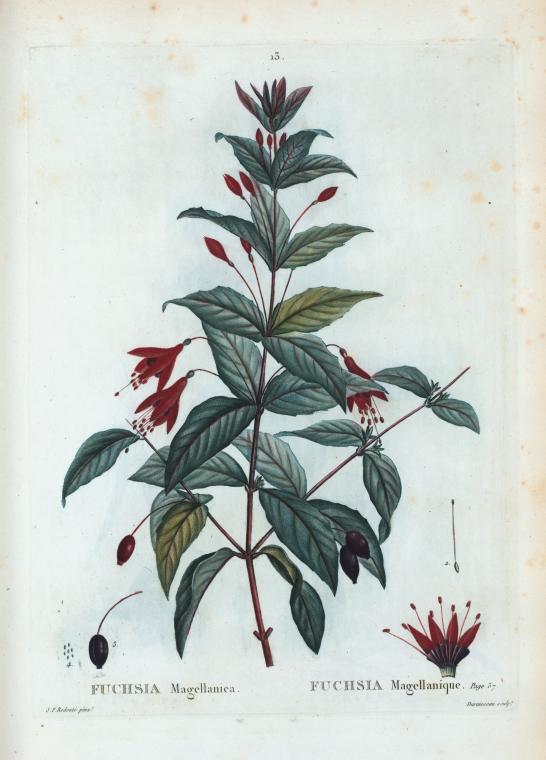

Hardy fuchsia belongs to the family Onagraceae and the genus Fuchsia. The genus includes more than a hundred species, many of which are grown as ornamental plants.
The species has opposite leaves with oval to lance-shaped blades and slightly toothed edges. The flower has a brightly colored calyx, a tubular corolla, and stamens that extend beyond the calyx.
A fruit forms after flowering. The plant is listed as safe for cats and dogs, so the main concern is not toxicity but physical damage to the shoots or pets eating the potting mix.
How it differs from similar plants
Chinese hibiscus Hibiscus rosa-sinensis
- Hardy fuchsia usually grows to 30 cm–1 m indoors, while hibiscus is described as a much taller shrub reaching 4.5 m.
Horseshoe geranium Pelargonium zonale
- The main brightly colored part of a hardy fuchsia flower is the calyx, with sepals longer than the petals. In pelargonium, the “large flower” is an umbrella-shaped cluster of individual flowers held above the leaves.
African violet Streptocarpus ionanthus
- Hardy fuchsia has a bushy growth habit, reaching 30 cm–1 m, while saintpaulia is recognizable by its rosette of fuzzy leaf blades with flower stalks rising above it.
Frequently asked questions
- Why are the buds dropping?
- The most common causes are overheating, allowing the potting mix to dry out, or moving the pot while buds are forming.
- Can I keep it at home if I have a cat?
- Yes, hardy fuchsia is listed as safe for cats and dogs. Just keep pets from tearing up the shoots and potting mix.
- How often should I repot it?
- Repot every spring as the plant comes out of dormancy.
- How should I overwinter it?
- In winter, it needs a cool spot at +6…+10 °C, moderate watering, and no fertilizer.
- How do I propagate it from cuttings?
- In spring, shorten the shoots by a third of their length and use the pruned sections as cuttings.


