Italian bellflower
The confusion starts with the genus name: Italian bellflower (Campanula isophylla) is often treated as a single plant grown both in gardens and indoors, though it is a distinct species from northern Italy within the large genus Campanula.

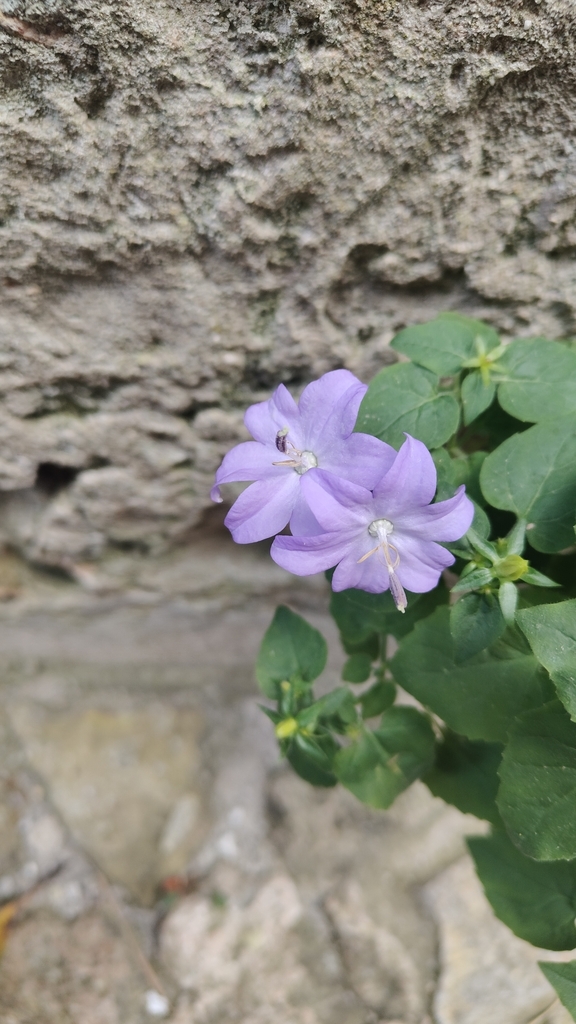
The name and the confusion
The genus name Campanula comes from the Latin campanula, meaning “little bell.” It is a descriptive name: it refers to the bell-shaped corolla, not to growing conditions or the difficulty of care.
The Ukrainian trade name meaning “bridegroom and bride” became established as an everyday name for paired ornamental forms of the plant. It is not a botanical term and does not help identify the species, family, or care requirements.
Plant structure
Italian bellflower belongs to a genus made up entirely of herbaceous plants in the family Campanulaceae. The genus is characterized by leaves without stipules, undivided leaf blades, and a mostly alternate arrangement along the stem.
Flowers in this genus are usually bell-shaped and actinomorphic, meaning they have radial symmetry. They may be solitary or borne in inflorescences of various forms.
- herbaceous growth
- leaves without stipules
- undivided leaf blade
- bell-shaped corolla
- capsule fruit
Origin and species boundaries
This species is native to northern Italy. That distinction matters: the genus as a whole has a much wider distribution, but that range cannot automatically be attributed to an individual species.
Campanula is the largest genus in the family and includes more than 200 species. There are 21 species of the genus known in Ukraine's wild flora, but this does not mean they all have the same requirements when grown indoors.
| Level | What is known |
|---|---|
| Species | native to northern Italy |
| Genus | more than 200 species |
| Flora of Ukraine | 21 species of the genus |
Flowers and inflorescences
Flowers in the genus may be solitary or grouped in branching, elongated, or head-like clusters. The calyx is divided into five parts, and the corolla usually has five lobes, five teeth, or notches.
The stamens have filaments that broaden at the base, and the anthers may be free or initially stuck together. These features are important in the botanical description of the genus, but when growing the plant indoors, the shape of the corolla and the condition of the leaves are usually more noticeable.
Fruit and seeds
The fruit in this genus is a capsule, either upright or nodding. It may have three or five chambers and opens through holes near the top or at the base.
The ovary also has three or five chambers, and the stigma is divided into three or five parts. These are botanical diagnostic features and explain why the genus is distinguished from other herbaceous plants with similar flowers.
Pet safety
Italian bellflower is safe for cats and dogs. No toxicity is listed for this species, so it is not classified among plants that irritate mucous membranes or poison pets.
Being safe does not mean the plant should be left to suffer damage. Chewed stems and leaf blades are slower to regain their appearance, and pieces of plant material can litter the potting mix.
- Difficulty
- moderate
- Cats and dogs
- safe
- Native range
- northern Italy
Care
Care guidelines for the whole genus should not be applied automatically to this species: Campanula includes many herbaceous plants. Watering, temperature, and repotting should depend on the plant's condition in its particular growing conditions.
- Leaves
- Leaves are undivided, without stipules. The genus is characterized by undivided leaves without stipules; depending on the species, they may be arranged alternately or clustered at the base of the stem.
Botany
4 ill.- Family
- Campanulaceae
- Genus
- Campanula
- Species
- Campanula isophylla
- Author and year
- Moretti




Italian bellflower belongs to the family Campanulaceae and the genus Campanula. The species comes from northern Italy, while the genus as a whole has a much wider distribution and includes more than 200 species.
The genus is characterized by herbaceous plants with undivided leaves without stipules. The flowers are usually bell-shaped, either solitary or grouped in inflorescences.
The fruit in this genus is a capsule that opens through holes with valves. These details are less noticeable when growing the plant indoors, but they are important in its botanical description.
Frequently asked questions
- Is Italian bellflower safe for cats and dogs?
- Yes, Italian bellflower is safe for cats and dogs. No toxicity is listed for this species.
- Where does this plant come from?
- The species is native to northern Italy. The genus as a whole has a wider distribution, which is not the same as this species' range.
- Why is the corolla described as bell-shaped?
- The genus name Campanula comes from the Latin word campanula, meaning “little bell.” It refers to the shape of the corolla.
- Is this the same plant as the garden species in the genus?
- It is a distinct species within the large genus Campanula. The genus includes many garden and wild species, so their care requirements should not be treated as interchangeable.
- Is Italian bellflower an annual or a perennial?
- The genus includes perennial, biennial, and, less commonly, annual herbaceous plants. A general description of the genus should not be used in place of the life cycle of a particular species.


