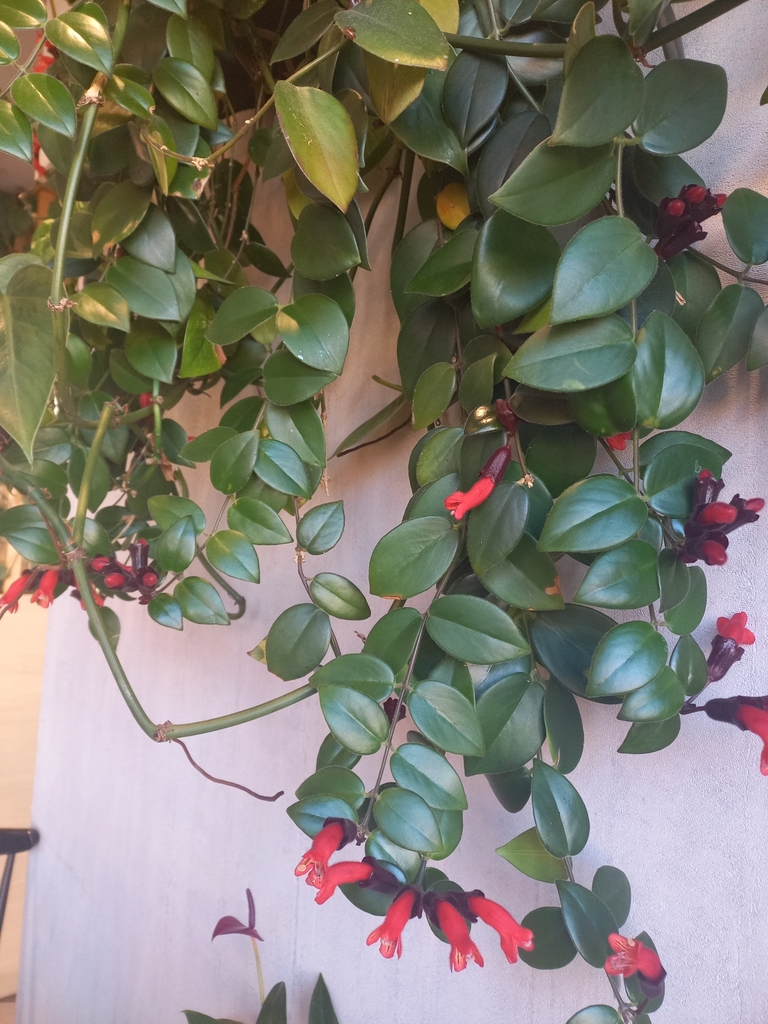
Streptocarpus rexii
Not every plant that looks like an African violet is a violet: Streptocarpus rexii belongs to Gesneriaceae and comes from the Eastern Cape province of South Africa.


Plant structure without overgeneralizing
Streptocarpus rexii belongs to the family Gesneriaceae and the genus Streptocarpus. As a houseplant, it is often valued for its flowers, but its foliage is just as important for care: it responds quickly to watering, light, and the condition of the potting mix.
This species has no established common or trade name, so reference books and collections usually use its botanical name. This reduces confusion with other gesneriads that may have very similar common names.
Origin and conditions in the wild
The species is native to the Eastern Cape province of South Africa. This offers an important clue for indoor care: the plant does not come from marshy habitats, so a constantly wet potting mix is unsuitable.
Indoors, aim to follow the principles of its natural conditions rather than recreate them exactly: plenty of indirect light, an airy potting mix, and watering after the top layer dries. Extremes—a dark corner or heavy, wet soil—are more likely to spoil the plant's appearance.
Light and placement
Bright indirect light is best. Direct midday sun can overheat the leaves, while in deep shade the plant usually produces fewer leaves and sets fewer buds.
- a windowsill without harsh midday sun
- a spot near a bright window
- a shelf with even supplemental lighting
Change the pot's position cautiously. After a sudden move from shade to strong light, the leaves may wilt or develop spots from overheating.
Watering and potting mix
Water moderately: moisten the potting mix after it has partly dried, without leaving it waterlogged for long periods. Gesneriad roots are sensitive to a lack of air, so heavy, compacted soil quickly becomes a problem.
Do not leave water standing in the saucer. If the leaves wilt while the potting mix is wet, the cause is often root damage from overwatering rather than a lack of water.
| Condition | What it means for care |
|---|---|
| The potting mix dries quickly | Water after it has partly dried |
| The potting mix stays wet for a long time | Use a lighter mix or a smaller pot |
| The leaves wilt after watering | Check the roots and whether they have access to air |
Temperature and humidity
The plant does well at a steady, warm room temperature without sudden changes. A cold windowsill combined with wet potting mix is particularly unsuitable, as root activity slows and the risk of rot increases.
Rather than misting the leaves, improve humidity around the pot by grouping plants, using a tray with damp material, or providing steady ventilation without drafts. Droplets can leave spots on the leaves, especially when air movement is poor.
Why leaves turn yellow or wilt
Yellowing has no single cause. Usually, you need to assess the whole care routine rather than an individual leaf: light, watering, root condition, and how long the potting mix stays wet.
- overwatering
- compacted potting mix
- insufficient indirect light
- overheated leaves
- a sudden change of location
Individual old leaves may die off without disease if the new rosette is developing normally. Widespread wilting in damp potting mix or soft leaf bases are warning signs.
Repotting and propagation
Repot when the potting mix becomes compacted or the roots become crowded. Avoid an oversized pot: the extra volume stays wet longer, and the roots may lose access to air.
Leaf material is often used for vegetative propagation of gesneriads, but sterile tools and a light potting mix matter more than the method itself. Cut surfaces should not sit in a constantly wet environment.
- Light
- bright indirect light
- Watering
- moderate
- Soil
- light, airy
- Difficulty
- moderate
- Cats and dogs
- safe
- Native range
- Eastern Cape province, South Africa
Care
Streptocarpus rexii responds better to consistent conditions than to frequent moves and abrupt changes in care. The main risks indoors are insufficient light, overwatering, and a heavy potting mix.
- Light
- Provide bright indirect light. Grows best near a bright window without harsh midday sun; in deep shade, it produces fewer leaves and buds.
- Temperature
- Keep at a steady room temperature. Avoid cold windowsills, drafts, and sudden temperature changes, especially while the potting mix is still damp.
- Watering
- Water when the mix has partly dried. Water moderately. A constantly wet potting mix is more dangerous than letting the top layer dry briefly.
- Soil
- Use a light, airy potting mix. The mix should drain excess water quickly and resist compaction around the roots.
- Feeding
- Feed moderately during active growth. Feed only when the plant is actively growing; do not apply fertilizer to dry potting mix.
- Leaves
- Clean without wetting the leaves. Remove dust with a dry or barely damp method, without leaving droplets on the leaves.
- Repotting
- Repot when the mix becomes compacted. The new pot should not be too large, or the mix will stay wet longer.
Botany
4 ill.- Family
- Gesneriaceae
- Genus
- Streptocarpus
- Species
- Streptocarpus rexii
- Author and year
- (Bowie ex Hook.) Lindl.


Streptocarpus rexii is a member of the family Gesneriaceae, native to the Eastern Cape province of South Africa. It is grown indoors as a flowering plant, but the condition of its foliage is a good indicator of whether light and watering are right.
Botanically, it is not a violet, although the general appearance of its flowers and its place in plant collections often put it alongside other gesneriads. This relationship has practical implications: the plant dislikes heavy, wet potting mix and abrupt changes in conditions.
The species is considered safe for cats and dogs. Normal precautions still apply: eating the leaves can cause physical irritation or digestive upset, even if the plant is not toxic.
Frequently asked questions
- Can I keep it at home if I have a cat?
- Yes, Streptocarpus rexii is safe for cats and dogs. Still, it is best not to encourage leaf chewing because it may cause digestive upset.
- Why are the leaves turning yellow?
- The most common causes are overwatering, compacted potting mix, or insufficient indirect light. First, check whether the soil stays wet for a long time.
- How often should I water?
- Water after the potting mix has partly dried. Do not leave water standing in the saucer.
- Why isn't it flowering?
- Insufficient light, overly wet potting mix, or weakened roots are usually the cause. Bud formation requires stable conditions without sudden changes.
- Does it need repotting after purchase?
- Yes, but repotting is appropriate when the potting mix becomes compacted or the roots become crowded. Avoid an oversized pot.