Gloxinia
Velvety, bell-shaped corollas and wrinkled, hairy leaves are the hallmarks of Sinningia speciosa. As a houseplant, it is a tuberous plant with a distinct period of dormancy.

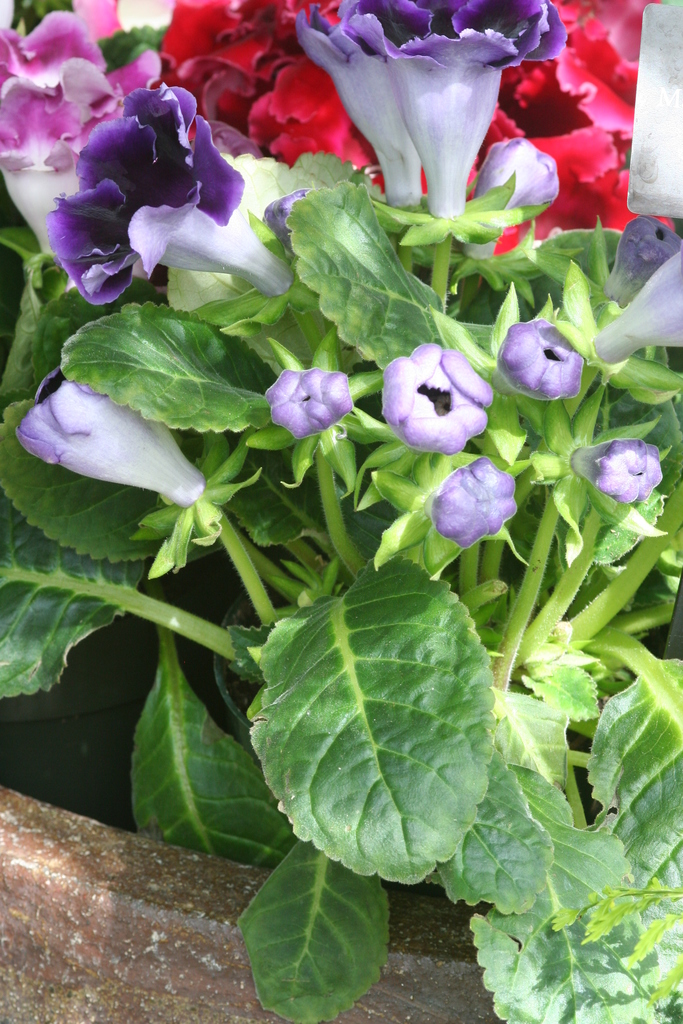
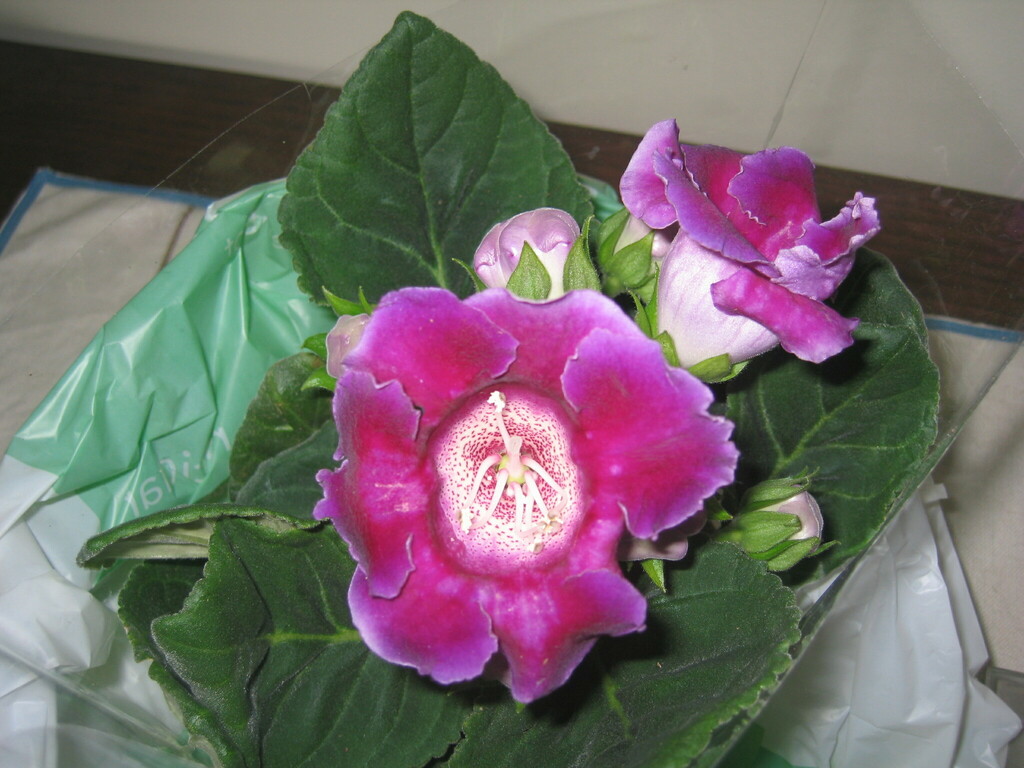
Leaf and flower structure
Grown indoors, this species is an herbaceous, tuberous plant with short stems or creeping underground stems. The leaves have long stalks and are dark green, hairy, and distinctly wrinkled.
| Feature | Description |
|---|---|
| Plant height | 15-45 cm |
| Leaf blade | 8-24 × 3.5-15 cm |
| Corolla | bell-shaped or tubular, 3.5-6 cm |
| Stamens | 4 |
| Flowers | single or in flat-topped clusters of 2-3 |
In the wild, the flowers are purple, or less often white or red; cultivated plants have a much wider range of colors. In cultivated forms, the corolla is often larger and faces upward, whereas in the wild it is described as smaller and horizontal.
The tuber and dormancy
After the active growing season, the top growth may die back and the plant enters dormancy. This is a normal part of the cycle for tuberous Sinningia, not necessarily a sign that the plant is dying.
Keep the tubers in a dry, cool place for winter. The plant produces no leaves or buds during this time, so its care differs from care during the growing season.
- top growth dies back after flowering
- the tuber is kept without regular watering
- growth resumes once dormancy ends
Origin and name
The species is native to Brazil. In the wild, Sinningia speciosa is described as endemic to that country, meaning its natural range is confined to Brazil.
The name “gloxinia” became established in horticulture for historical reasons: it is linked to the genus Gloxinia, named after the botanist and physician Benjamin Peter Gloxin, but this species belongs to the genus Sinningia.
Such differences between trade names and botanical classification are common. For care, understanding the plant's tuberous nature and seasonal cycle of growth and dormancy matters more than the name on the label.
Light and placement
During growth, the plant needs a consistently bright spot where the leaves will not overheat. Hairy leaves do not tolerate rough wiping well, so a spot free from constant dust and drafts makes care easier.
- a bright windowsill where the leaves will not overheat
- a spot without close contact with other plants
- dry, cool tuber storage in winter
Once new leaves appear, gradually return the pot to active growing conditions. Avoid abrupt changes in location while buds are forming, as the plant puts considerable resources into its flowers.
Watering and potting mix
Watering this species depends on its stage of development. When it has leaves and buds, the plant is actively growing; when the top growth dies back, the tuber enters dormancy and needs drier conditions.
Do not base a strict watering schedule on the calendar. Let the plant's condition guide you: an actively growing rosette of leaves needs a different watering routine from a tuber stored in a dry, cool place for winter.
- water during active growth
- reduce watering after the leaves die back
- keep the tuber dry during dormancy
Propagation
Propagate the plant from leaf cuttings or seeds. A leaf cutting relies on the tissue's ability to form a new plant, while seed propagation produces more variation.
- leaf cuttings
- seeds
- tubers kept through dormancy
Seed-grown offspring of cultivated forms may not retain all the parent plant's traits. This is especially noticeable in corolla color: cultivated forms may be spotted, striped, or have colors not typical of the wild form.
Common changes in the plant's condition
Leaves yellowing and dying back after flowering do not always indicate a problem. For a tuberous plant, this may be the transition into dormancy if it was growing and flowering normally beforehand.
- leaves turn yellow after the active growing season ends
- buds do not form until growth resumes
- the tuber is stored separately from the top growth
A sudden decline during active growth is a different matter. Check whether the watering routine has changed, whether the leaves are overheating, and whether the conditions suit the plant's stage of development.
- Difficulty
- moderate
- Cats and dogs
- safe
- Size indoors
- 15-45 cm
- Leaves indoors
- 8-24 × 3.5-15 cm
- Native range
- Brazil
Care
Care centers on the tuber: active growth and flowering give way to dormancy. The biggest seasonal differences are in watering and tuber storage.
- Light
- Provide indirect light. During growth, keep it in a bright spot where the hairy leaves will not overheat.
- Temperature
- Keep it warm. Warm conditions are needed during growth; move the tubers to a dry, cool place for winter.
- Watering
- Water according to the growth stage. The plant grows more actively while it has leaves. Once the top growth dies back, reduce watering and store the tuber dry.
- Soil
- Use a loose potting mix. A tuberous plant needs a potting mix that does not compact around the tuber or retain excess moisture during dormancy.
- Feeding
- Feed only during growth. Feed while the plant has leaves and buds. Stop feeding during dormancy.
- Support
- No support needed. The stems are short or underground; the plant does not grow as a vine and needs no support.
- Leaves
- Do not rub the leaf hairs. The leaves are hairy and wrinkled; remove dust gently rather than wiping them roughly.
- Repotting
- Repot after dormancy. The easiest time to repot is before growth resumes, when the tuber comes out of dry storage.
Botany
4 ill.- Family
- Gesneriaceae
- Genus
- Sinningia
- Species
- Sinningia speciosa
- Author and year
- (G.Lodd. ex Ker Gawl.) Hiern


Sinningia speciosa belongs to the family Gesneriaceae and the genus Sinningia. It is an herbaceous, tuberous plant with short stems or creeping underground stems.
The leaves are opposite, with long stalks and hairy, wrinkled blades. Flowers emerge from the leaf axils, either singly or in flat-topped clusters of 2-3.
The wild form has mostly purple corollas, or less often white or red ones. Selection in cultivation has produced forms with larger, upright flowers in a variety of colors.
How it differs from similar plants
African violet Streptocarpus ionanthus
- Gloxinia has much larger, wrinkled leaf blades, while Saintpaulia forms a rosette with flower stalks rising above it.
Frequently asked questions
- Is it safe for cats and dogs?
- Yes. The plant is safe for cats and dogs.
- Why are the leaves turning yellow?
- If this happens after flowering, the plant may be entering dormancy. Afterward, store the tuber in dry, cool conditions.
- How do I propagate it?
- From leaf cuttings or seeds. Seeds from cultivated forms may produce plants with different flower traits.
- Does it grow in winter?
- No, it is a tuberous plant with a period of dormancy. Keep the tubers in a dry, cool place for winter.
- What colors are the flowers?
- That depends on the plant's form: in the wild, the corolla is purple, or less often white or red, while cultivated plants come in many colors.
- Is a store-bought gloxinia the wild species?
- No. Everything sold as “gloxinia” consists of cultivars of horticultural origin derived from Sinningia speciosa. The actual botanical genus Gloxinia contains different plants.


