Bunny ears cactus
Flat oval pads dotted with small yellow areoles make this cactus instantly recognizable: Opuntia microdasys has almost no conventional spines, but it does have brittle glochids that readily lodge in skin.

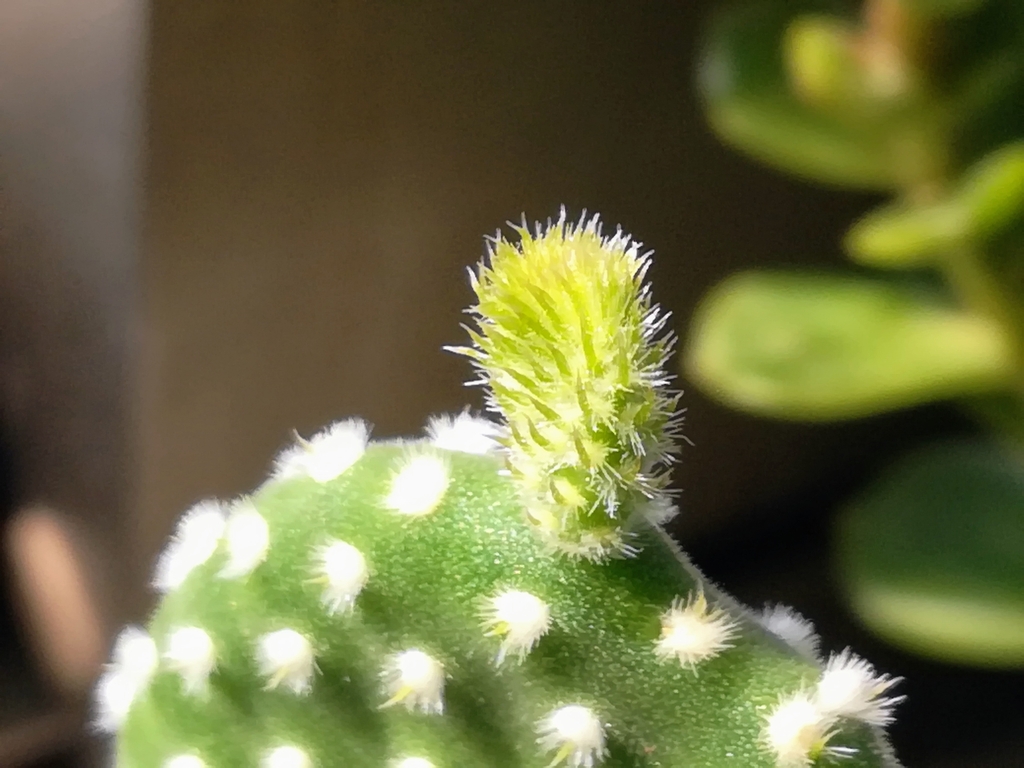
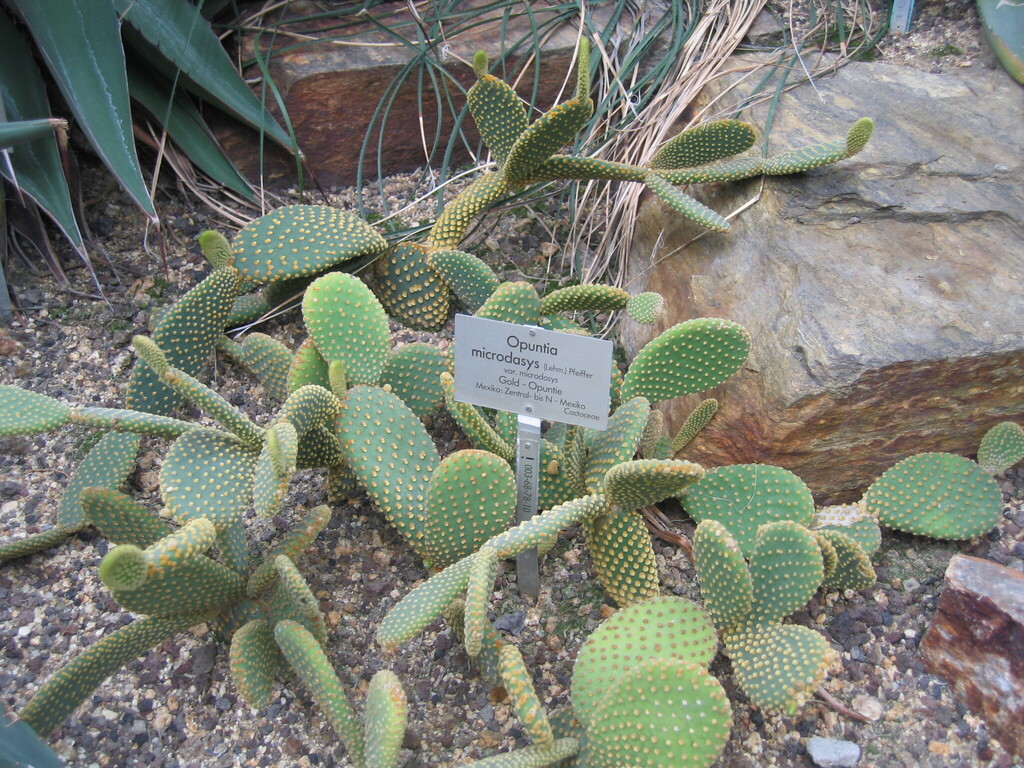
Pad and glochid structure
The aboveground growth consists not of leaves but of fleshy, flattened stem segments called cladodes. In this species, they are egg-shaped with the wider end at the top, green, 5-15 cm long, and 4-12 cm wide.
Small areoles cover the surface of the pads. There are no conventional spines; instead, clusters of yellow glochids 2-3 mm long form and detach easily when touched.
- Handle the plant with gloves or tongs
- Place it where the pads will not be brushed against frequently
- Avoid wiping the surface with your hand
- Repot without squeezing the pads
- Carefully remove glochids from skin without rubbing
Glochids are not a sign of toxicity, but they act like tiny bristles: they lodge in skin and can cause itching or pain. They make handling the plant more difficult than its lack of large spines might suggest.
Origin and natural conditions
The species is native to northern and central Mexico. Sources also place Opuntia microdasys in the valleys of central Mexico, including Hidalgo, at around 1000 m above sea level.
This origin explains its need for very bright light and careful watering. The pads store water, while the surface with its areoles reduces moisture loss and protects the tissues from damage.
| In the wild | Indoors |
|---|---|
| an open, sunny spot | the brightest windowsill |
| a dry season and periods without rainfall | letting the potting mix dry out between waterings |
| cool, dry winter conditions | dry dormancy at a low temperature |
Indoor conditions do not need to replicate Mexico exactly, but the principles of care are the same: plenty of light, an airy potting mix, and no persistent moisture around the roots.
Light and placement
Healthy growth requires bright sunlight throughout the growing season. South-, southeast-, or west-facing positions work best, providing several hours of direct sun.
Without enough light, new pads lose their characteristic flattened shape and may stretch, becoming cylindrical. This is not a separate disease but a response to low light.
- a south-facing window with direct sun
- a southeast-facing window with morning light
- a west-facing window with afternoon light
During the warmer months, the plant can be kept outdoors in a bright spot where it will not need to be moved unnecessarily. Avoid sudden changes in conditions while buds are forming.
Watering and potting mix
Water moderately, once the potting mix has noticeably dried out. A constantly wet pot is more dangerous for this species than a short spell without water.
During the growing season, from mid-spring to September, the plant needs more regular watering, but without standing water. Stop watering in winter if the plant is kept cool; if a cool winter rest is not possible, moisten the potting mix very sparingly.
The potting mix should be loose and drain quickly. Sources recommend a mix of 50 % mineral material—sand, expanded clay, or similar components—and 50 % humus-based material for this species.
When watering, avoid wetting the areoles and glochids unnecessarily. If the plant is misted in summer, keep it out of direct sun until its surface is dry.
Temperature and dormancy
Normal room temperature combined with strong light is suitable during active growth. Warmth alone cannot replace sunlight: growth becomes misshapen in low light.
In winter, the plant needs a bright, cool spot. A winter temperature of +3…+10 °C is recommended for this species; under these conditions, watering is sharply reduced or stopped.
| Season | Conditions |
|---|---|
| spring-summer | bright sun, room temperature, moderate watering |
| winter | light, +3…+10 °C, dry conditions |
A cool, dry winter rest is important not only for limiting growth during the darker months. It also tends to encourage bud formation in mature plants.
Flowering indoors
Flowering is rare indoors; it is seen more often in greenhouses or on large, well-developed plants. The flowers are lemon yellow and 3-5 cm in diameter.
Under favorable conditions, flowering occurs in midsummer. Up to ten flowers can develop on a single pad, followed by juicy purple-red fruits.
- a wide container for the roots
- the brightest possible spot during the growing season
- time outdoors during the warmer months
- minimal movement while buds are forming
- a prolonged dry, cool winter rest
Even with these conditions, flowering cannot be guaranteed. The plant must reach a sufficient size and complete its dormant period without excess water.
Propagation and common problems
The simplest method of vegetative propagation is to root an individual pad. Handle it just as carefully as a mature plant, because glochids readily lodge in skin.
Problems usually arise not from a lack of care but from failing to provide the basic conditions: light, a dry winter rest, and an airy potting mix. For this species, overwatering is more dangerous than a brief dry spell.
- elongated, cylindrical pads caused by low light
- soft areas caused by overwatering
- no buds without a dry winter rest
- skin irritation after contact with glochids
- slow growth in an overly heavy potting mix
If the plant has lost its shape because of insufficient light, the old, misshapen pads will not become flat. New growth will return to normal only after the plant is moved to a much brighter spot.
Care
This sun-loving cactus stores water in its pads, so its main risks indoors are too little sun and overwatering. Care centers on a bright spot, a loose potting mix, and a dry, cool winter rest.
- Light
- Provide bright direct light. Grows best on a very bright windowsill. Without enough sun, new pads become misshapen and cylindrical.
- Temperature
- Keep at room temperature in summer. Normal room temperature is suitable during the growing season. In winter, provide a bright, cool resting place at +3…+10 °C.
- Watering
- Water once the potting mix dries out. Water moderately in spring and summer once the potting mix dries out. Stop watering during a cool winter rest.
- Soil
- Use 50 % mineral material. A loose mix is suitable: 50 % sand, expanded clay, or other mineral material and 50 % humus-based material.
- Feeding
- Feed 1-2 times a month. A specialist cactus fertilizer can be used during the growing season. No feeding is needed in winter.
- Leaves
- Do not wet the plant in direct sun. Misting is possible in summer, but the plant must dry before it receives direct sun. Avoid wetting the areoles unnecessarily.
- Repotting
- Use a wide container. A wide container is preferable for mature plants and flowering. Repot carefully because the glochids are brittle.
Botany
4 ill.- Family
- Cactaceae
- Genus
- Opuntia
- Species
- Opuntia microdasys
- Author and year
- (Lehm.) Pfeiff.


Bunny ears cactus (Opuntia microdasys) belongs to the family Cactaceae and the genus Opuntia. It is a cactus with segmented, flattened stems that photosynthesize and store water.
The species is native to northern and central Mexico. As a houseplant, it is recognizable by its green, egg-shaped pads, wider at the top, with closely spaced areoles and clusters of yellow glochids instead of large spines.
Glochids are not soft fuzz but tiny, brittle bristles. They detach easily from the areoles, lodge in skin, and cause mechanical irritation, although the species itself is listed as safe for cats and dogs.
How it differs from similar plants
Thanksgiving cactus Schlumbergera truncata
- Bunny ears cactus is recognizable by its oval pads dotted with yellow areoles, while Schlumbergera has smaller segments with sharp teeth along the edges and flowers at the shoot tips.
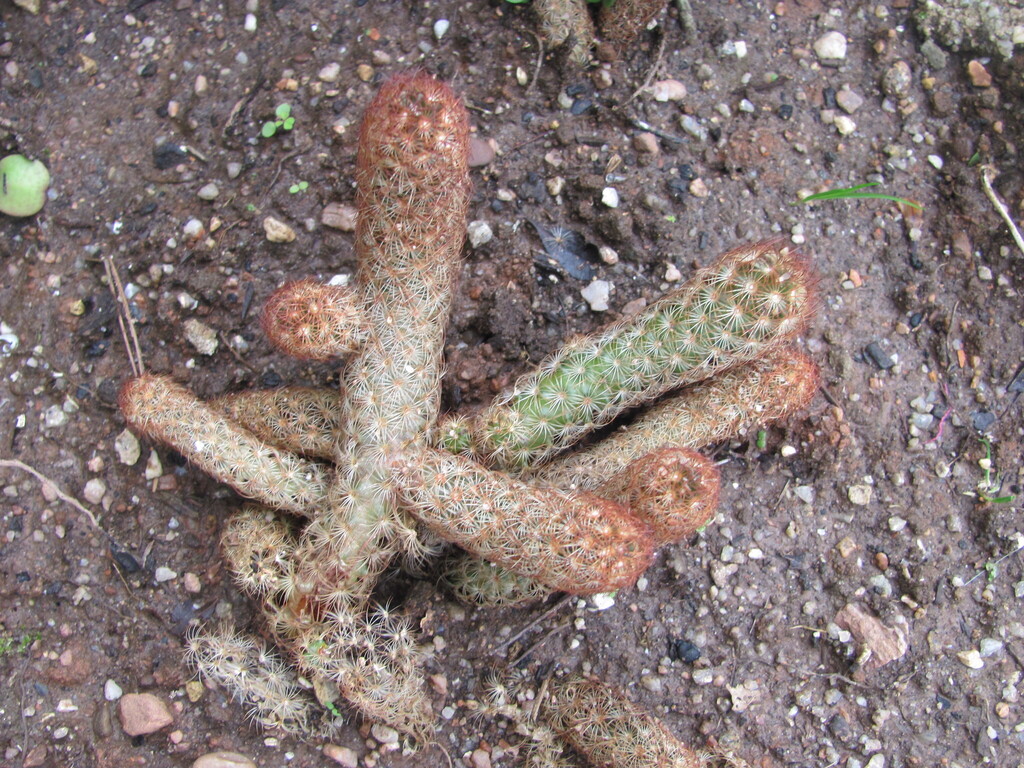 Ladyfinger cactus
Mammillaria elongata
Ladyfinger cactus
Mammillaria elongata- Instead of the elongated cylindrical stems and dense clumps of Mammillaria, bunny ears cactus has flat oval pads with small yellow areoles.
Moon cactus Gymnocalycium mihanovichii
- Bunny ears cactus grows up to 1 m indoors and needs bright sun, while Gymnocalycium stays compact—5–6 cm in diameter—and responds better to partial shade.
Frequently asked questions
- Is bunny ears cactus safe for cats and dogs?
- Yes, the verified facts list this species as safe for cats and dogs. However, glochids can mechanically irritate skin and mucous membranes.
- Why are the pads stretching and becoming cylindrical?
- This is usually caused by insufficient light. New pads return to their normal shape only after the plant is moved to a brighter spot.
- How often should I water bunny ears cactus?
- During the growing season, water once the potting mix dries out. In winter at +3…+10 °C, keep the plant almost dry or stop watering altogether.
- Does bunny ears cactus flower indoors?
- Yes, but it rarely happens indoors. Large plants are more likely to flower after a dry, cool winter rest and a very bright growing season.
- What should I do if glochids get into my skin?
- Do not rub the skin, as this pushes the bristles deeper. Carefully remove them mechanically, and wear gloves when handling the plant in future.


