Ladyfinger cactus
Overwatering does harm faster than a brief drought: ladyfinger cactus (Mammillaria elongata) has elongated cylindrical stems and forms dense clumps, but its roots cannot tolerate constantly wet potting mix.

Stem and spine structure
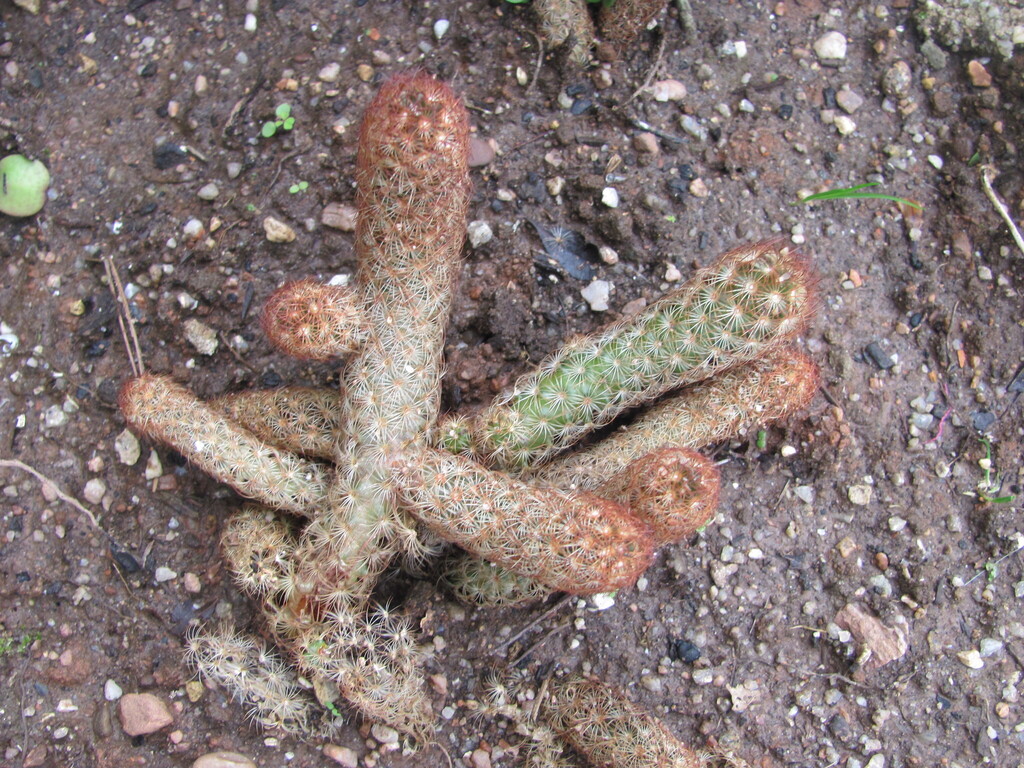
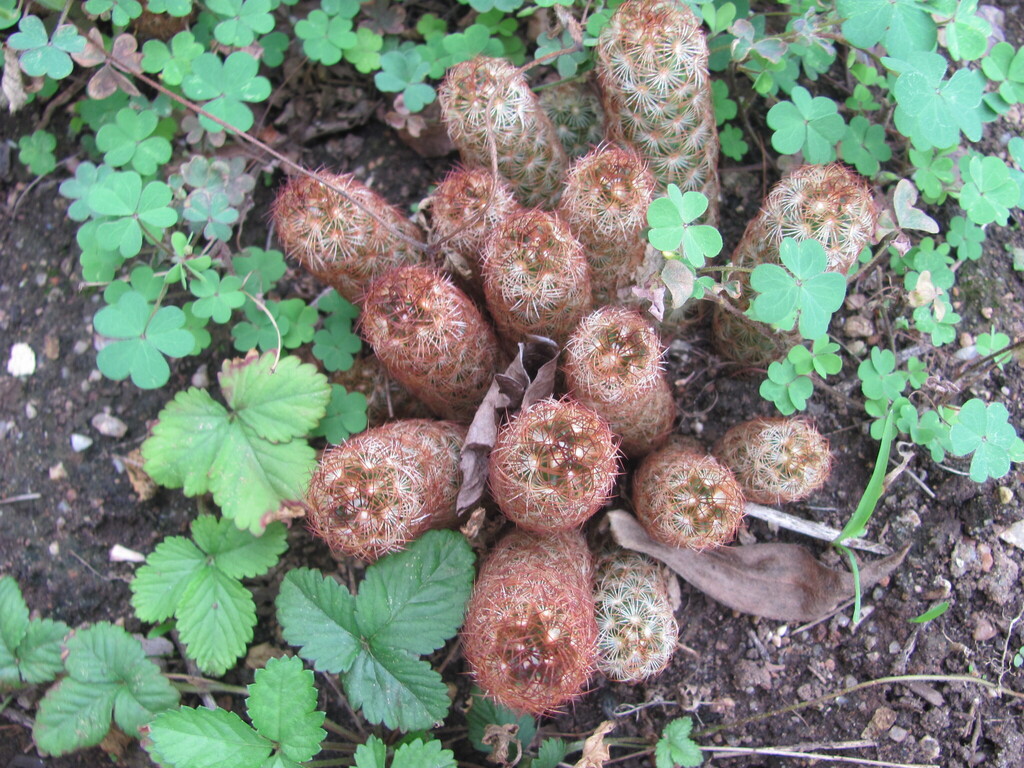
The plant forms groups of elongated cylindrical stems. Each stem is usually 1-3 cm in diameter, and individual clumps grown indoors can reach 60 cm in diameter.
Unlike many cacti, the stem surface is not ribbed but covered in mammillae—slender, conical bumps. The axils, or areas between the mammillae, are bare or almost bare.
- radial spines: 14-25 per areole, white or golden yellow
- radial spine length: 4-9 mm
- central spines are usually absent
- sometimes there are two central spines
- central spines range from yellow to brown with dark tips
Origin and natural habitat
The species is native to central Mexico. In the wild, it occurs in the states of Hidalgo, Guanajuato, and Querétaro, within a limited Mexican range.
The plant grows in calcareous soils at 1 350-2 400 m above sea level. For indoor growing, this is not a reason to add lime indiscriminately, but an explanation of its need for a mineral-based potting mix that dries quickly.
| Feature in the wild | What it means indoors |
|---|---|
| Calcareous soils | The potting mix should be loose and mineral-based |
| Steep slopes and open terrain | The plant holds its shape better in a bright spot |
| Limited range | Do not buy wild plants without proof of legal sourcing |
Light and placement
The clump stays dense and the internodes stay short where the plant receives plenty of light. In shade, the stems may stretch and the spines become less distinct.
Choose the brightest spot in the home for the pot. After a long, cloudy winter or a move from a store, introduce the plant to direct sun gradually to avoid burning the stem tissue.
- a bright windowsill
- gradual acclimation to direct sun
- dry air without regular misting
Watering and potting mix
The most common care mistake is watering the cactus a little at a time, but often. With this approach, the top of the potting mix looks dry while moisture lingers around the roots.
Go by the condition of the potting mix rather than the calendar: it should dry out before the next watering. The pot needs a drainage hole, and the mix should be free-draining, with a substantial mineral component.
| Situation | What to do |
|---|---|
| The potting mix is still damp | Wait before watering |
| The stems are firm and retain their turgor | There is no need to rush to water |
| The base of the stem is softening | Check the roots and let the potting mix dry out |
Flowers and fruit
The flowers are small, pale yellow or pink, up to 10 mm long and roughly the same in diameter. They appear near the tops of the stems without overshadowing the plant's main ornamental feature: its dense network of spines.
After flowering, pink fruits may develop and turn red over time. The seeds are brown; the species also reproduces from seed, though detached side shoots are more commonly used indoors.
Propagation and clump growth
The plant naturally forms groups, so side shoots regularly appear around the main stems. They can be detached for vegetative propagation once a shoot has its own base.
Propagation from seed is also possible, but it is slower and the seedlings' appearance is less predictable. Vegetative propagation preserves the characteristics of an individual plant more reliably, including the color of its spines.
- detach a side shoot
- let the cut surface dry
- plant in dry, mineral-based potting mix
- water cautiously for the first time after rooting
- keep in a bright spot without overwatering
Common problems
Problems usually show in the stems: they either lose firmness or change shape. In a cactus with slender cylindrical shoots, this becomes noticeable sooner than in species with a single thick stem.
- stems stretching from insufficient light
- a soft base from overwatering
- loss of shape in an overly rich potting mix
- sunburn after an abrupt move into direct sun
- root damage in a pot without a drainage hole
It is also worth checking where the plant comes from. The species is listed under CITES, and some wild populations remain threatened by illegal collection, changes in land use, and habitat degradation.
Care
This succulent cactus forms dense groups of stems. Its main requirements are plenty of light and a potting mix that dries quickly. Excess water does more harm than a brief pause in watering.
- Light
- Provide bright light. Stems may stretch in shade. Reintroduce direct sun gradually after a break.
- Watering
- Water after the potting mix dries out. Water thoroughly and less often rather than frequently in small amounts. Constantly damp potting mix puts the roots at risk.
- Soil
- Use a mineral-based, free-draining mix. It grows in calcareous soils in the wild, so the mix should not hold water around the roots.
- Support
- No support needed. The stems form a clump and need no support; a stable pot with a drainage hole is more important.
- Leaves
- Do not mist. There are no leaf blades; remove dust between the spines with a dry, soft brush.
- Repotting
- Repot when the clump outgrows its pot. Handle it carefully when repotting: the tightly packed stems break off easily, and the roots do not tolerate wet potting mix after repotting.
Botany
4 ill.- Family
- Cactaceae
- Genus
- Mammillaria
- Species
- Mammillaria elongata
- Author and year
- DC.


Ladyfinger cactus belongs to the genus Mammillaria in the family Cactaceae. The specific epithet elongata comes from a Latin word meaning ‘elongated’ and describes the shape of the stems.
Instead of ribs, the plant has mammillae—conical bumps bearing areoles with spines. The radial spines are numerous and slender, while central spines often do not form at all.
In the wild, the species is associated with calcareous soils in central Mexico. It is assessed as Least Concern, but international trade in cacti is regulated by CITES.
How it differs from similar plants
Thanksgiving cactus Schlumbergera truncata
- Thanksgiving cactus has flat green segments with sharp teeth and tubular flowers at the shoot tips, while ladyfinger cactus has elongated cylindrical stems in a dense clump.
Bunny ears cactus Opuntia microdasys
- Ladyfinger cactus forms a dense clump of elongated cylindrical stems, while Opuntia is recognizable by its flat oval segments with small yellow areoles.
Moon cactus Gymnocalycium mihanovichii
- Ladyfinger cactus needs bright light, while Gymnocalycium responds better to partial shade.
Frequently asked questions
- Is it safe for cats and dogs?
- Yes, the plant is safe for cats and dogs. The spines can still cause physical injury, so place the pot where a pet cannot knock it over.
- Why are the stems stretching?
- This is most often a response to insufficient light. Move the pot to a brighter spot, but introduce direct sun gradually.
- How do I propagate it?
- The easiest method is to detach a side shoot and root it in dry, mineral-based potting mix. Propagation from seed is also possible.
- Does it flower indoors?
- Yes, it can flower indoors. The flowers are small, pale yellow or pink, up to 10 mm.
- What potting mix does it need?
- It needs a loose, mineral-based, free-draining potting mix. The species grows in calcareous soils in the wild, so it does not tolerate standing water.


