Iron cross begonia
Iron cross begonia (Begonia masoniana) evolved in the humid forests of southern China (Guangxi) and Vietnam. It is a rhizomatous plant with rough-textured leaves and a dark cross-shaped pattern.

Growth habit and leaves
This is a rhizomatous perennial begonia grown for its foliage. Indoors, it is grown in pots and containers, where it forms a dense rosette of leaves on stalks.
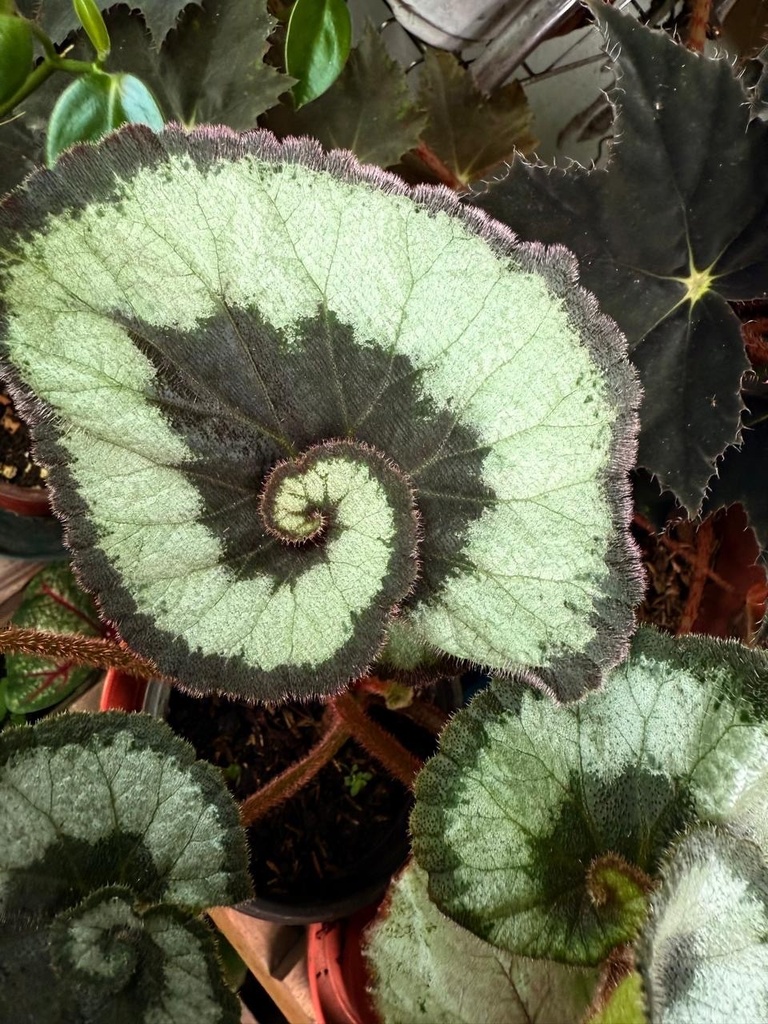
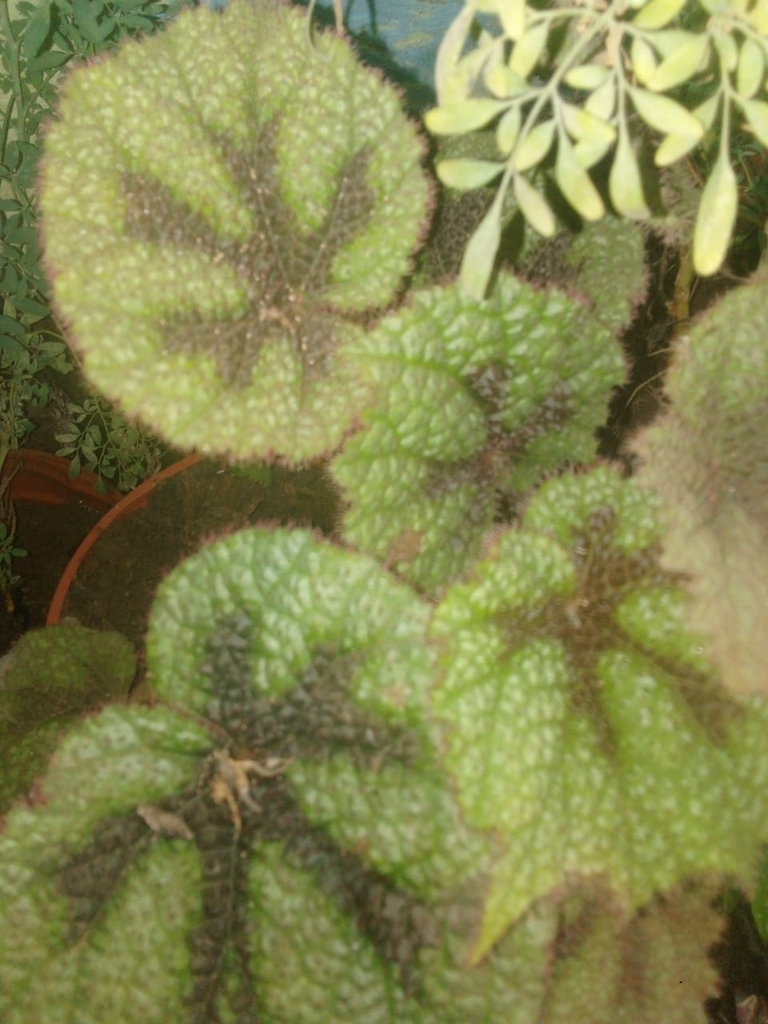
The leaves are oval and rough to the touch, with a distinctly textured surface. A dark brown cross-shaped pattern runs through the center, making the plant easy to distinguish from many other foliage begonias.
Origin and natural conditions
The species is native to southern China (Guangxi) and Vietnam. This origin explains its need for gentle indirect light and consistent moisture, without drying out or becoming waterlogged.
| In the wild | Indoors |
|---|---|
| Humid forest conditions | Consistent humidity |
| Protection from harsh sun | Indirect light or light shade |
| Organic layer in the soil | Nutrient-rich, well-drained mix |
The species does not occur in the wild in Ukraine. It is grown only as a houseplant, valued for the color and texture of its leaves rather than its flowers.
Light and placement
Bright indirect light or light shade is best. Harsh direct sun can damage the leaves, especially when the plant is close to window glass.
- a spot without midday sun
- consistent light throughout the day
- distance from radiators and hot air
- avoidance of abrupt moves
- room for leaves without pressing against glass
The plant responds poorly to sudden changes in conditions. Once a suitable spot is found, there is no need to move it frequently: stability matters more to foliage begonias than searching for the “perfect” corner every week.
Watering and potting mix
Water moderately, allowing the top layer of potting mix to dry between waterings. Constantly wet roots increase the risk of rot and fungal diseases, while drying out completely quickly affects the condition of the leaves.
The potting mix should be nutrient-rich, with organic ingredients and good drainage. A heavy mix that holds water around the rhizome for a long time is unsuitable for this species.
- moderate moisture in the potting mix
- drying of the top layer before watering
- a drainage layer in the pot
- organic ingredients in the mix
- no standing water in the saucer
Humidity also matters, especially during active growth. Misting the leaves is not always suitable for plants with rough leaf surfaces: it is better to maintain humidity around the pot without leaving water on the leaves.
Flowers and foliage
Flowers are not this begonia’s main ornamental feature. They are small, white with a pink tinge, and borne in upright clusters.
The foliage is the main attraction: the contrast between the green areas and the dark brown central pattern creates a distinct graphic effect. If light is insufficient or conditions are unstable, new growth may be less dense and less striking.
Remove old or damaged leaves so dead tissue is not left on the surface of the potting mix. Pruning to shape the plant is usually unnecessary, as it grows from a rhizome rather than as a shrub with long shoots.
Common problems
Yellowing and drooping leaves are often linked to cold combined with an overly wet potting mix. In these conditions, the roots function less effectively and the leaves quickly lose firmness.
- root rot
- gray mold
- powdery mildew
- bacterial leaf spot
- ringspot
Pests found on begonias include mealybugs, mites, thrips, aphids, leaf beetles, and caterpillars. Regularly checking the undersides of leaves helps catch problems before they spread throughout the plant.
Propagation and repotting
The plant can be propagated from seed, leaf cuttings, or rhizome division. Home growers more often use vegetative methods because they preserve the parent plant’s characteristics.
- seeds
- leaf cuttings
- rhizome division
Repot when the rhizome becomes crowded or the potting mix loses its structure. After repotting, it is important not to keep the mix too wet: damaged roots and rhizomes are sensitive to waterlogging.
- Light
- indirect light
- Watering
- moderate
- Soil
- nutrient-rich, well-drained
- Difficulty
- moderate
- Cats and dogs
- mildly toxic
- Size indoors
- 45-60 cm
- Native range
- southern China (Guangxi) and Vietnam
Care
This species grows best in stable conditions: indirect light, consistent moisture, and a potting mix that does not stay waterlogged. The main care risk is a combination of cold and overwatering.
- Light
- Provide bright indirect light. Light shade or a bright spot without harsh direct sun is suitable. Avoid sudden changes in light levels.
- Temperature
- Keep consistently warm. Avoid sudden temperature changes and cold drafts. Near a radiator, leaves deteriorate more quickly in the hot, dry air.
- Watering
- Water when the top 1-2 cm is dry. Water moderately. Let the top layer of potting mix dry out, but avoid both complete drying and waterlogging.
- Soil
- Use a nutrient-rich, well-drained mix. The mix should contain organic ingredients and drain well. A heavy, wet mix increases the risk of rot.
- Support
- No support needed. This is a rhizomatous plant, not a climber. It needs no support, just a pot positioned so the leaves are not pressed against glass or neighboring plants.
- Leaves
- Remove dry leaves. Cut off old and damaged leaves. Keep the surface of the potting mix clean so dead tissue does not accumulate.
- Repotting
- Repot when the rhizome is crowded. Repot into fresh, loose, well-drained potting mix. Water carefully after repotting, without making the mix too wet.
Botany
- Family
- Begoniaceae
- Genus
- Begonia
- Species
- Begonia masoniana
- Author and year
- Irmsch.
Iron cross begonia (Begonia masoniana) belongs to the family Begoniaceae. It is a rhizomatous foliage plant with oval, rough-textured leaves and a dark cross-shaped pattern in the center.
The species’ natural range covers southern China (Guangxi) and Vietnam. This explains its indoor requirements for indirect light, consistent humidity, and a potting mix that does not stay waterlogged.
The flowers are small, white with a pink tinge, and borne in upright clusters. However, the species is valued primarily for its foliage rather than its flowers.
Frequently asked questions
- What light does it need?
- It needs bright indirect light or light shade. Direct midday sun can damage the leaves.
- How often should I water it?
- Water moderately when the top 1-2 cm of potting mix has dried out. Water should not sit in the pot or saucer.
- Why are the leaves turning yellow?
- This most often happens because of cold and excess water in the potting mix. Let the mix dry out a little and check whether the pot is in a draft.
- Is it safe for cats and dogs?
- No, the plant is mildly toxic to cats and dogs: chewing it can irritate mucous membranes. Keep the pot out of pets’ reach.
- How can I propagate it?
- You can use leaf cuttings, rhizome division, or seeds. Vegetative propagation is usually chosen to preserve the plant’s characteristics.