Boston fern
Nephrolepis exaltata evolved in the warm conditions and filtered light of tropical America. Indoors, this is reflected in its need for consistently moist potting mix, high humidity, and protection from direct sun.
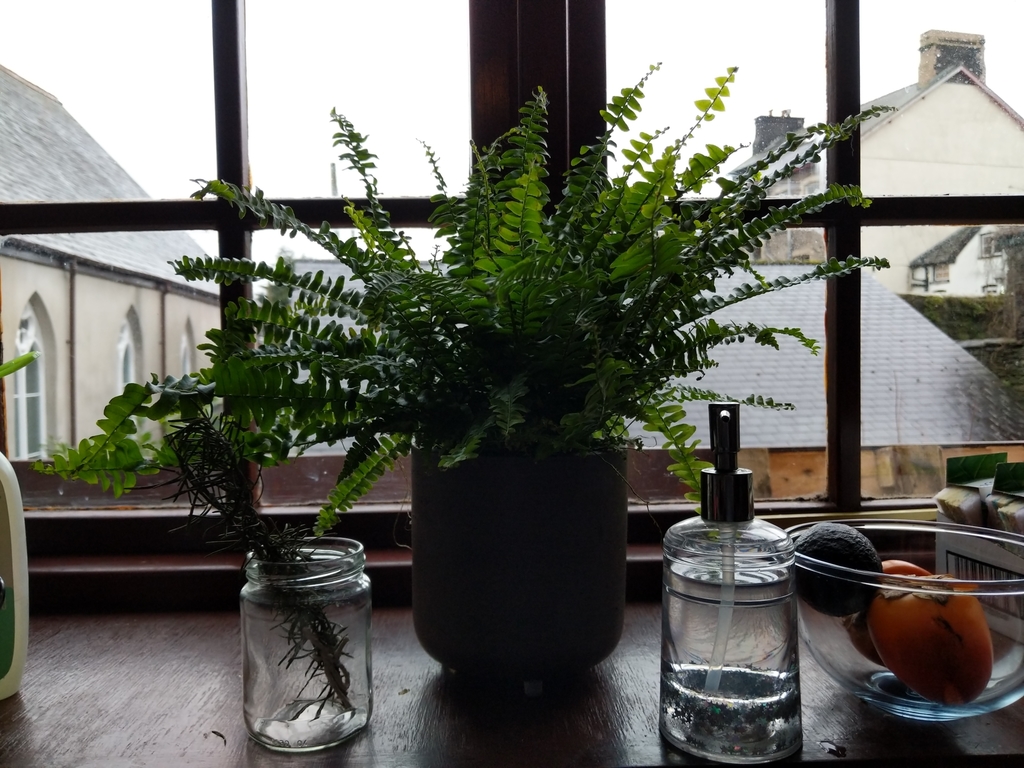

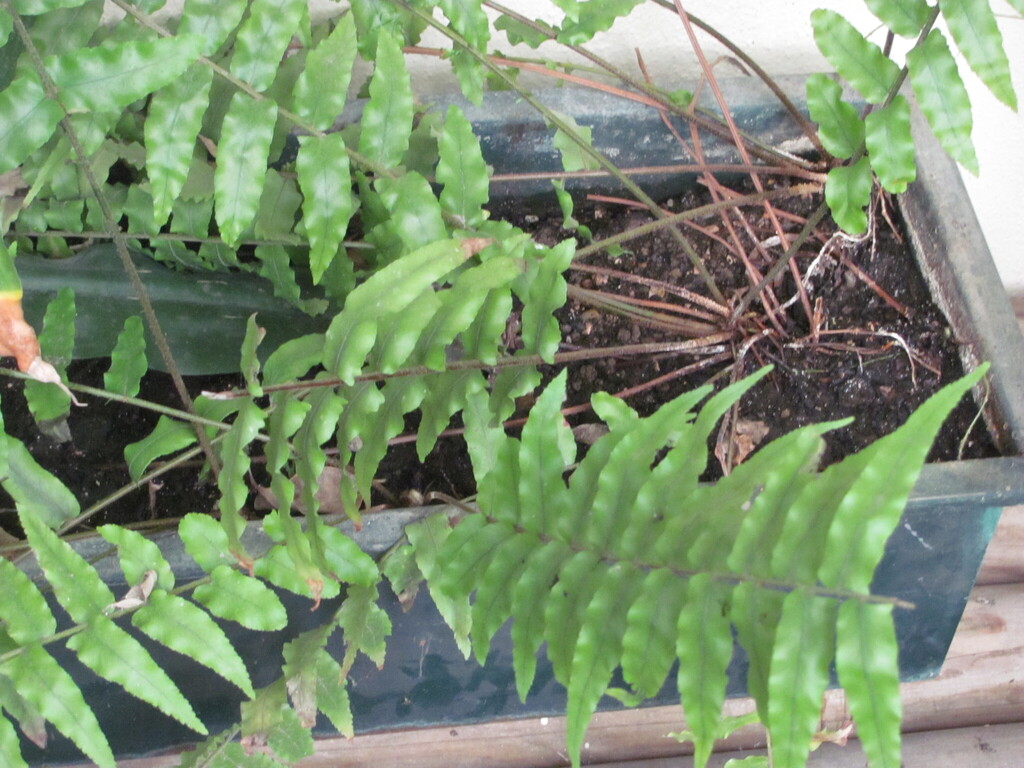
Leaf and rhizome structure
The plant has a short, upright rhizome topped with a rosette of large, pinnately compound fronds. In cultivation, they can reach up to 70 cm, with an overall lance-shaped outline and short stalks.
The individual leaf segments are also lance-shaped, measuring 5 cm or more in length. Their edges have shallow teeth and rounded scallops, and they are usually light green.
- short, upright rhizome
- rosette of pinnately compound fronds
- lance-shaped segments with uneven edges
- round sori on the undersides of the segments
- leafless, scaly shoots that take root
Name origin and natural conditions
Nephrolepis is often called by the Ukrainian common name meaning "fern"; this is a broad everyday name for spore-producing plants with similar-looking foliage, not the botanical name of the genus.
The species is native to tropical America. Indoors, this is more than a background detail: it points to the conditions the plant prefers—warmth, indirect light, and evenly moist potting mix.
The genus name comes from the Greek words nephros, meaning "kidney," and lepis, meaning "scale." It describes the shape of the indusium that covers the spore-bearing sori on the undersides of the leaf segments.
Light and placement
This species needs bright indirect light. Shade it from direct sun in summer, as an unshaded south-facing windowsill does not suit it.
- an east-facing window with gentle morning light
- a west-facing window with shade in summer
- a north-facing window without direct sun
Growth slows if there is too little light, but the main indoor problem is more often dry air than shade. Avoid placing the plant near hot air currents, even if the light is good.
Watering and humidity
Keep the potting mix consistently moist without letting it dry out completely. Waterlogging is harmful, however: the rhizome needs an aerated mix, not a sodden mass.
Regular misting is used to maintain steady humidity; care guidance for this species mentions misting twice a day. Dry air is the most common cause of declining foliage indoors.
| Condition | What to do |
|---|---|
| The potting mix is drying out | Water until evenly moist |
| Water is collecting | Reduce watering and check drainage |
| The air is dry | Maintain high humidity |
Feeding and potting mix
Feed 3-4 times per season. More frequent feeding is not needed: consistent moisture and light matter more to this plant than extra fertilizer.
Use a potting mix without loam. When rooting young offsets, add peat to help the mix retain moisture.
| Care element | Approach |
|---|---|
| Feeding | 3-4 times per season |
| Potting mix | A mix without loam |
| Offsets | A mix with added peat |
Propagation
Propagate in spring by dividing the clump, rooting leafless, scaly shoots, or separating the offsets that form at their tips. Propagation from spores is less common because it is slower and less convenient indoors.
- divide a mature rosette in spring
- root a leafless, scaly shoot
- separate and plant a young plantlet from the tip of a shoot
Plant offsets in a mix with added peat, water thoroughly, and cover with plastic film. Keep the temperature around +15 °C while they root.
Foliage problems
Yellowing can be natural in older fronds: they turn yellow and fall off as they age. If many younger fronds in the rosette turn yellow, dry air or a pest is more often the cause.
- insufficient humidity
- waterlogged potting mix
- brown scale infestation
Brown scale causes yellowing, so inspect the undersides of the leaf segments and the base of the rosette. If the air is dry, address humidity first rather than simply changing how often you water.
- Light
- bright indirect light
- Watering
- consistently moist
- Soil
- without loam
- Difficulty
- moderate
- Cats and dogs
- safe
- Leaves indoors
- up to 70 cm
- Native range
- tropical America
Care
Dry air and waterlogged potting mix are the main concerns in care. This species grows best in indirect light with evenly moist potting mix.
- Light
- Provide bright indirect light. East-, west-, or north-facing windows are suitable; shade from direct sun in summer.
- Temperature
- Keep warm. The temperature should not fall below +16…+18 °C; keeping the plant below this range is not recommended.
- Watering
- Keep the potting mix consistently moist. Water so the mix never dries out completely, but do not let water collect around the rhizome.
- Soil
- Use a mix without loam. A light potting mix without loam is suitable; add peat for young offsets.
- Feeding
- Feed 3-4 times per season. Feed during the growing season, along with consistent watering and indirect light.
- Leaves
- Maintain high humidity. Leaves turn yellow in dry air; mist twice a day to maintain humidity.
Botany
- Family
- Nephrolepidaceae
- Genus
- Nephrolepis
- Species
- Nephrolepis exaltata
- Author and year
- (L.) Schott
Nephrolepis exaltata belongs to the family Nephrolepidaceae. It is a terrestrial or epiphytic herbaceous plant with a short, upright rhizome and a rosette of large, pinnately compound fronds.
Round sori sit near the edges on the undersides of the leaf segments. They are arranged in two rows on either side of the midrib and are involved in spore reproduction.
The rhizome produces leafless, scaly shoots that can take root and develop into new plants. This ability makes vegetative propagation much more practical than sowing spores.
How it differs from similar plants
ZZ plant Zamioculcas zamiifolia
- Nephrolepis has long fronds reaching up to 70 cm, while Zamioculcas has distinctive compound leaves with smaller leaflets measuring 7–15 cm.
Rex begonia Begonia rex
- Begonia is easy to recognize by its large, asymmetrical leaves, while Nephrolepis has long fern fronds reaching up to 70 cm.
Snake plant Dracaena trifasciata
- Sansevieria stands out for its long, stiff leaf blades, while Nephrolepis needs bright indirect light with protection from direct sun.
Frequently asked questions
- Can I keep it at home if I have a cat?
- Yes, the plant is safe for cats and dogs.
- Why are the fronds turning yellow?
- Most often because of dry air; brown scale or aging fronds can also cause yellowing.
- Where is the best place for the pot?
- East-, west-, or north-facing windows with indirect light are suitable; shade from direct sun in summer.
- How often should I water?
- The potting mix should stay consistently moist, but water must not collect around the rhizome.
- How can I propagate it at home?
- In spring, divide the clump, root leafless shoots, or separate offsets; propagation from spores is less common.
- Is Boston fern a separate species?
- No, it is the cultivar 'Bostoniensis' of Nephrolepis exaltata, found in a shipment of plants in Boston in the late 19th century. Its care is the same as for the species.


