Thaumatophyllum xanadu
Overwatering does more harm than a short spell without water: the roots of Thaumatophyllum xanadu respond quickly to constantly wet potting mix, and its leaves hold their shape better in indirect light.
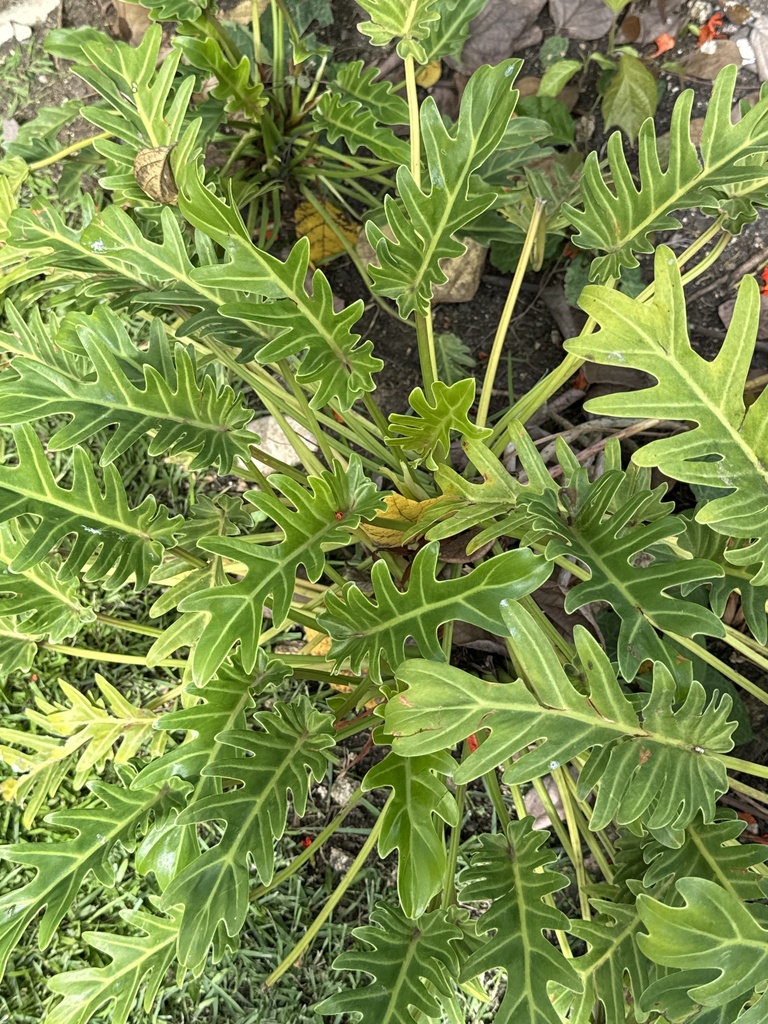


Leaf structure and growth habit
The main ornamental feature is the deeply divided leaf blade. These lobes give the plant an airy look, but they are not fenestrations like those of monstera: they are divisions along the leaf edge.
Indoors, the plant is grown as a dense, leafy clump. If light is insufficient, the stem stretches and the leaves become more widely spaced, so the shape of the plant is a good indicator of whether the location suits it.
Origin and name
The plant is native to southern Brazil and Paraguay. For indoor growing, this means it needs warmth, consistent moisture in the potting mix without standing water, and protection from cold drafts.
It is still sold under the name “Philodendron xanadu,” a holdover from its earlier classification among philodendrons, although modern taxonomy places the species in the genus Thaumatophyllum. The trade name makes it easy to recognize, but does not change the plant’s botanical classification.
Light and placement
Bright indirect light is best. The plant can survive in lower light, but growth slows and the internodes become noticeably longer.
- bright indirect light
- protection from harsh sun
- a location without cold drafts
Avoid direct sun, which can cause dry, pale patches on the leaves. If the leaves lean toward the window and the plant loses its symmetry, rotate the pot periodically.
Watering and potting mix
The roots should not sit in constantly wet potting mix. Empty excess water from the saucer after watering, and water again once the top layer has partially dried.
| Symptom | Likely cause |
|---|---|
| yellowing leaves | overwatering or standing water |
| drooping leaves | lack of water or a sudden temperature change |
| stretched stem | insufficient light |
The potting mix needs to be loose and well drained. A dense mix holds water longer, so even moderate watering can leave the roots short of air.
Temperature and humidity
During the growing period, the plant does best at +18…+25 °C. Avoid sudden temperature changes and drafts, as these can cause the leaves to lose firmness.
| Condition | What to keep in mind |
|---|---|
| growing period | +18…+25 °C |
| lower limit | do not let temperatures fall below +13 °C |
| humidity | keep humidity elevated |
Higher humidity reduces drying at the leaf edges. Misting or a tray of damp pebbles is appropriate only when water does not collect around the roots.
Propagation and repotting
Stem cuttings are used for vegetative propagation. Leave 2-3 leaves and several nodes on each cutting, and root it in water or in a light, moist potting mix.
- a healthy shoot
- several nodes on the cutting
- a moderately moist rooting medium
Repot when the roots have filled the pot or the potting mix has become compacted. Water carefully after repotting: damaged roots are less tolerant of excess water.
Problems and pests
Most problems are caused by growing conditions rather than infections: overwatering, insufficient light, dry air, or sudden temperature changes. The leaves show how the plant is doing, so assess changes by looking at new growth, not just older leaves.
- yellowing leaves after frequent watering
- dry patches after exposure to direct sun
- drooping leaves after drying out
- a stem that stretches in shade
- scale insects, spider mites, or thrips
If you suspect pests, inspect both sides of the leaves, especially near the leaf stalks. Keeping the plant isolated during treatment helps prevent pests from spreading to neighboring plants.
- Light
- bright indirect light
- Temperature
- +18…+25 °C
- Watering
- moderate
- Soil
- loose, well-drained potting mix
- Difficulty
- moderate
- Cats and dogs
- mildly toxic
- Native range
- southern Brazil and Paraguay
Care
The plant responds better to stable conditions than to frequent changes in location and watering routine. The main risk indoors is waterlogged potting mix combined with insufficient light.
- Light
- Provide bright indirect light. It can grow in lower light, but becomes leggy. Harsh direct sun scorches the leaves.
- Temperature
- Keep at +18…+25 °C. This is the range for the growing period. Do not let temperatures fall below +13 °C, and avoid sudden drafts.
- Watering
- Water when the potting mix has dried slightly. Water moderately. Constantly wet potting mix quickly leads to root rot.
- Soil
- Use a loose, well-drained potting mix. The mix must allow air and water to pass through. Dense potting mix increases the risk of overwatering even with moderate watering.
- Feeding
- Feed during active growth. Feed only while the plant is actively growing. Do not fertilize a weakened or waterlogged plant.
- Leaves
- Wipe dust off the leaves. Dust reduces the light reaching the leaf surface. Wipe the leaves with a soft, damp cloth without leaf polish.
- Repotting
- Repot when the roots are crowded. Repot when the roots have filled the pot or the potting mix has become compacted. Water carefully after repotting.
Botany
- Family
- Araceae
- Genus
- Thaumatophyllum
- Species
- Thaumatophyllum xanadu
- Author and year
- (Croat, J.Boos & Mayo) Sakur., Calazans & Mayo
Thaumatophyllum xanadu belongs to the family Araceae. Aroids characteristically have an inflorescence consisting of a spadix with a spathe, although indoors this plant is mostly grown for its foliage.
The species is native to southern Brazil and Paraguay. Indoors, it needs conditions without sudden changes: warmth, indirect light, and potting mix that does not stay wet for long.
The plant’s sap contains irritants typical of many aroids. It is mildly toxic to cats and dogs: chewing the leaves can irritate mucous membranes.
Frequently asked questions
- Why are the leaves turning yellow?
- This is most often caused by overwatering or standing water around the roots. Let the potting mix dry slightly and check for water sitting in the saucer.
- Can I keep it at home if I have a cat?
- Yes, but the plant is mildly toxic to cats and dogs. Chewing it can release sap that irritates mucous membranes, so it is best to keep the pot out of pets’ reach.
- What light does it need?
- It needs bright indirect light. The plant survives in low light, but is more likely to become leggy and grow more slowly.
- Why have the leaves drooped?
- The cause may be insufficient watering or a sudden temperature change. If the potting mix is wet, do not increase watering; check the roots and growing conditions instead.
- How do I propagate the plant?
- Use a stem cutting with 2-3 leaves and several nodes. It can be rooted in water or in a light, moist potting mix.


