Stromanthe thalia
In Brazil's tropical forests, Stromanthe thalia evolved under the shelter of taller vegetation: its leaves move throughout the day and reveal their red undersides at night.
Structure and leaf movement
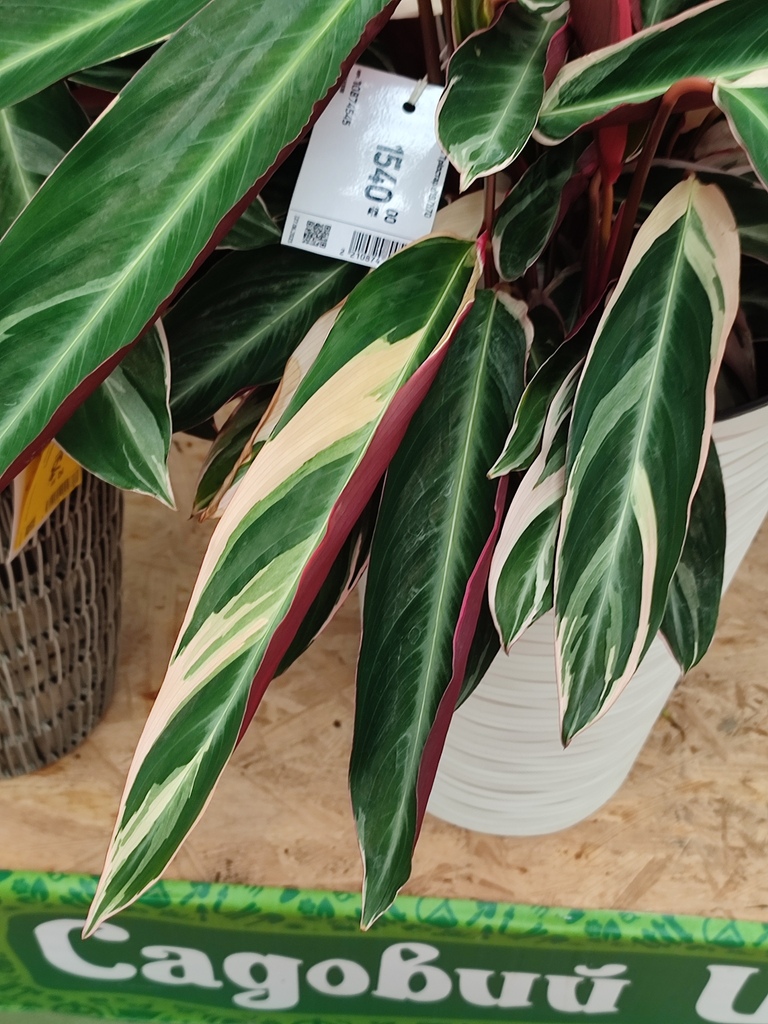
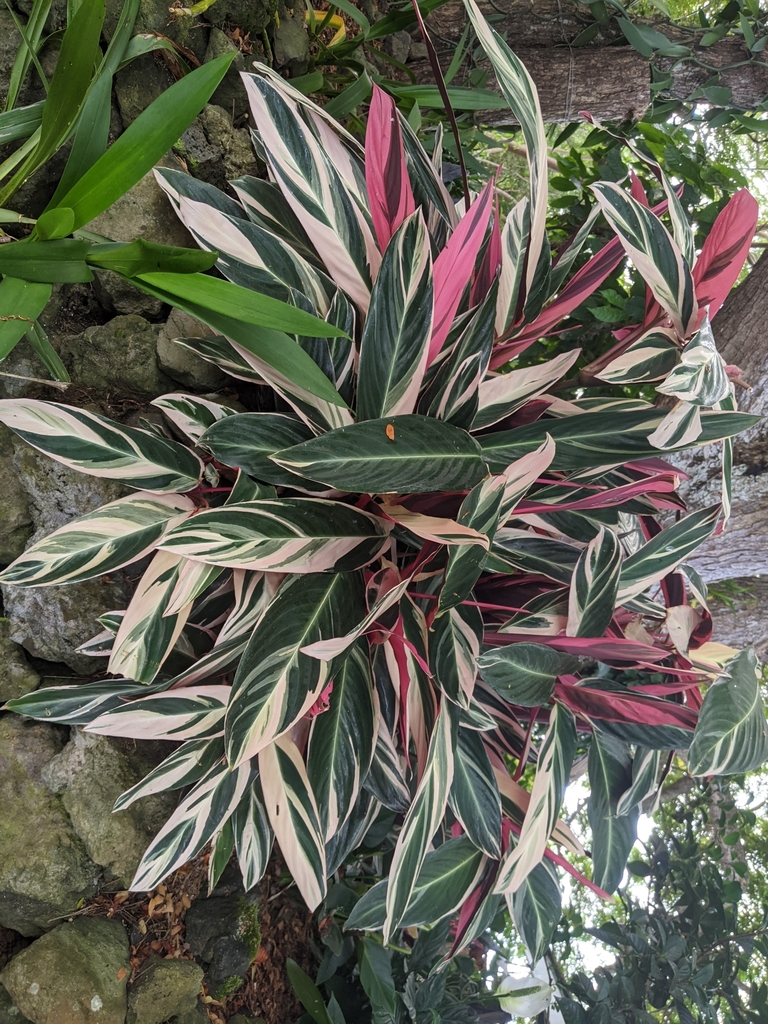
This is an upright, rhizomatous perennial with leaves clustered at the base and arranged along branching stems. The leaf blades may be lance-shaped or elongated and elliptical, with a dark olive-green color.
The forms described have oval, pointed leaf blades up to 40 cm long and up to 13 cm wide. The undersides are red or cherry red, so the plant's appearance changes noticeably as its leaves move.
- a rhizome that supports regrowth
- dark green upper leaf surfaces
- red undersides visible as the leaves fold at night
Leaves folding at night is a normal response, not a sign of wilting. In members of the Marantaceae family, the leaves change position throughout the day, and this movement is especially noticeable in the evening.
Origin and name
The species is native to Brazil; other plants in the genus occur in tropical regions of the Americas. For indoor growing, this matters less as a geographical detail than as a guide to conditions: the plant evolved without abrupt dry spells and under the shelter of taller vegetation.
The genus name Stromanthe comes from the Greek words stroma, meaning “bed,” and anthos, meaning “flower”; it is linked to the shape of the inflorescence. The name “Stromanthe” is used in everyday speech and in the trade; no separate folk name has become established for this species.
The former name Stromanthe sanguinea appears as a synonym. The specific epithet sanguinea refers to the red bracts and red undersides of the leaves.
Light and placement
Indoors, the plant needs bright indirect light without prolonged direct sun. In a spot that is too dark, variegated forms lose contrast, and new leaves may have less distinct markings.
A spot near a window with a sheer curtain, or to the side of a well-lit window, is better than deep shade. The plant is sensitive to sudden changes in conditions, so new leaves may temporarily unfurl more slowly after it is moved.
- bright indirect light
- protection from direct midday sun
- a consistent spot without cold drafts
Watering and potting mix
Watering should maintain even moisture without leaving the potting mix sodden. The rhizome needs access to air, so standing water around the roots quickly affects the condition of the leaves.
Water when the top layer of potting mix begins to dry. If the leaves lose firmness while the mix is wet, the cause is more often poor root function than drought.
The potting mix needs to be loose, moisture-retentive, and well aerated. A heavy mix that takes a long time to dry increases the risk of yellowing leaves and rhizome damage.
Flowering
In its natural cycle, small white flowers with orange-red sepals and cherry-red bracts appear in winter and spring. They are grouped in inflorescences, with the bracts providing more ornamental interest than the flowers themselves.
Indoors, the plant is more often grown for its leaves. A lack of flowers does not mean the plant is unhealthy: flowering requires a combination of maturity, light, and consistent care.
- small white flowers
- orange-red sepals
- cherry-red bracts
Common leaf problems
Yellowing leaves are often linked to excess moisture, especially if the potting mix stays wet after watering. Dry edges, by contrast, are more likely to develop with uneven moisture or dry air around the plant.
Leaves folding at night is not a problem. This is normal leaf movement that reveals the red undersides.
- yellowing from constantly wet potting mix
- dry edges from insufficient moisture around the leaves
- loss of contrast in low light
- limp leaves after an abrupt move
- leaf folding as normal daily movement
Propagation and repotting
The plant's rhizomatous structure allows propagation by division. Each division must have a living section of rhizome and its own shoots; otherwise, regrowth will be weak.
Repot when the rhizome becomes crowded or the potting mix loses its structure. An oversized pot is undesirable: the extra volume holds moisture longer than the roots can use it.
- division of an overgrown rhizome
- a separate section with shoots
- fresh, loose potting mix after repotting
- Light
- indirect light
- Watering
- even moisture
- Soil
- loose, moisture-retentive
- Difficulty
- moderate
- Cats and dogs
- safe
- Leaves indoors
- up to 40 cm long
- Native range
- Brazil
Care
This plant is more sensitive to unstable conditions than to occasional mistakes: sudden changes in light, cold, and humidity quickly show on its leaves. Care centers on even moisture, a warm spot, and indirect light.
- Light
- Provide bright indirect light. Choose a spot without direct midday sun. In deep shade, variegated forms lose contrast.
- Temperature
- Keep warm, away from cold drafts and sudden temperature changes. Cold, wet potting mix is especially harmful to the rhizome.
- Watering
- Water when the surface dries. Keep the potting mix slightly moist, but not wet. Standing water around the roots quickly affects the leaves.
- Soil
- Use a loose, moisture-retentive mix. The mix should retain moisture while allowing air through. Heavy, dense potting mix increases the risk of waterlogging.
- Feeding
- Feed during active growth. Feed when the plant is actively producing leaves. Too much fertilizer can cause weak or deformed growth.
- Support
- No support needed. The shoots grow upright, so support is usually unnecessary. It is more important not to bury the rhizome too deeply when repotting.
- Leaves
- Wipe dust off the leaves. The large leaves quickly collect dust. Wiping them helps maintain normal gas exchange at the leaf surface.
- Repotting
- Repot when the rhizome is crowded. Repot when the potting mix becomes compacted or the rhizome fills the pot. An oversized pot holds excess moisture longer.
Botany
3 ill.- Family
- Marantaceae
- Genus
- Stromanthe
- Species
- Stromanthe thalia
- Author and year
- (Vell.) J.M.A.Braga


Stromanthe thalia belongs to the Marantaceae family. It is a rhizomatous perennial with upright growth, branching stems, and large leaf blades with red or cherry-red undersides.
The species is native to Brazil. Species within the genus Stromanthe occur in tropical regions of the Americas, but Brazil is specifically given as the native range of this species.
The name Stromanthe sanguinea, by which the plant was often known in the past, is a synonym of Stromanthe thalia. It was used in reference to the red bracts and the color of the leaf undersides.
How it differs from similar plants
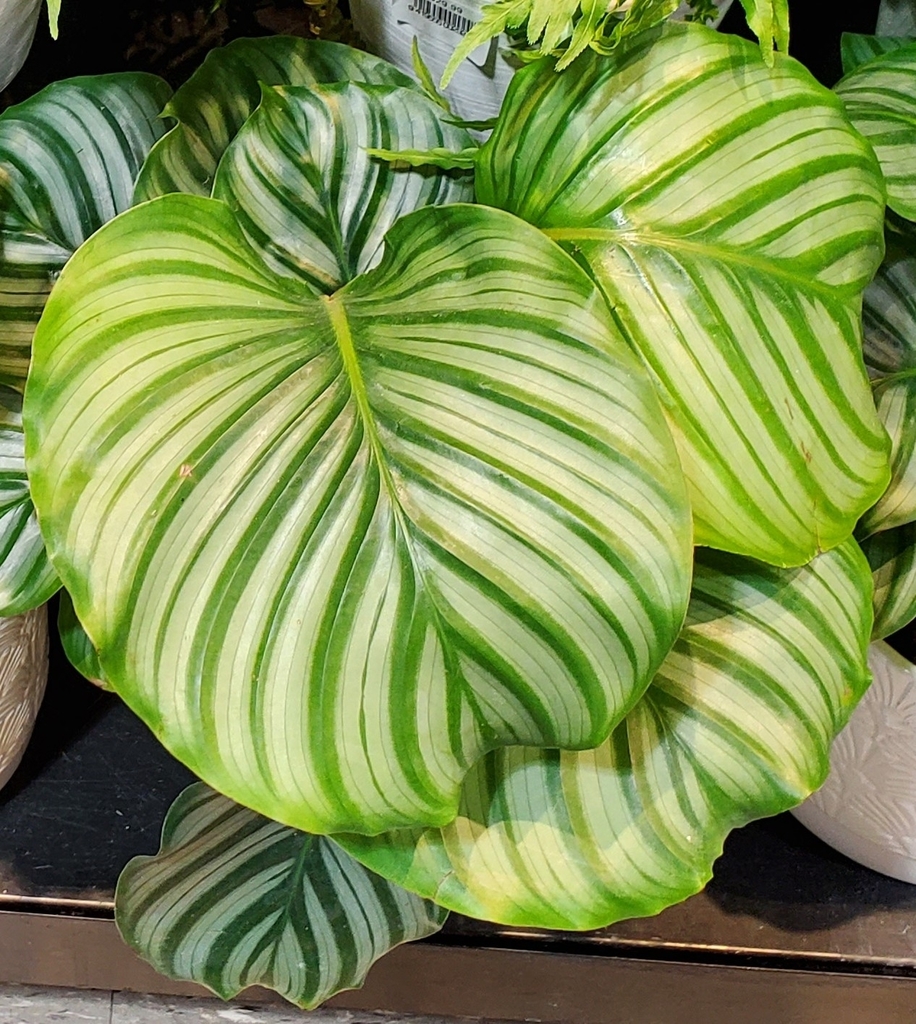
Peacock plant Goeppertia makoyana
- Stromanthe thalia reveals its red leaf undersides at night, while calathea is recognized by its broad, patterned leaves.
 Prayer plant
Maranta leuconeura
Prayer plant
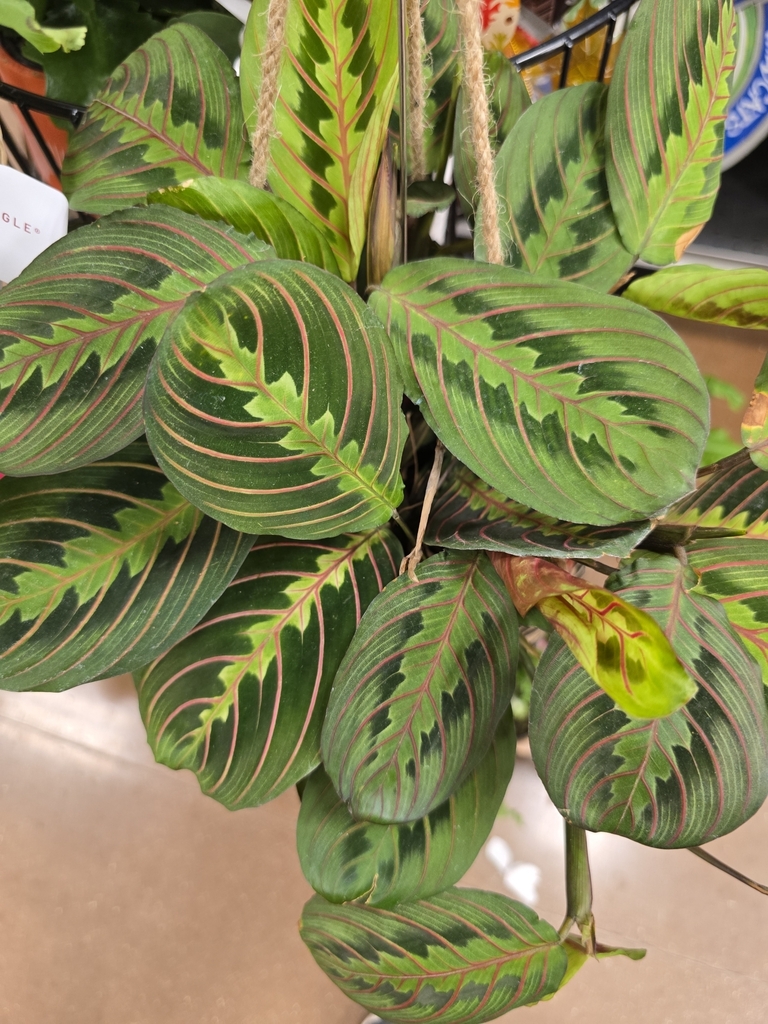
Maranta leuconeura- Maranta's main visible feature is the contrasting veins on its leaves, while Stromanthe thalia is distinguished by its red leaf undersides, which become visible at night.
ZZ plant Zamioculcas zamiifolia
- Zamioculcas has compound leaves that look like stems, while Stromanthe thalia produces leaf blades up to 40 cm long and reveals their red undersides at night.
Frequently asked questions
- Is it safe for cats and dogs?
- Yes. The plant is safe for cats and dogs.
- Why do the leaves fold at night?
- This is normal daily leaf movement. In the evening, the leaves fold and reveal their red undersides.
- Why are the leaves turning yellow?
- Most often because of excess moisture or potting mix that stays wet for too long. Check the roots and let the top layer dry before watering again.
- Why are the leaf edges drying out?
- Uneven moisture or dry air around the plant is often the cause. Consistent watering and a draft-free spot reduce the problem.
- Does it flower indoors?
- It can flower in winter and spring, but indoors it is more often grown for its leaves. A lack of flowers alone is not a sign of illness.