Thanksgiving cactus
Flat green segments with sharp teeth along the edges make the Thanksgiving cactus (Schlumbergera truncata) recognizable even before it flowers. Tubular pink, red, or white flowers form at the tips of the stems.


Stems and flowers
The green parts often called leaves are actually flat, jointed stems. Each segment is elongated, 4-6 cm long, with 4-8 pointed, forward-facing projections along its edges.
The segments have areoles with small spines. Flowers appear at the stem tips and are tubular, with a double corolla. They can be pink, red, or white; each flower is 7.5 cm long.
- flat, jointed stems without conventional leaf blades
- pointed teeth along the segment edges
- flowers at the stem tips rather than in leaf axils
Origin and growth habit
The species is native to southeastern Brazil. In the wild, it grows on trees, in hollows between branches where decomposed plant debris accumulates.
This growth habit is called epiphytic: the plant uses a tree for support but does not feed on its sap. Rainwater drains away quickly, so the roots are not adapted to a constantly wet growing medium.
The name Schlumbergera comes from the genus Schlumbergera, named after the French cactus collector Frédéric Schlumberger; the Ukrainian name meaning “Christmas plant” arose from its winter flowering when grown indoors.
Light and placement
The best spot is a well-lit windowsill without direct midday sun. An east- or west-facing window is better than an unshaded south-facing one.
Darkness at night is important for bud formation: constant artificial light in the evening can interfere with flowering. Once buds appear, it is best not to move the pot, as a change in conditions sometimes causes them to drop.
Watering and potting mix
Water moderately, moistening the potting mix after the top 1-3 cm has dried out. The root ball should not dry out completely, but waterlogging is even more dangerous for an epiphytic cactus.
| Condition | What it means |
|---|---|
| Potting mix | nutrient-rich, well-drained |
| pH | acidic, pH 5 |
| Watering | sparingly, after partial drying |
| Pot | no standing water around the roots |
In the wild, the roots receive moisture during rain but do not sit in water. Indoors, this means a loose potting mix, drainage, and careful watering during cooler periods.
Flowering and dormancy
In the wild, flowers appear at the start of the wet season. Indoors, flowering usually occurs in winter, with shorter days and cooler nights helping prepare the plant for it.
Temperatures from +12 °C to +25 °C are suitable for bud formation. Once buds appear, the plant needs more warmth and moisture, but without an abrupt change of location.
- bright indirect light
- darkness at night before bud formation
- moderate watering without letting the plant dry out
- no moving the pot once buds appear
- a cooler period before flowering
Common problems
Wilting segments are often related to the condition of the roots rather than a lack of water. If the potting mix stays wet for too long, the root system loses its ability to supply water to the stems, and the plant looks dehydrated.
- limp segments caused by overwatering
- bud drop after moving the pot
- poor flowering without darkness at night
- drying edges when conditions are too dry
- fungal rot affecting roots and segments
Possible diseases include fusarium, phytophthora, pythium, and bacterial infections. Prevention comes down to a well-drained potting mix, moderate watering, and removing visibly damaged parts.
Propagation and repotting
The plant is propagated vegetatively using stem sections. The best time to take cuttings is spring or early summer, when the stems begin active growth.
Repotting is not needed every year: repot young plants about once every 3 years and mature plants once every 5-6 years. When repotting, avoid compacting the mix too much so that the roots have access to air.
- Light
- bright indirect light
- Temperature
- +18…+22 °C
- Watering
- moderate
- Soil
- acidic, well-drained
- Difficulty
- moderate
- Cats and dogs
- safe
- Leaves indoors
- segments 4-6 cm
- Native range
- southeastern Brazil
Care
This is an epiphytic forest cactus, so its care differs from that of desert cacti. The main requirements are indirect light, an airy, acidic potting mix, and watering without waterlogging.
- Light
- Provide bright indirect light. A well-lit window without direct midday sun is suitable; a south-facing window needs shading.
- Temperature
- Keep at +18…+22 °C. This is the range for growth. For bud formation, +12…+25 °C is suitable; in winter, plants are often kept cooler, around +14…+16 °C.
- Watering
- Water moderately. Water when the top 1-3 cm of potting mix has dried out. The roots should not sit in water for long.
- Soil
- Use an acidic, well-drained mix. It needs a nutrient-rich, well-drained, acidic potting mix, around pH 5.
- Feeding
- Feed from March through September. During the growing season, feed once every 2 weeks with a compound mineral fertilizer for cacti.
- Leaves
- Mist in summer. In hot weather, the plant does better with higher humidity; reduce misting frequency in winter.
- Repotting
- Repot infrequently. Repot young plants once every 3 years and mature plants once every 5-6 years, using a loose, well-drained potting mix.
Botany
4 ill.- Family
- Cactaceae
- Genus
- Schlumbergera
- Species
- Schlumbergera truncata
- Author and year
- (Haw.) Moran
- Life form
- epiphytic cactus


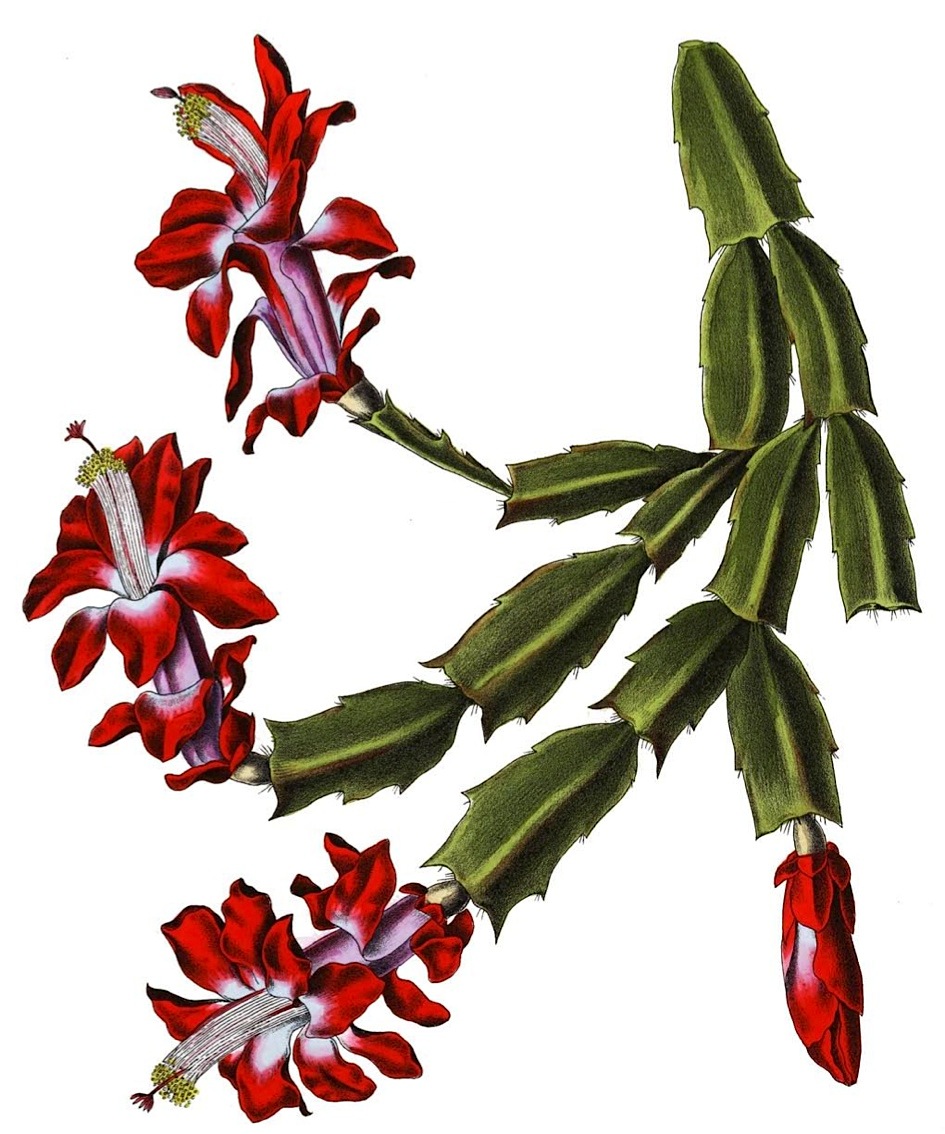
Thanksgiving cactus belongs to the family Cactaceae, but its structure differs from that of desert cacti. Its photosynthetic organs are flat, segmented stems rather than conventional leaf blades.
The species comes from southeastern Brazil, where it grows as an epiphyte on trees. Plant debris accumulates in hollows between branches, retaining some moisture while allowing excess water to drain quickly.
The flowers are zygomorphic and tubular, and grow at the tips of the segments. The pointed teeth along the stem edges help distinguish this species from close relatives in the genus with more rounded segment edges.
How it differs from similar plants
Bunny ears cactus Opuntia microdasys
- Thanksgiving cactus has flat segments with toothed edges, while Opuntia has oval segments with small yellow dots called areoles.
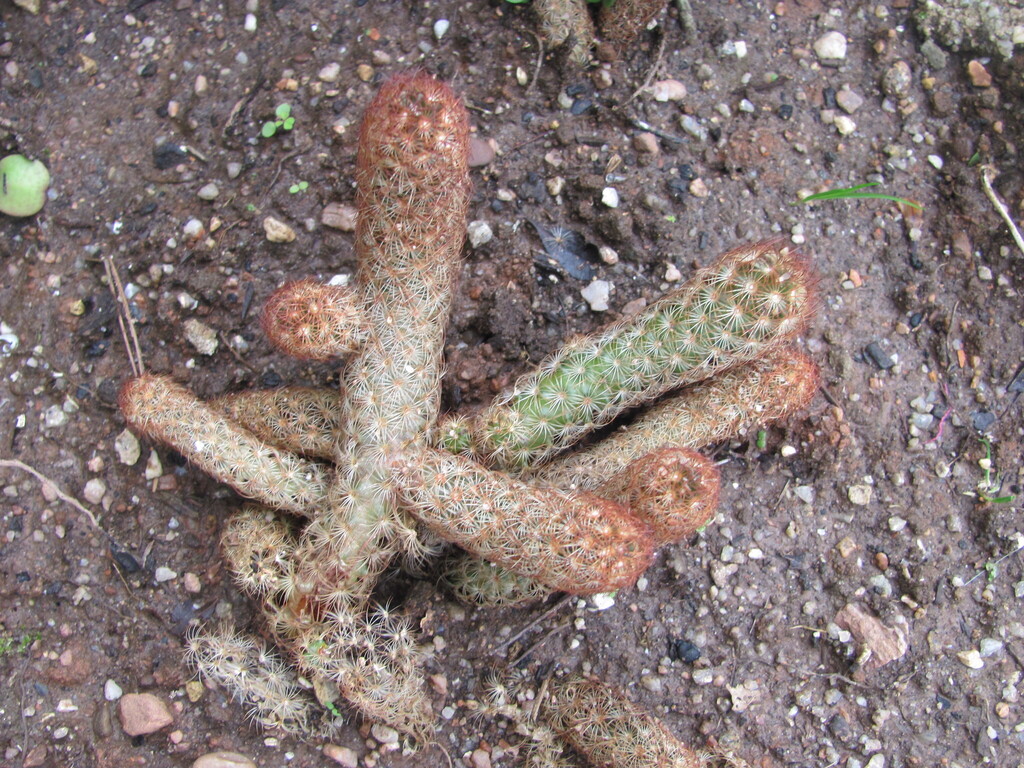 Ladyfinger cactus
Mammillaria elongata
Ladyfinger cactus
Mammillaria elongata- Thanksgiving cactus has flat, segmented stems, while Mammillaria forms elongated cylindrical stems in dense clumps.
Moon cactus Gymnocalycium mihanovichii
- Thanksgiving cactus needs bright indirect light, while Gymnocalycium responds better to partial shade.
Frequently asked questions
- Why isn't it flowering?
- Most often, the plant has not had a period of darkness at night, or the pot was moved after buds appeared. For bud formation, +12…+25 °C is suitable.
- Why are the segments wilting?
- Overwatering and root damage may be the cause. If the potting mix stays wet for too long, reduce watering and check the condition of the root system.
- Can I move it while buds are forming?
- Once buds appear, it is best not to move or turn the plant. An abrupt change in light or humidity can cause bud drop.
- Is it safe for cats and dogs?
- The plant is safe for cats and dogs. However, pets damaging the stems can spoil the plant's shape.
- How often should I repot it?
- Repot young plants about once every 3 years and mature plants once every 5-6 years. The potting mix should be acidic and well-drained.
