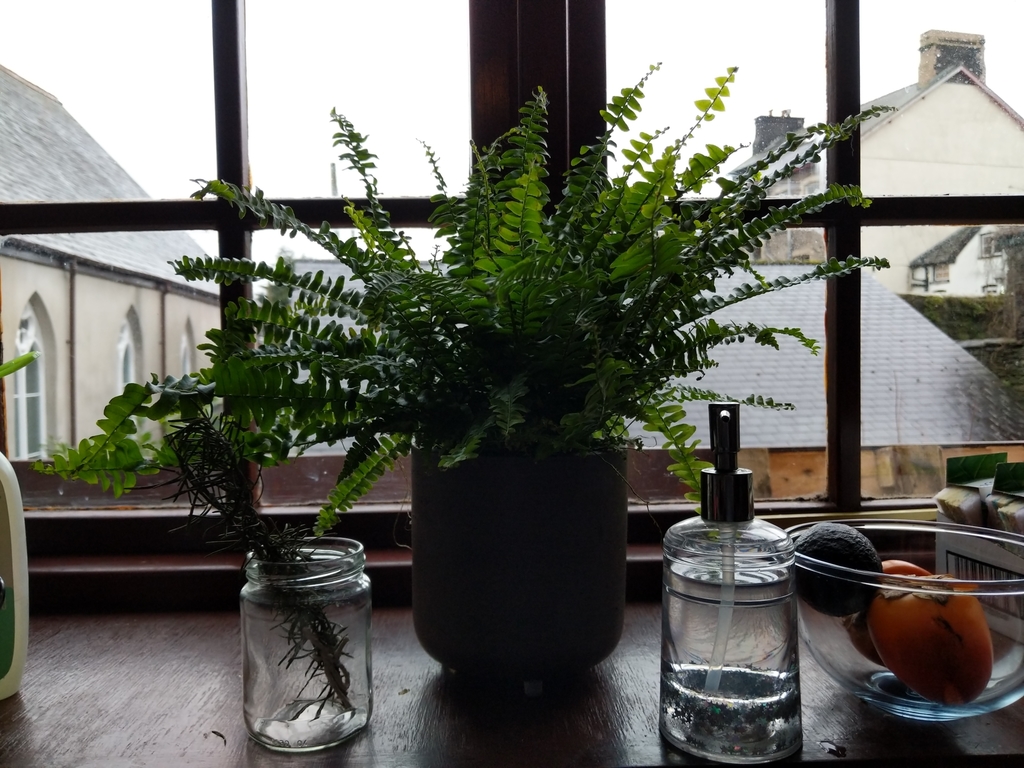
Chinese money plant
Its rounded, shield-shaped leaves might lead you to expect a peperomia, but the Chinese money plant (Pilea peperomioides) belongs to the nettle family. Its resemblance to peperomias is even reflected in its specific epithet.


Structure and growth
This is a rhizomatous herbaceous perennial with hairless stems. The stems may be upright, ascending, or climbing, 15-40 cm tall and 0.6-2 cm in diameter, with a woody base.
The leaves are concentrated mainly at the upper nodes, on leaf stalks of varying lengths — 2-17 cm. The leaf blade is shield-shaped and fleshy, green above and paler below, measuring 2.5-9 × 2-8 cm.
- upright or ascending stems
- rounded, shield-shaped leaf blades
- prominent semicircular leaf scars
- persistent triangular-ovate stipules
- fleshy green leaf tissue
The leaf stalk's attachment to the underside of the blade gives each leaf the appearance of sitting on a long stem. As a result, the foliage looks less like a dense bush and more like a collection of separate rounded blades on slender supports.
Origin and names
The species is native to southern China: Yunnan and Sichuan. The genus Pilea belongs to the family Urticaceae and contains 600-700 species, making it the largest genus in the nettle family.
The Ukrainian name, meaning “Chinese money plant,” is a trade and common name: it refers to the rounded leaf blades and the species' Chinese origin, rather than a botanical feature.
The Latin genus name comes from pileus — “felt hat” or “cap” — referring to the persistent calyx that covers the fruit. The specific epithet peperomioides indicates a visual resemblance to some peperomias, although the plant belongs to a different family.
Light and placement
Most members of the genus are shade-loving herbaceous plants or shrubs. For indoor growing, this means that direct midday sun is not essential for growth.
The foliage keeps its shape best in indirect light, where the stems do not stretch to one side. If the plant stands near a window, turn it occasionally so the leaf blades are more evenly distributed.
- indirect light without midday sun
- regular rotation of the pot
- distance from cold window glass
Longer internodes and stems leaning toward the light source are signs of insufficient light. When moving the plant, avoid abrupt changes in conditions, as the fleshy leaf stalks respond quickly to stress.
Watering and potting mix
Fleshy leaf blades do not make this plant a succulent in the full sense. It responds better to moderate moisture in the potting mix than to alternating waterlogging and prolonged drying out.
Water after the top layer begins to dry, when the mix is no longer wet but has not yet become a dry mass. Avoid excess water in the saucer: rhizomatous herbaceous plants do not tolerate standing water around their roots well.
- an airy potting mix
- a drainage hole in the pot
- watering after the top layer begins to dry
The mix should retain some moisture without compacting after every watering. If water sits on the surface for a long time, the problem is more often the structure of the mix or a pot without adequate drainage.
Flowering and flower clusters
The flowers of this species are small and pale green, sometimes with a pink tinge. The plant's ornamental appeal comes not from its flowers but from its rounded leaf blades and distinctive leaf stalks.
The species is often dioecious and sometimes monoecious, meaning that male and female flowers may occur on separate plants or on the same plant. Flower clusters appear at the upper nodes, and female clusters are shorter than male clusters.
| Feature | Description |
|---|---|
| Male flower cluster | raceme-like panicle, 18-28 cm |
| Flower stalk | thick, 5-14 cm |
| Achene | purple, about 0.8 mm |
Indoors, flowering should not be treated as the main measure of the plant's condition. Even without flower clusters, it can produce leaves normally and maintain a compact shape.
Common leaf problems
Yellowing, soft leaf stalks, or loss of firmness most often reflect an imbalance between light, water, and air in the potting mix rather than a single cause. The leaf blades are fleshy, so changes in their condition become apparent quickly.
- overly wet potting mix
- roots drying out for too long
- a sudden change in light
- a cold windowsill
- compacted potting mix
If only the older lower leaves turn yellow, this may be part of normal foliage renewal. If young leaf blades wilt at the same time, check the roots, the moisture in the potting mix, and the plant's location.
Individual leaf scars remain visible on the stem after leaves fall. This is a normal anatomical feature of the species, not pest damage.
Propagation and repotting
As a rhizomatous herbaceous perennial, the plant is propagated vegetatively using young rosettes or parts of the plant that already have their own growing point. Separating material without roots is risky: the fleshy tissues quickly lose their stored moisture.
Repot when the roots have filled the available space in the pot or the mix has become noticeably compacted. Do not bury the woody stem base, as it should remain above the constantly wet zone.
- separating plants with their own roots
- repotting without burying the stem deeply
- replacing compacted potting mix
After repotting, the plant needs stable conditions without harsh sun or excessive moisture. New growth develops more readily when the roots are functioning in a loose mix and the leaves remain firm.
- Light
- indirect light or partial shade
- Watering
- after the mix begins to dry
- Soil
- loose, well-drained
- Difficulty
- moderate
- Cats and dogs
- safe
- Size indoors
- 15-40 cm
- Leaves indoors
- 2.5-9 × 2-8 cm
- Native range
- southern China: Yunnan and Sichuan
Care
The Chinese money plant has fleshy leaves and a rhizomatous base, so it responds poorly to extremes: standing water, sudden drying out, and cold around the roots. Care centers on consistent light, a loose potting mix, and moderate watering.
- Light
- Provide bright indirect light. The genus Pilea is largely shade-loving; direct midday sun is not needed. In low light, stems stretch toward the window.
- Temperature
- Keep consistently warm. Avoid cold windowsills and sudden temperature changes. The fleshy leaf stalks quickly lose firmness when chilled.
- Watering
- Water when the top layer begins to dry. Water when the top layer is no longer wet. Avoid standing water, as this rhizomatous herbaceous plant is sensitive to constantly damp potting mix.
- Soil
- Use a loose, well-drained mix. The mix should let air through and resist compaction after watering. A hole for excess water to drain away is essential.
- Feeding
- Feed during active growth. Feed while the plant is actively producing leaves. In low light, excess nutrients only encourage more stretching.
- Support
- No support needed. The stems are naturally upright or ascending, reaching 15-40 cm tall. Only plants that have lost their shape need support.
- Leaves
- Wipe leaves gently. The leaf blade is fleshy and the leaf stalk is long. Do not pull on the leaf while cleaning it, as this can damage its attachment point.
- Repotting
- Repot when the roots are crowded. Repot when the roots have filled the pot or the mix has become compacted. Do not bury the woody stem base in wet mix.
Botany
4 ill.- Family
- Urticaceae
- Genus
- Pilea
- Species
- Pilea peperomioides
- Author and year
- Diels


Pilea peperomioides belongs to the family Urticaceae. The genus Pilea contains 600-700 species and occurs in tropical, subtropical, and warm temperate regions, except Australia and New Zealand.
The species has hairless stems with a woody base, prominent leaf scars, and shield-shaped, fleshy leaf blades. The leaf stalk can be considerably longer than the blade itself, making the leaves look raised above the stem.
The plant is native to southern China: Yunnan and Sichuan. The specific epithet peperomioides refers to its resemblance to peperomias, but this similarity is only visual: botanically, the plant belongs to the nettle family.
How it differs from similar plants
ZZ plant Zamioculcas zamiifolia
- The upright “stems” of Zamioculcas are actually compound leaves, while the Chinese money plant is recognized by its separate rounded, shield-shaped leaf blades.
Rex begonia Begonia rex
- Begonia has large, asymmetrical leaves, while the Chinese money plant has rounded, shield-shaped leaf blades.
Snake plant Dracaena trifasciata
- Sansevieria is recognizable by its long, stiff leaf blades, while the Chinese money plant has rounded, shield-shaped leaves.
Frequently asked questions
- Can I keep it at home if I have a cat?
- Yes, the plant is safe for cats and dogs.
- Why are the leaves turning yellow?
- The most common causes are overly wet conditions, drying out, or cold around the roots. Check the potting mix and the plant's location first.
- Does it flower indoors?
- Yes, but the flowers are small and pale green, sometimes with a pink tinge. The species' ornamental appeal comes mainly from its leaves.
- Why are the leaves getting smaller?
- This can happen in low light or after a sudden change in conditions. The plant stretches its stems toward the light source.
- How often should I repot it?
- When the roots have filled the pot or the mix has become compacted. Avoid burying the stem base deeply when repotting.