Heartleaf philodendron
The most common mistake is placing heartleaf philodendron (Philodendron hederaceum) in direct sun: in the wild, it is a climbing hemiepiphyte of tropical forests that climbs trees and clings to its support with aerial roots.


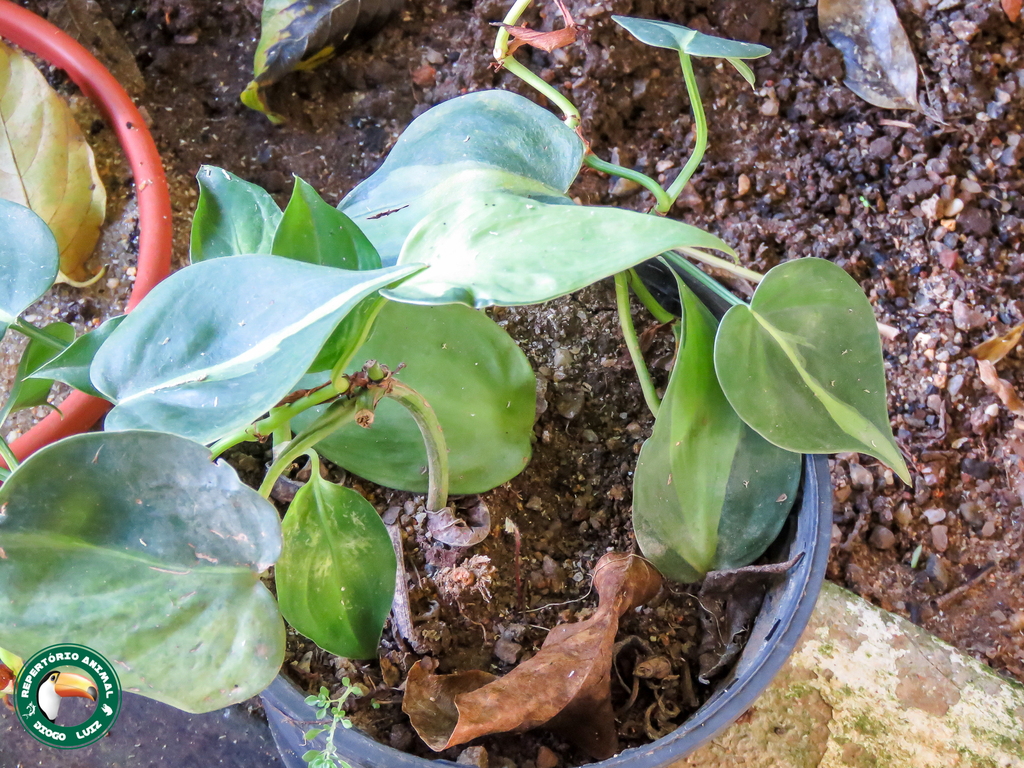
Stem and root structure
This is a climbing hemiepiphyte: in the wild, it can climb tree trunks, anchoring itself with roots at the nodes. The stems may climb or trail and have visible scars from fallen leaves.
Aerial roots are not an incidental decorative feature of this species but part of its growth habit. Indoors, they help it cling to a support; without one, the stems tend to trail over the edge of the pot.
Leaf blades
The leaves are broadly heart-shaped, with long petioles, and range from leathery to semi-leathery. The upper surface is usually dark green; the underside is lighter, sometimes with a reddish-purple tint.
- long internodes
- deciduous cataphylls
- broadly heart-shaped leaf blades
- long petioles
- solitary inflorescences in the leaf axils
Young plants may differ from mature plants in the appearance of their leaves. Indoors, they often retain a juvenile or intermediate growth form, so not every plant develops the appearance of a mature specimen in the wild.
Origin and light
The species is native to Central and South America, where it is associated with tropical forests. This habitat explains its dislike of strong direct sun: its leaf blades are not adapted to exposed, scorching light.
| In the wild | Indoors |
|---|---|
| Climbs trees | Grows on a support or trails |
| Receives filtered forest light | Needs a spot without direct sun |
| Anchors itself with aerial roots | Attaches at the nodes to a rough support |
It can be placed farther into a room if the spot is not dark during the day. The plant may survive in deep shade, but new growth usually becomes weaker and more stretched.
Watering and potting mix
Water regularly during active growth and reduce watering in winter. This does not mean keeping the potting mix constantly wet: roots need air, especially in a plant with a hemiepiphytic growth habit.
Avoid heavy, compacted potting mix because it holds water around the roots for too long. An airy mix works better, preventing water from sitting in the pot and stem nodes from rotting in constant dampness.
- moderately moist potting mix
- no standing water
- reduced watering in winter
Temperature and seasonal slowdown
In winter, the temperature must not fall below +12 °C. Growth slows in cool conditions, so reduce watering and let the potting mix dry out more than during the warmer months.
Dormancy here does not mean the plant goes completely ‘to sleep.’ It simply produces stems and leaves more slowly, and excess water becomes more of a risk during this time.
Inflorescences
As a member of the aroid family, the plant produces not a single ‘flower’ but an inflorescence—a spadix with a spathe. The inflorescence is usually solitary and sits in a leaf axil.
The spathe is usually green, and its tube may be reddish or dark red. Indoors, flowering is not the main sign of health: the condition of the leaf blades, petioles, and growing points is much more telling.
Common problems
Yellowing leaves are most often linked to watering problems: either the potting mix stays wet for too long or watering is highly inconsistent. If yellowing is accompanied by softening of the stem near the nodes, check the roots and the bases of the shoots first.
Dry patches on the leaf blades can appear after exposure to direct sun, especially if the plant was placed closer to a window without shading. Elongated internodes more often indicate insufficient light or a lack of support for climbing.
- Light
- no strong sun
- Watering
- regular, reduced in winter
- Soil
- airy potting mix
- Difficulty
- moderate
- Cats and dogs
- toxic
- Leaves indoors
- 11-40(50) × 8-24(34) cm
- Native range
- Central and South America
Care
This species grows as a climbing hemiepiphyte, so indoors it needs indirect light, moderate watering, and a support it can cling to. Constantly wet potting mix and direct sun cause more problems than a slight lack of space.
- Light
- Provide indirect light without direct sun. Strong sun is unsuitable; the plant does not have to be near a window as long as the spot gets enough light.
- Temperature
- Keep above +12 °C in winter. Growth slows in cool conditions, so reduce watering. This is the minimum temperature for winter care.
- Watering
- Water regularly, less in winter. Keep the potting mix moderately moist during the warmer months; in the colder months, let it dry out more between waterings.
- Soil
- Use an airy potting mix. This climbing hemiepiphyte produces aerial roots, so avoid heavy, compacted potting mix.
- Support
- Provide a support or hanging pot. The stems can climb or trail; a support makes it easier for aerial roots at the nodes to attach.
- Leaves
- Inspect leaf blades and petioles. The leaves are leathery, with long petioles; gently remove dust so the leaf blades receive more light.
- Repotting
- Repot when the roots are crowded. Repot once the roots have filled the potting mix; this is also a convenient time to refresh or replace the support.
Botany
4 ill.- Family
- Araceae
- Genus
- Philodendron
- Species
- Philodendron hederaceum
- Author and year
- (Jacq.) Schott


Heartleaf philodendron (Philodendron hederaceum) belongs to the family Araceae. It is a climbing hemiepiphyte with aerial roots, long internodes, and deciduous cataphylls that protect young growth and then fall off.
The leaf blade is broadly heart-shaped, 11-40(50) cm long and 8-24(34) cm wide. The petioles are long, and the leaf surface may be semi-glossy or matte.
The inflorescence consists of a spadix and a spathe. The species typically has solitary inflorescences, often with a green spathe and a reddish to dark red tube.
Popular cultivars
3- ivy-likePhilodendron hederaceum
- broadly heart-shaped dark green leaves; the spathe is usually green, with a reddish to dark red tube
- bipinnatifidumPhilodendron bipinnatifidum
- tree-like growth habit, not a vine
- jacquiniiPhilodendron jacquinii
- hairy stems and petioles, thinner leaf blades, and larger veins on the undersides of the leaves
How it differs from similar plants
ZZ plant Zamioculcas zamiifolia
- Zamioculcas looks like a clump of large compound leaves that resemble stems, whereas heartleaf philodendron has a climbing habit and clings to a support with aerial roots.
Peace lily Spathiphyllum wallisii
- Spathiphyllum forms a clump of basal leaves with no visible stem and has a white spathe beside the spadix, while heartleaf philodendron is recognized by its climbing habit and aerial roots.
Anthurium Anthurium andraeanum
- Anthurium needs bright indirect light, while heartleaf philodendron should be placed out of strong sun.
Frequently asked questions
- Can I place it away from a window?
- Yes, but without strong direct sun. If the room is dark farther from the window, the internodes stretch and growth weakens.
- Can I keep it at home if I have a cat?
- The plant is toxic to cats and dogs. Place the pot where pets cannot chew the leaves and stems.
- Why are the leaves turning yellow?
- The most common cause is overly wet potting mix or abrupt changes in watering. Check the roots and the base of the stem.
- Do I need to cut off the aerial roots?
- Yes, they are a natural part of a climbing hemiepiphyte's structure. They help the stem attach to a support.
- Does it need a support, or is a hanging pot better?
- It can be grown either way. On a support, the stems climb; in a hanging pot, they trail over the edge.


