Baby rubberplant
The most common mistake is watering a baby rubberplant (Peperomia obtusifolia) as if it had thin leaves. Its thick leaves and fleshy stems store water, so constantly wet potting mix does more harm than good.

Leaf and stem structure
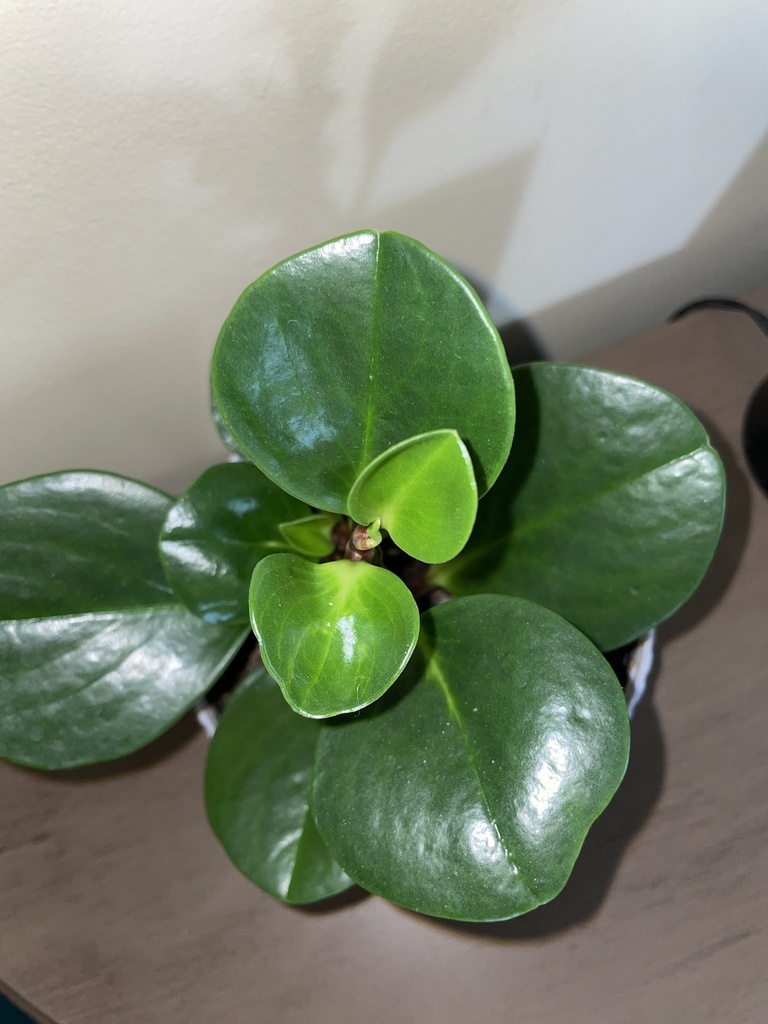
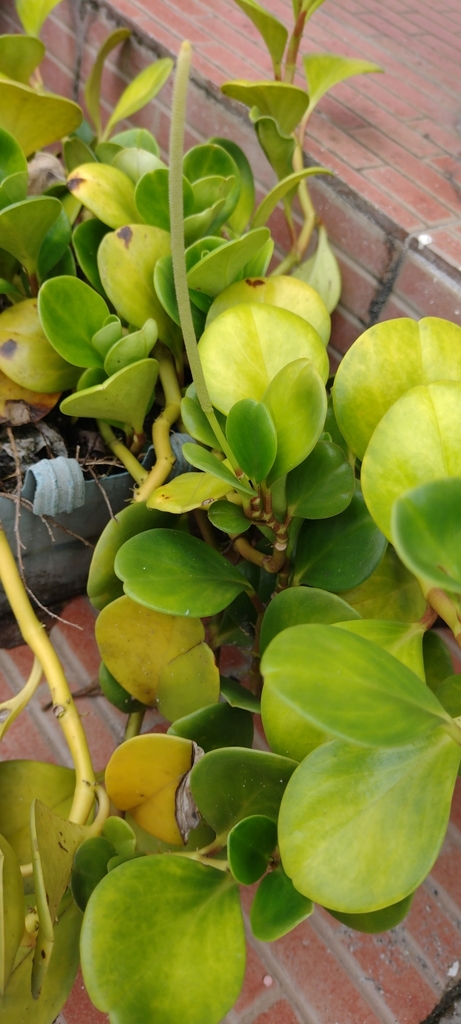
This species is grown for its foliage rather than its flowers. The leaves are thick, leathery, and glossy, with rounded tips; this blunt shape helps distinguish it from other peperomias.
Its fleshy stems mean the plant responds to watering differently from species with thin leaves. Water is stored in its tissues, while excess moisture in the potting mix quickly causes problems at the base of the stems.
- thick, fleshy stems
- thick, leathery leaves
- leaves arranged opposite each other on the stem
This structure allows the plant to tolerate a short interval between waterings better than constant moisture around its roots. Keep this in mind when choosing a pot and repotting.
Origin and family
The species is native to tropical America. Indoors, its tropical origins are reflected in its need for warmth and gentle light, but it does not need constantly wet potting mix.
Baby rubberplant belongs to the family Piperaceae and the genus Peperomia. The genus name is linked to Greek words referring to a resemblance to pepper; this describes the botanical origin of the name, not a culinary use for the houseplant.
| Feature | Details |
|---|---|
| Native range | tropical America |
| Family | Piperaceae |
| Genus | Peperomia |
| For cats and dogs | safe |
Light and placement
Bright indirect light is best. Direct sunlight on a windowsill can damage the leaves, while deep shade gradually weakens growth.
A spot near a window with indirect light usually provides more consistent conditions than a shelf in a dark corner. If the stems stretch and new leaves grow smaller, the plant is not getting enough light.
- bright indirect light
- protection from direct sunlight
- a consistently warm spot without sudden changes
In a warm room, the leaves stay firm and glossy longer. Move the plant gradually from a very bright spot to a dark one to avoid disrupting its growth rhythm.
Watering and potting mix
The main rule is not to keep the roots constantly wet. Fleshy stems and thick leaves do not mean the plant can be left dry for long periods, but excess water is more dangerous than a short interval between waterings.
| Season | Watering |
|---|---|
| Spring and summer | water more during growth |
| Fall | reduce gradually |
| Winter | water only enough to keep the root ball from drying out completely |
The potting mix should drain freely and not compact around the base of the stems. If it stays wet for a long time after watering, the risk of rot increases even in suitable light.
- soft stem bases
- wilted leaves after watering
- dark spots near the surface of the potting mix
These signs are more often linked to too much water than too little. Before watering again, assess not just the top layer of the mix but the plant's overall condition.
Flowering and energy use
Indoors, the plant may produce slender, upright spadices bearing small white flowers. They have almost no scent and are far less ornamental than the foliage.
Flowering is usually noticeable in summer. If dense foliage is the priority, flower stalks are often removed as they begin to form so the plant does not spend resources on the inflorescences.
Some stems may look weaker after flowering. This is not always a sign of disease: sometimes the plant is simply reallocating energy between leaf growth and flowering.
Propagation and repotting
The plant is propagated vegetatively through stem cuttings, leaf cuttings, or division. These methods are more practical for home growers than propagation from seed.
- stem cuttings
- leaf cuttings
- division
A cutting should be firm, with no soft areas or spots. If the parent plant has suffered from overwatering, take cuttings only from healthy sections of stem.
When repotting, inspect the stem bases and roots. The fresh potting mix should not hold water longer than needed to moisten the root ball.
Why the plant loses its good looks
Wilted or dull leaves often follow watering mistakes. In baby rubberplant, this does not always mean "give it more water": if the potting mix is wet, additional watering makes the condition worse.
- constantly wet potting mix
- a dried-out root ball
- summer heat near the window glass
- spider mites
- scale insects
Pests are often revealed by sticky residue, tiny dots, webbing, or uneven yellowing of the leaves. Isolate the affected plant and treat it with a suitable product for the pest identified.
If the leaves wilt in hot weather, do not automatically increase watering. First check the light, the temperature near the window, and the condition of the potting mix after the previous watering.
Care
Baby rubberplant grows best in a warm spot with indirect light and moderate watering. Its thick leaves store moisture, but its roots are not adapted to constantly wet potting mix.
- Light
- Provide bright indirect light. Choose a bright spot out of direct sunlight. In deep shade, stems weaken and new leaves develop more slowly.
- Temperature
- Keep around +22 °C. This temperature is suitable during the growing season. Keep the plant cooler in winter: +17…+18 °C.
- Watering
- Water moderately. Water more in spring and summer, then reduce watering in fall. In winter, water just enough to keep the root ball from drying out completely.
- Soil
- Use a light potting mix. The mix should drain freely and not stay wet around the base of the stems. Waterlogged conditions quickly damage roots and stems.
- Feeding
- Feed every two weeks. Feed during active growth. In winter, when growth slows, fertilizer is usually unnecessary.
- Support
- No support needed. The fleshy stems form a compact canopy. Add support only if individual stems become unstable after stretching.
- Leaves
- Wipe off dust. Clean the glossy leaves with a soft, damp cloth. Misting does not replace watering and should not leave the potting mix wet.
- Repotting
- Repot when the pot is cramped. Check the stem bases and roots when repotting. Soft, dark areas are more likely to appear after overwatering.
Botany
4 ill.- Family
- Piperaceae
- Genus
- Peperomia
- Species
- Peperomia obtusifolia
- Author and year
- (L.) A.Dietr.


Baby rubberplant (Peperomia obtusifolia) is a member of the family Piperaceae from tropical America. Indoors, it is grown as a foliage plant with fleshy stems and thick leaves.
The leaves are arranged opposite each other on the stem and have a leathery texture and glossy surface. This structure helps the tissues retain moisture but does not protect the roots from rot in waterlogged potting mix.
The inflorescence is a slender spadix bearing small white flowers. The flowers have little ornamental value, so the plant's condition is more often assessed by the density of its foliage, the firmness of its stems, and the absence of spots around their bases.
Popular cultivars
4- Blunt-leavedPeperomia obtusifolia
- thick, glossy, dark green leaves
- WrinkledPeperomia caperata
- wrinkled, heart-shaped leaves with prominent veins
- SilveryPeperomia argyreia
- striped, silver-green leaves resembling watermelon rind
- MulticoloredPeperomia clusiifolia Ginny
- variegated leaves with cream and pink edges
How it differs from similar plants
ZZ plant Zamioculcas zamiifolia
- The upright "stems" of Zamioculcas are actually compound leaves, whereas baby rubberplant is a compact plant with fleshy stems and thick leaves.
Rex begonia Begonia rex
- Begonia is easily recognized by its large, asymmetrical leaves, whereas baby rubberplant is described as a compact plant with thick leaves.
Snake plant Dracaena trifasciata
- Sansevieria has long, stiff leaves, while baby rubberplant has a compact growth habit and fleshy stems.
Frequently asked questions
- Is baby rubberplant safe for cats and dogs?
- Yes, the plant is safe for cats and dogs. If a pet chews the leaves, move the pot to prevent damage to the plant itself.
- Why are the leaves turning yellow?
- The most common cause is overwatering or a sudden change in conditions. If the potting mix is wet, no additional watering is needed.
- How often should I water baby rubberplant?
- Water moderately: more during the growing season, less in fall, and in winter only enough to keep the root ball from drying out completely.
- Does baby rubberplant flower?
- Yes, it can produce slender, upright spadices bearing small white flowers. The plant is grown mainly for its foliage rather than its flowers.
- How do I propagate baby rubberplant?
- Stem cuttings, leaf cuttings, and division are suitable methods. Take cuttings from firm, healthy parts with no spots or soft areas.