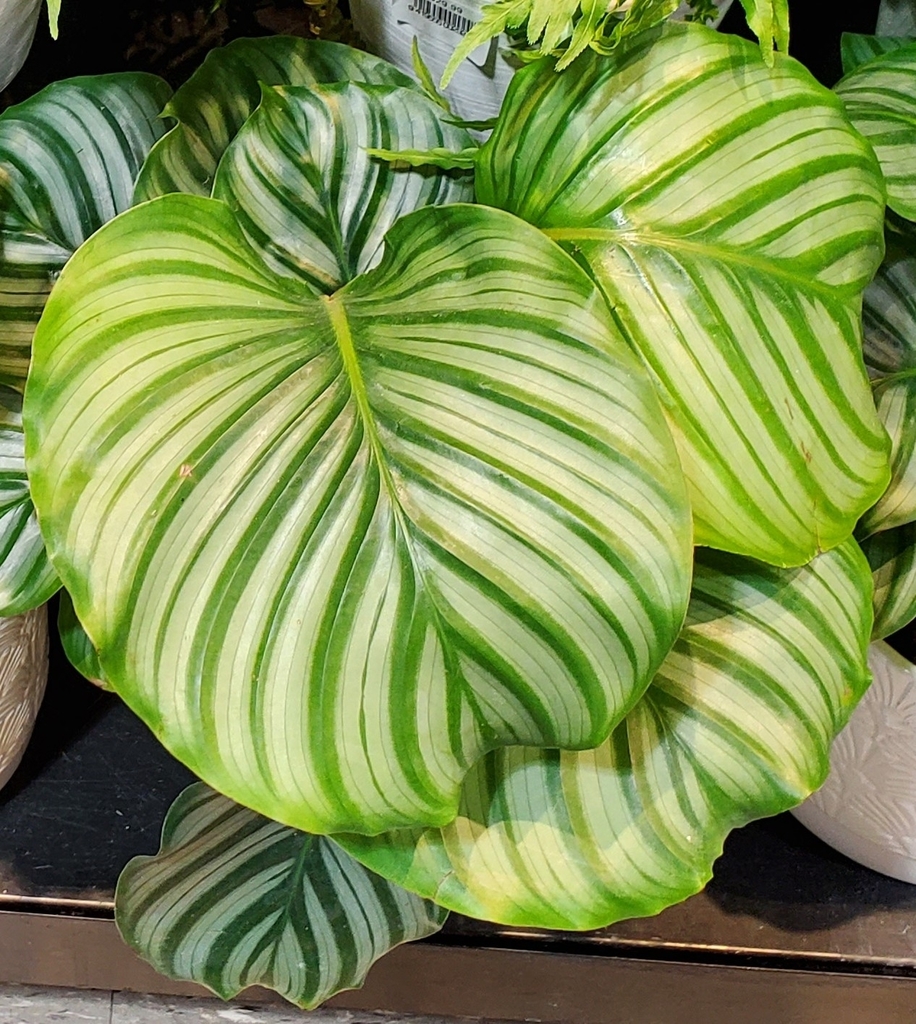
Prayer plant
Contrasting leaf veins are the first thing that identifies a prayer plant (Maranta leuconeura). Indoors, its leaves show how it responds to drying out, overwatering, and dry air.

Leaf patterns and movement
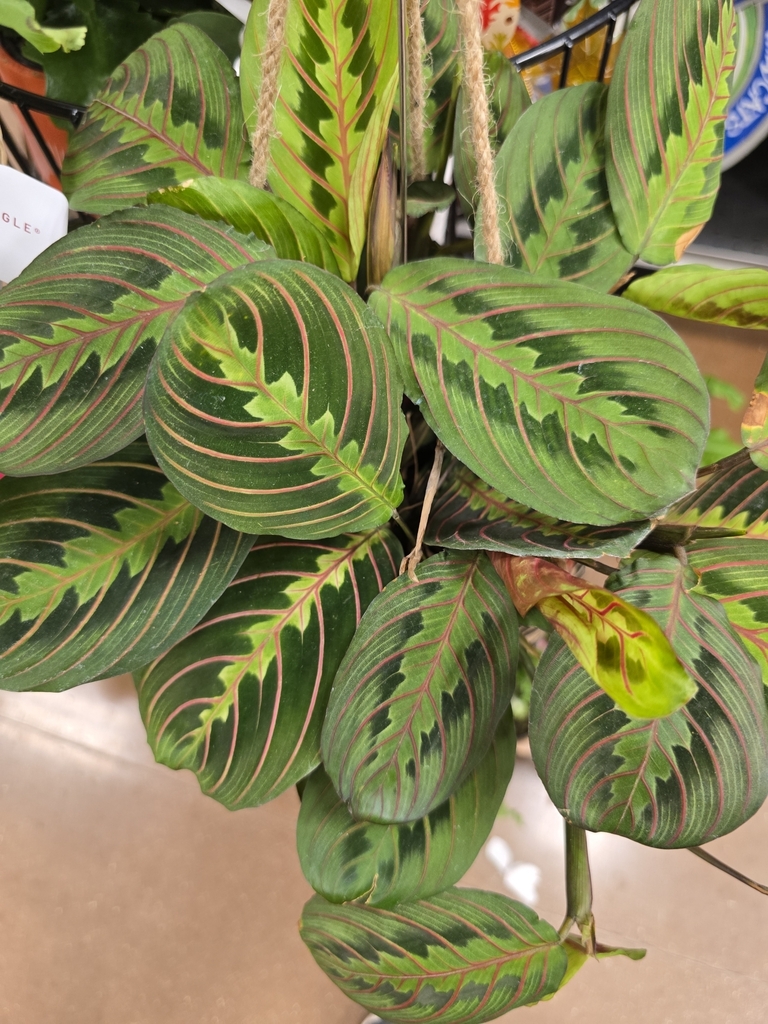
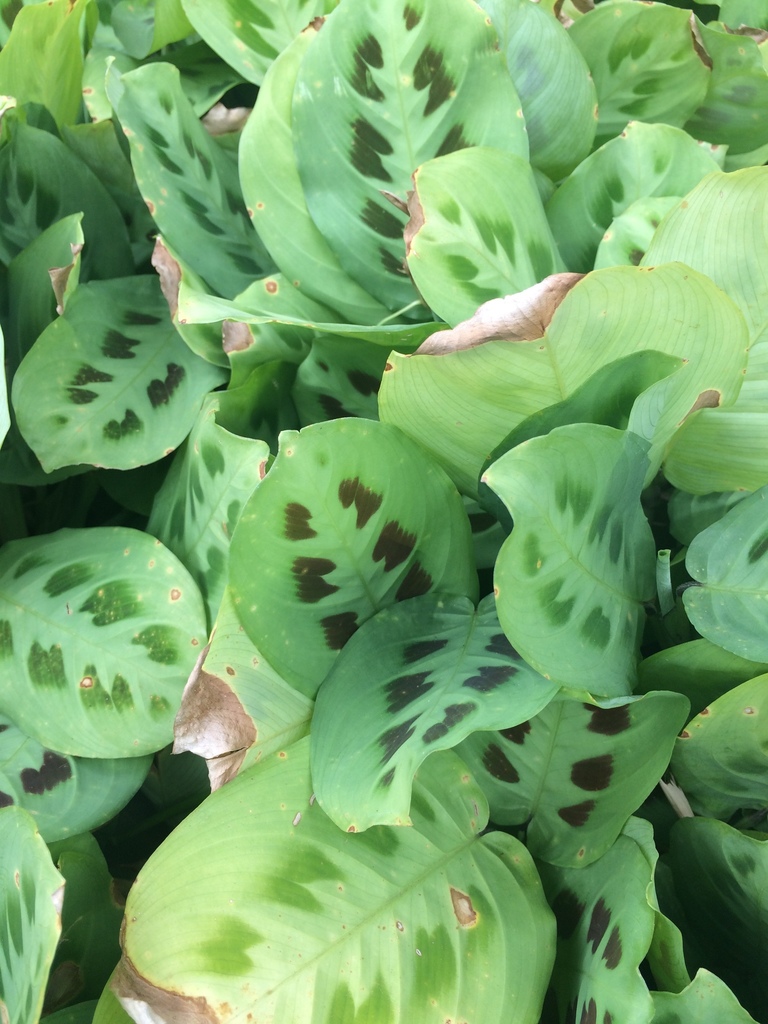
The leaves are the main ornamental feature of a prayer plant. Their contrasting pattern along the veins makes the plant easy to recognize even without flowers.
The leaves respond to conditions throughout the day and may change their angle. This is a normal feature of the plant, not a sign of disease, as long as the leaves stay firm and their edges do not dry out.
Origin and indoor conditions
Prayer plant is native to Brazil. Indoors, it needs steady conditions without abrupt changes: its leaves stay in better condition when light, humidity, and watering do not change suddenly.
Direct sun is unsuitable for the leaves: their pattern may fade and their edges may dry out. Bright indirect light or a spot slightly to one side of a window works best.
Watering and potting mix
Prayer plant roots should not be kept in either dried-out or constantly wet potting mix. Base watering on the condition of the top layer, not the calendar: it should dry slightly before the next watering.
- a light potting mix that does not compact
- drainage holes in the pot
- moderate moisture without standing water
- no cold drafts after watering
- regularly emptying water from the saucer
If the leaves are limp and the potting mix is wet, the problem is often a lack of air around the roots rather than a lack of water. In this situation, reduce watering and check whether the mix has compacted.
Humidity and leaves
Dry air most often shows up at the leaf edges, which turn brown or curl. Misting has only a brief effect, so consistent humidity matters more than occasional treatments.
Clean dust off the leaves with a soft, damp cloth. This is not a treatment, but it helps maintain normal gas exchange and makes early changes in the plant's condition easier to spot.
Why leaves turn yellow or dry out
A single old leaf turning yellow does not always mean there is a problem: the plant gradually replaces old leaves with new ones. Widespread yellowing is a concern, especially when accompanied by wet potting mix or limp leaf stalks.
- overwatering and a lack of air around the roots
- potting mix drying out between waterings
- direct sun on the leaves
- dry air near a radiator
- a sudden change of location or a draft
Dry tips do not recover; they can only be carefully trimmed within the dry tissue. Finding the cause matters more, otherwise new leaves will develop the same pattern of damage.
Repotting and propagation
Repot a prayer plant when the potting mix has compacted or the roots have become crowded. Avoid an oversized pot: excess potting mix holds water around the roots for longer.
The easiest way to propagate it vegetatively is to divide a mature plant when repotting. Each division needs its own roots and several shoots; otherwise, recovery will be slow.
- Light
- bright indirect light
- Watering
- moderate
- Soil
- light, moisture-retentive
- Difficulty
- moderate
- Cats and dogs
- safe
- Native range
- Brazil
Care
Prayer plant is sensitive less to a single mistake than to inconsistent conditions: drying out, overwatering, and dry air quickly affect its leaves. Keep care consistent, without sudden changes in location or watering routine.
- Light
- Provide bright indirect light. Direct sun can damage the leaves. In deep shade, the pattern usually fades and growth slows.
- Temperature
- Steady room warmth suits this plant, without cold drafts or sudden temperature changes after watering.
- Watering
- Water when the mix has dried slightly. Keep the potting mix moderately moist, but not wet. Water sitting around the roots quickly causes limp, yellowing leaves.
- Soil
- Use a light, moisture-retentive mix. The mix should retain moisture while allowing air through. Dense potting mix increases the risk of root rot.
- Feeding
- Feed moderately during the growing season. Apply fertilizer cautiously: excess salts can cause dry leaf edges.
- Support
- No support needed. The plant does not produce heavy climbing stems, so it usually needs no support.
- Leaves
- Wipe off dust. Remove dust with a soft, damp cloth. Dry edges will not turn green again; you can trim them within the dry tissue.
- Repotting
- Repot when the pot is crowded. Repot if the roots have filled the pot or the potting mix has compacted. An oversized pot holds excess water for longer.
Botany
2 ill.- Family
- Marantaceae
- Genus
- Maranta
- Species
- Maranta leuconeura
- Author and year
- É.Morren

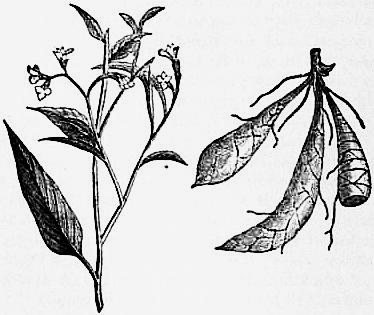
Prayer plant (Maranta leuconeura) belongs to the family Marantaceae and the genus Maranta. The species is described as a plant from Brazil and is grown indoors primarily for its foliage.
The leaves have a distinctive vein pattern that makes the plant easy to recognize among other foliage plants. Leaf condition is the clearest indicator of whether the light, watering, and humidity suit a prayer plant.
Prayer plant is safe for cats and dogs. It still needs to be protected from chewing: physical damage to the leaves does not heal and remains visible until the leaf naturally dies.
How it differs from similar plants
Peacock plant Goeppertia makoyana
- Prayer plant is easier to identify by its contrasting leaf veins, while calathea stands out for its broad, patterned leaves and need for low or medium light.
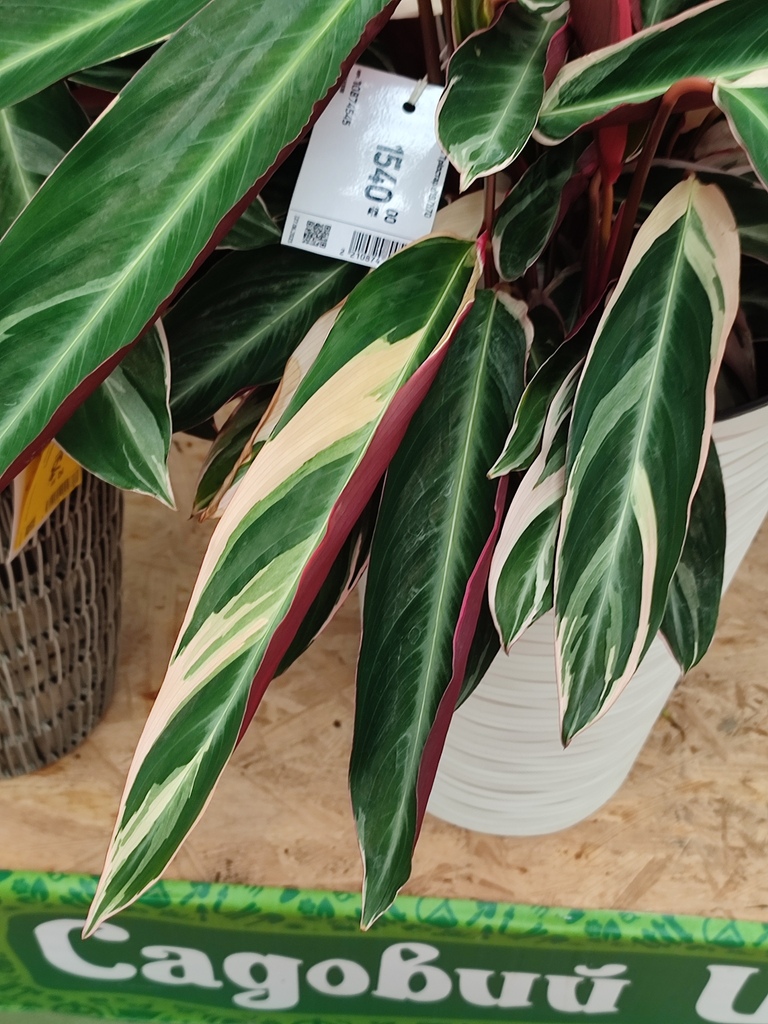 Stromanthe thalia
Stromanthe thalia
Stromanthe thalia- Stromanthe reveals the red undersides of its leaves at night, while prayer plant's main visible feature is its contrasting veins.
ZZ plant Zamioculcas zamiifolia
- Zamioculcas has conspicuous compound leaves that resemble stems, while prayer plant is recognized by its flat leaves with contrasting veins.
Frequently asked questions
- Why are the leaf tips drying out?
- Most often because of dry air, drying out, overwatering, or direct sun. Damaged edges do not recover.
- Can I keep it at home if I have a cat?
- Yes, prayer plant is safe for cats and dogs. However, chewing physically damages the leaves.
- How often should I water it?
- Water once the top layer of potting mix has dried slightly. A constantly wet pot is more dangerous for the roots than a short pause between waterings.
- Why are the leaves drooping?
- Overwatering, drying out, or a sudden change in conditions may be the cause. Check the moisture in the potting mix first rather than automatically adding water.
- Where is the best place to put the pot?
- Bright indirect light without direct sun suits this plant. In a dark spot, growth slows and the leaf pattern may become less distinct.