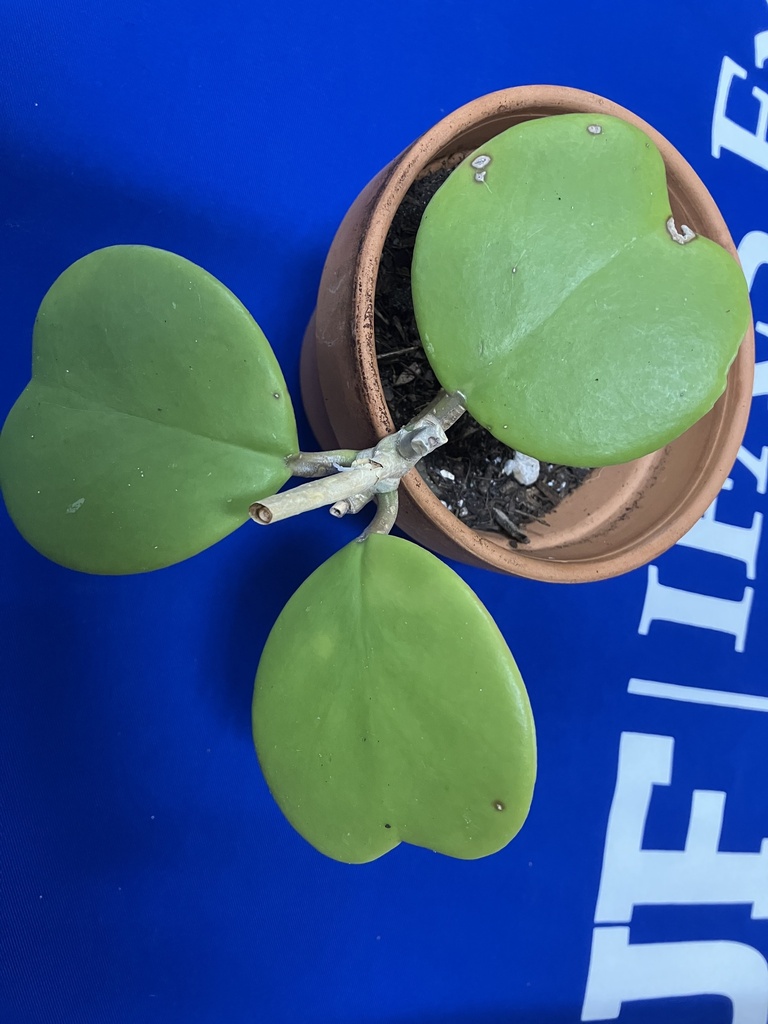
Miniature wax plant
Its thick, leathery leaves make the miniature wax plant (Hoya bella) look like a succulent suited to a dry windowsill, but it is an epiphyte: it needs an airy potting mix, indirect light, and watering without waterlogging.

Structure and growth habit
This is an epiphytic hoya with thin, trailing stems. Indoors, it is usually grown as a trailing plant: the stems hang down from a hanging planter or shelf rather than needing rigid vertical support.
The leaves are lance-shaped, green, thick, and leathery, with a natural sheen. This species has small leaves, up to 2.5 cm long, giving it a smaller, more delicate appearance than many other hoyas.
- thin, trailing stems
- lance-shaped green leaves
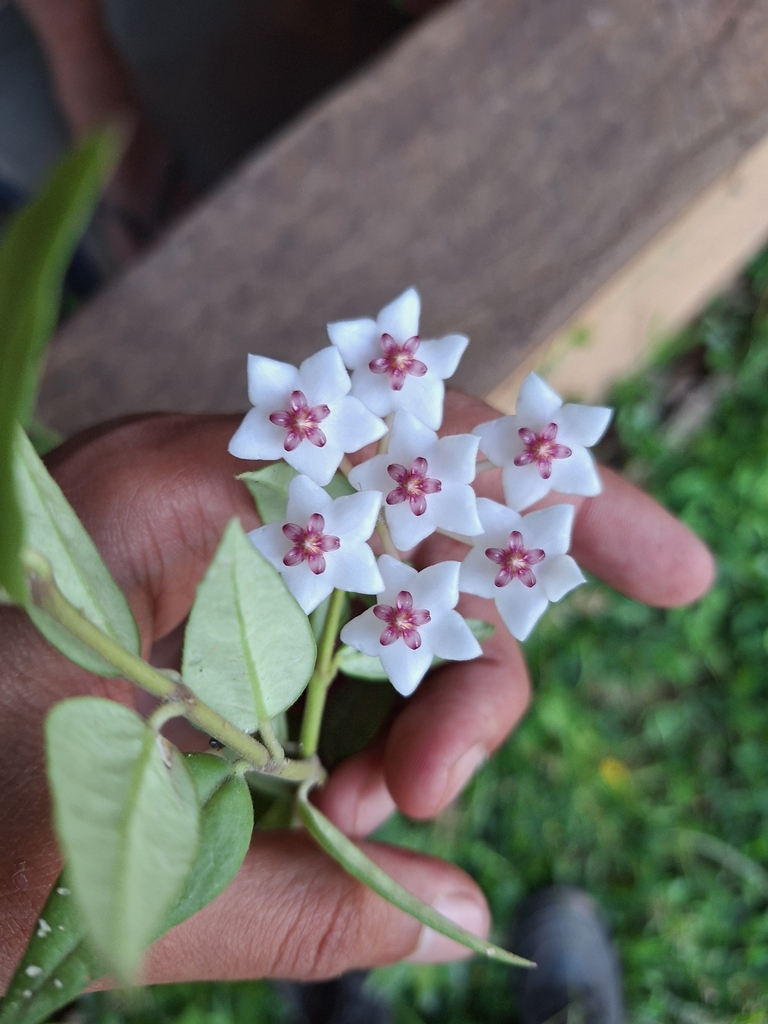
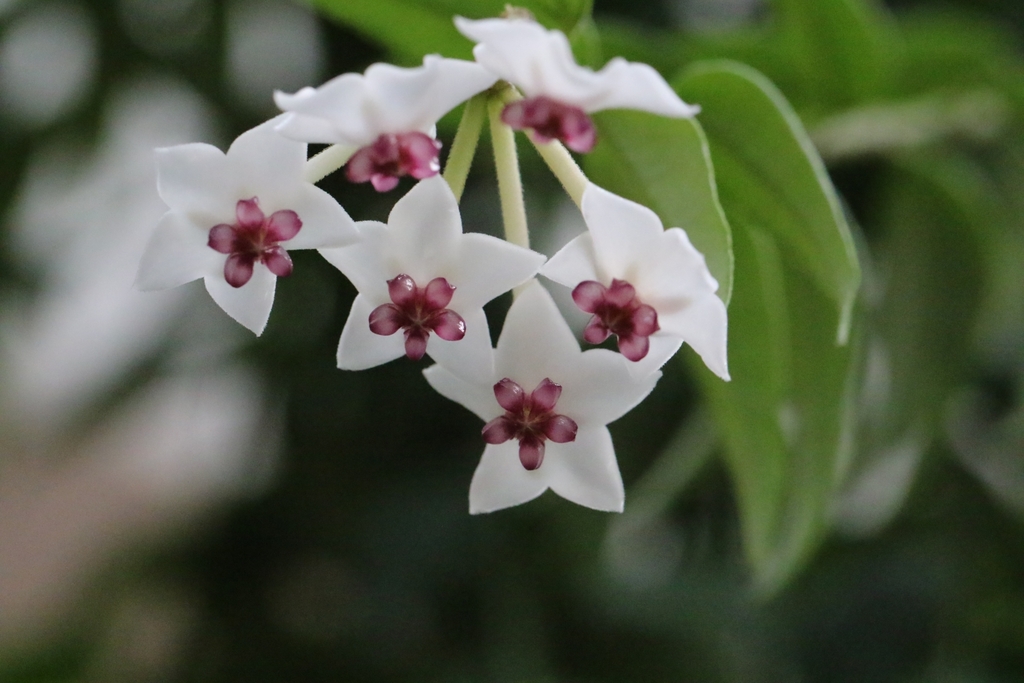
- flat-topped flower clusters
- white star-shaped flowers
- a pink-red center in each flower
Origin and natural conditions
The species is native to northeastern India (Assam) and Myanmar. In the wild, hoyas often grow in open woodland, using woody plants for support without drawing nourishment from them.
Its epiphytic habit explains its potting mix requirements: the roots are not adapted to dense soil that stays wet for a long time. Indoors, good aeration, steady warmth, and indirect light without abrupt changes are important.
| In the wild | Indoors |
|---|---|
| grows on trees as an epiphyte | does best in a loose potting mix |
| stems use support | stems trail from a planter |
| humidity is higher | dry air increases stress |
Light and placement
Bright indirect light is needed for growth and flowering. Avoid direct summer sun: the leaves are small, so overheating and drying out quickly cause them to lose firmness.
Insufficient light does not always kill the plant immediately, but flowering declines or stops altogether. A spot near an east- or west-facing window is suitable; light shading is needed at a south-facing window.
Watering and potting mix
The main care mistake is keeping the potting mix constantly wet. Water when the top 2-3 cm has dried out, and allow excess water to flow freely through the drainage holes.
The mix needs to be light and well-drained. Ingredients such as bark, perlite, sphagnum moss, and charcoal are suitable for an epiphytic hoya; dense peat without aerating amendments holds water longer and increases the risk of rot.
- a light-textured potting mix
- drainage holes in the pot
- letting the top layer dry before watering
- less watering in fall and winter
- no standing water in the planter
Flowers and buds
In summer, the plant produces white star-shaped flowers with pink or red centers. They grow in clusters and have a noticeable fragrance; in hoyas, the short flower-bearing stems do not die after flowering.
Once buds appear, avoid moving or turning the plant unnecessarily. Do not cut off spent flower clusters, as the hoya may bloom again on the same flower stalks.
- bright indirect light
- a consistently warm spot
- moderate watering without waterlogging
- leaving flower stalks intact after flowering
- no misting during flowering
Repotting, pruning, and propagation
Repot infrequently, every 2-3 years or when the roots have filled the pot. An oversized container keeps the potting mix moist for longer, so pot size and drainage are important for this species.
Propagate the plant from cuttings in spring or fall. Take a cutting from a healthy stem from the previous year, including a node; it can be rooted in water or a light potting mix.
- take a 10-15 cm cutting with 2-3 leaves and a node
- make the cut below a node using a clean, sharp tool
- submerge the node in water or plant it in a moist, light potting mix
- keep the cutting in a warm spot with indirect light
- move it to its permanent pot once roots appear
Common problems
Yellowing leaves are most often linked to excess water or poor drainage from the pot. If the roots go without air for too long, rot sets in and the stems lose firmness.
- yellow leaves from overwatering
- leaf drop after a sudden change in conditions
- lack of flowering due to insufficient light
- slow growth from a lack of nutrients
- webbing and speckling caused by spider mites
Pests include mealybugs, scale insects, and spider mites. Inspect not only the leaves but also the stem nodes, where small insects often hide.
- Light
- bright indirect light
- Temperature
- +15…+27 °C
- Watering
- when the top 2-3 cm is dry
- Soil
- light, well-drained potting mix
- Difficulty
- moderate
- Cats and dogs
- safe
- Size indoors
- 30-45 cm
- Leaves indoors
- up to 2.5 cm
- Native range
- northeastern India (Assam) and Myanmar
Care
Miniature wax plant grows best in conditions that suit an epiphyte: plenty of air around the roots, indirect light, and moderate watering. It dislikes waterlogging and abrupt changes in location.
- Light
- Provide bright indirect light. Flowering declines in shade. Shade the plant from direct summer sun, especially in a south-facing window.
- Temperature
- Keep at +15…+27 °C. Steady warmth is needed during growth. Drafts and sudden temperature changes can cause leaf drop.
- Watering
- Water when the top 2-3 cm is dry. The top layer of potting mix should dry out. Constant moisture around the roots increases the risk of rot.
- Soil
- Use a light, well-drained potting mix. A mix containing bark, perlite, sphagnum moss, and charcoal is suitable; avoid dense mixes.
- Feeding
- Feed monthly during growth. Use a houseplant fertilizer during active growth. Excess fertilizer does not speed up flowering.
- Support
- Grow in a hanging planter or on a shelf. The stems are thin and trailing, so the plant is usually grown in a hanging form without rigid support.
- Leaves
- Do not mist the flowers. The leaves may respond to more humid air, but stop misting during flowering.
- Repotting
- Repot every 2-3 years. Repot when the roots fill the pot. The container must have drainage holes.
Botany
- Family
- Apocynaceae
- Genus
- Hoya
- Species
- Hoya bella
- Author and year
- Hook.
Miniature wax plant (Hoya bella) belongs to the family Apocynaceae and the genus Hoya. It is a small-leaved epiphyte with thin, trailing stems that readily form a cascading plant indoors.
The leaves are lance-shaped, green, and thick, with a glossy surface; they reach up to 2.5 cm in length. The flowers are star-shaped and white with pink-red centers, arranged in flat-topped clusters, and noticeably fragrant.
The genus name Hoya honors the English gardener Thomas Hoy, who worked with tropical greenhouse plants. The species is native to northeastern India (Assam) and Myanmar.
Frequently asked questions
- Can I keep it at home if I have a cat?
- Yes, the plant is safe for cats and dogs.
- Why are the leaves turning yellow?
- The most common cause is overwatering or poor drainage. Let the potting mix dry out between waterings.
- Why is it not flowering?
- Usually because of insufficient light, the plant's young age, or flower stalks that have been cut off. Bright indirect light is needed for buds to form.
- How often should I water it?
- Water when the top 2-3 cm of potting mix has dried out. Reduce watering in fall and winter.
- Can I propagate it from a cutting?
- Yes, it is most often propagated from 10-15 cm cuttings with 2-3 leaves and a node. They can be rooted in water or a light potting mix.