Easter lily cactus
Native to southern Brazil, Uruguay, Paraguay, and Argentina, the Easter lily cactus (Echinopsis oxygona) is adapted to dry conditions: its ribbed, spherical stem stores water, and its large, evening-opening flowers are short-lived.


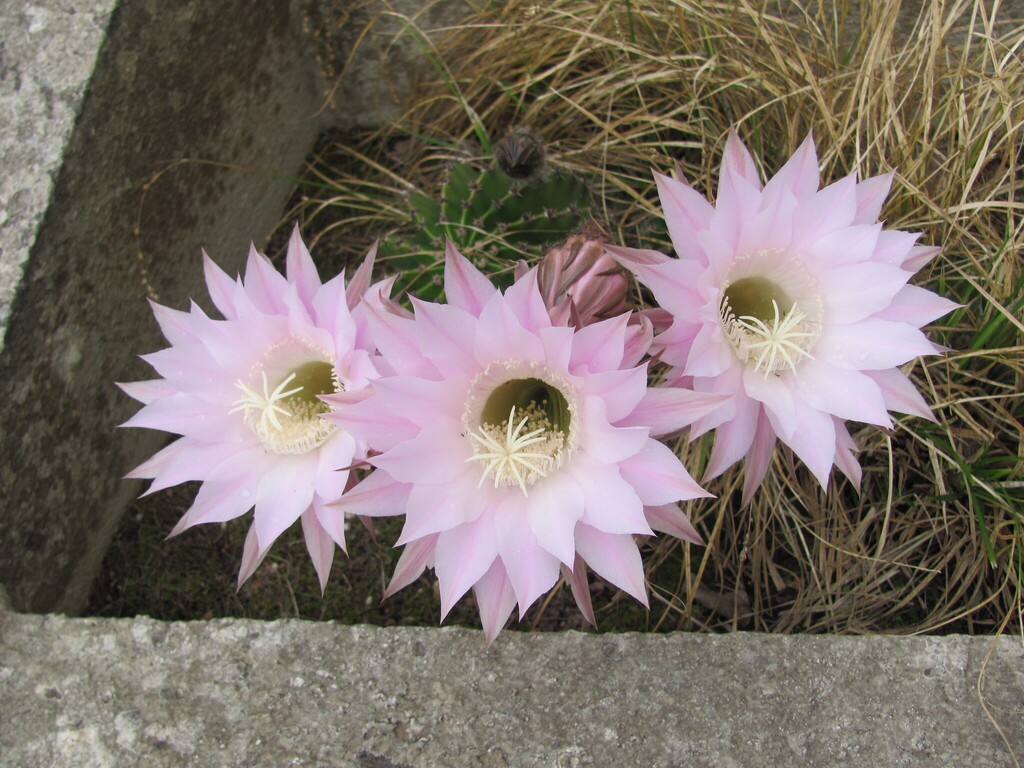
Stem structure
The plant has a spherical stem when young, which may become slightly elongated over the years. Its surface is smooth and glossy, with color ranging from light green to dark green.
The stem has sharp, symmetrical ribs, with evenly spaced areoles. Sturdy spines emerge from these areoles, so this is not a decorative, ‘smooth’ succulent but a typical cactus with protective structures.
- spherical stem when young
- ribbed surface
- smooth, glossy skin
- areoles with spines
- shallow root system
In a pot, the stem can reach 30 cm. This size does not make the plant difficult to care for, but the pot needs to be stable because the roots are shallow and spread horizontally.
Origin and adaptation to dry conditions
The species is native to southern Brazil, Uruguay, Paraguay, and Argentina. This explains its tolerance of bright light, heat, and dry spells between waterings in cultivation.
This cactus is not adapted to constantly wet potting mix. Rather than giving it frequent small amounts of water, alternate thorough watering with periods of drying out.
| In the wild | Indoors |
|---|---|
| Dry spells between rainfall | A break between waterings |
| Full sun or light shade | A bright spot without prolonged darkness |
| Shallow, horizontally spreading roots | A shallow, stable pot |
Light and placement
The plant grows well in sun or light shade. Avoid a permanently dark spot: it is harder to maintain compact growth and normal flower bud formation there.
On a windowsill, consider the spines as well as the light. Do not place the pot where hands, curtains, or neighboring plants will constantly brush against the stem.
- a sunny windowsill
- a spot with light shade
- a stable surface
- space away from the edge of a shelf
- room around the spines
If you move the plant into more direct sun, make the change gradually. An abrupt move from low light to strong light can stress the stem.
Watering and potting mix
This cactus does not need daily watering. Water when the potting mix has dried out, rather than following a fixed schedule.
Constant moisture around the roots is more dangerous than a short dry spell. Be especially careful with watering in cool conditions, when water evaporates more slowly.
- allowing the potting mix to dry out
- no standing water
- a stable, shallow pot
- careful watering in cold conditions
- dry spells between waterings
The exact ingredients of the mix matter less than how it behaves after watering. It should not hold water around the shallow root system for long.
Flowering
Flowers emerge from areoles along the sides of the middle part of the stem. They have long tubes and are funnel-shaped, with pointed petals that may be white or lavender.
Each flower opens in the evening and, in hot weather, wilts the next day. Its scent is described as sweet but faint, so the flowers are more noticeable for their shape than their fragrance.
| Feature | What to expect |
|---|---|
| Opening time | Evening |
| Duration in hot weather | Until the next day |
| Usual flowering period | Midsummer |
| Color | White or lavender |
Propagation and repotting
Small offsets often appear at the base of the stem. They can be used for vegetative propagation once they are well formed and can be separated from the parent plant.
Repotting is a good opportunity to inspect the roots and the base of the stem. Because the root system is shallow and spreads horizontally, the plant suits a stable container that is not too deep.
- inspect the base of the stem
- choose a well-formed offset
- separate it from the parent plant
- plant it in a separate pot
- do not water it daily
Young plants can grow fairly quickly. Fast growth does not mean they need frequent repotting, though: the size of the pot and the condition of the stem base remain the guides.
Common problems
The most common mistake is treating this cactus as a plant that needs constant moisture. If the potting mix does not have time to dry out, the roots are left in conditions the plant is not adapted to.
A lack of flowers does not always indicate disease. Flowering is brief and depends on the plant’s age, condition, and light levels, so buds do not appear every season.
- daily watering
- constantly moist potting mix
- prolonged darkness
- an unstable pot
- frequent contact with the spines
Take particular care to avoid physical damage: the sturdy spines easily catch on fabric or skin. This also puts the plant at risk, as damaged areoles and ribs recover slowly.
Care
The Easter lily cactus tolerates dry spells better than constant moisture around its roots. Indoors, the essentials are light, a stable pot, and careful watering.
- Light
- Provide sun or light shade. A bright spot works well. Avoid keeping it in constant darkness, especially if you want compact growth and flowers.
- Temperature
- Heat is tolerated. In cultivation, it has been reported to tolerate −10 °C, but this is not a growing temperature. Keep the potting mix drier in cold conditions.
- Watering
- Do not water daily. The plant is adapted to dry conditions: water after the potting mix has dried out rather than keeping it constantly moist.
- Soil
- Use a mix that dries quickly. The mix should not hold water around the roots. A stable pot is also important for the shallow, horizontally spreading root system.
- Support
- No support needed. The spherical stem, which may become slightly elongated with age, is not a vine. It needs no support; a stable pot matters more.
- Leaves
- Inspect the stem and areoles. There are no leaves in the usual sense. Spines grow from areoles along the ribs, so keep the plant away from places where it is easily brushed against.
- Repotting
- Repot when the pot is too small. When repotting, you can separate any offsets that have already formed at the base of the stem.
Botany
4 ill.- Family
- Cactaceae
- Genus
- Echinopsis
- Species
- Echinopsis oxygona
- Author and year
- (Link) Zucc. ex Pfeiff. & Otto


The Easter lily cactus belongs to the family Cactaceae. It has a ribbed stem with areoles from which spines emerge and flowers develop.
The species is native to southern Brazil, Uruguay, Paraguay, and Argentina. Indoors, this is reflected in its tolerance of sun, heat, and irregular watering.
The flowers are large and funnel-shaped, with long tubes and pointed white or lavender petals. They open in the evening, have a faint, sweet scent, and wilt quickly in hot weather.
How it differs from similar plants
Thanksgiving cactus Schlumbergera truncata
- The Easter lily cactus is recognizable by its ribbed, spherical stem, while Schlumbergera has stems made up of flat green segments with sharp teeth along the edges.
Bunny ears cactus Opuntia microdasys
- Instead of the flat, oval segments with small yellow areoles found in Opuntia, the Easter lily cactus has a single ribbed, spherical stem.
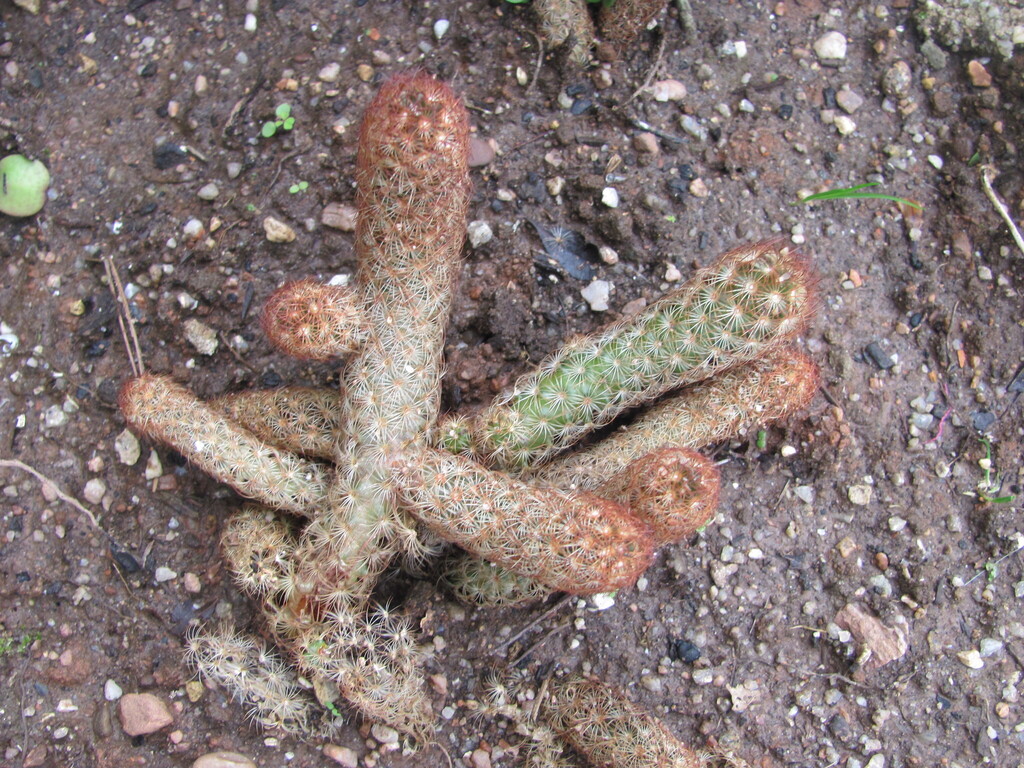 Ladyfinger cactus
Mammillaria elongata
Ladyfinger cactus
Mammillaria elongata- Mammillaria forms dense clumps of elongated, cylindrical stems, while the Easter lily cactus remains a ribbed, spherical cactus.
Frequently asked questions
- Can I keep it at home if I have a cat?
- Yes, the plant is safe for cats and dogs. The spines pose a physical risk, so place the pot where pets will not brush against it.
- How often should I water it?
- No, daily watering is not needed. Let the potting mix dry out between waterings.
- When does the flower open?
- The flower opens in the evening. In hot weather, it may wilt the next day.
- How do I propagate it?
- The easiest way is to use the offsets that appear at the base of the stem. Separate them and plant them in individual pots.
- Why is it not flowering?
- The cause may be its age, condition, or insufficient light. Even with good care, flowering is not continuous.
