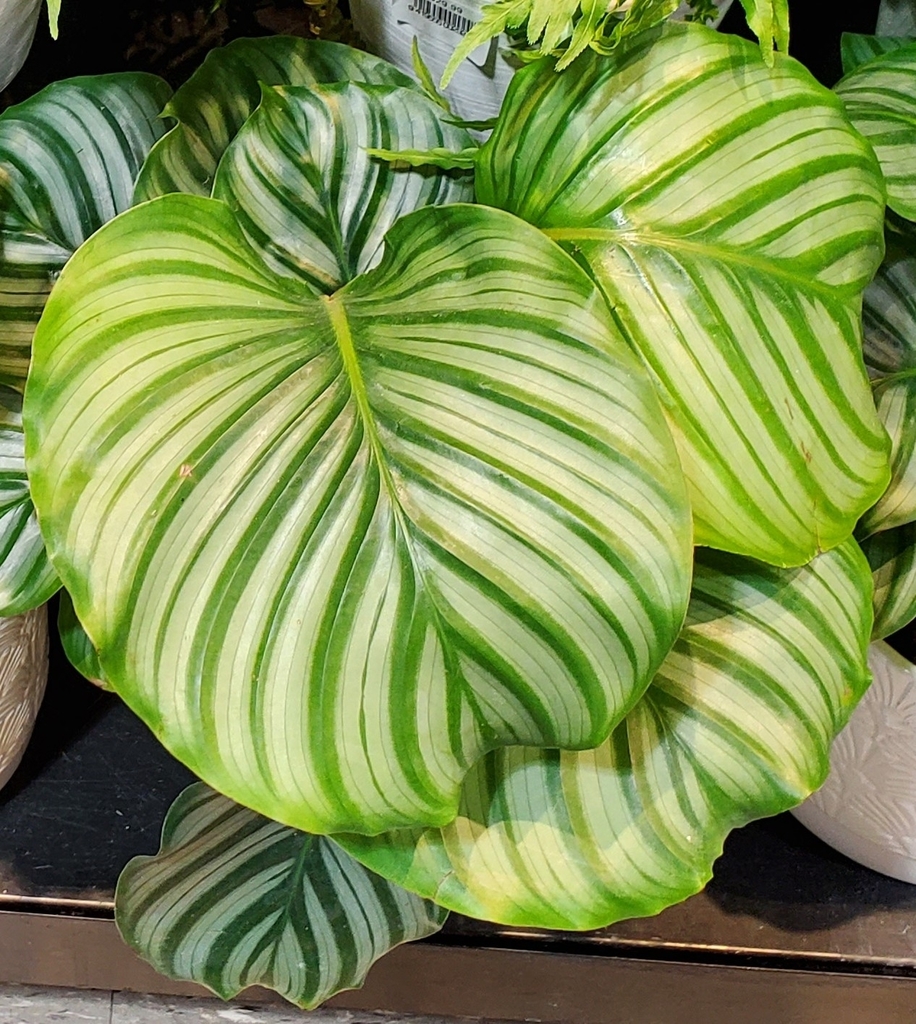
Peacock plant
Usually sold as a calathea, the peacock plant (Calathea makoyana) is now classified in the genus Goeppertia. It has patterned leaves that move throughout the day with the help of a pulvinus.


Classification and name
As a houseplant, it is usually called a calathea, although modern classification places this species in the genus Goeppertia. The Latin name Calathea makoyana remains familiar in the trade and in reference books, so the two names often appear side by side.
The plant belongs to the family Marantaceae, a group of tropical herbaceous plants with distinctive foliage and mobile leaf stalks. The name Calathea is linked to the Greek word kalathos, meaning “basket”: the leaves of related species were used for weaving.
Leaves and daily movement
The species is distinguished by broad leaves with a dark pattern that contrasts with lighter areas. Many calatheas have purple leaf undersides, so the plant looks different depending on the viewing angle and time of day.
The leaves may rise in the evening and spread out in the morning. This is not “wilting” but nyctinasty: daily movement enabled by the pulvinus, a small swelling between the leaf stalk and blade.
- leaves rising in the evening
- leaves spreading out in the morning
- curling when the potting mix is dry
- leaf tips drying out in dry air
- leaf patterns becoming less distinct in strong sun
Origin and natural conditions
The species is native to eastern Brazil. This offers an important clue for indoor care: the plant evolved in tropical forest conditions, where light is gentle and the air is more humid than in most apartments.
In nature, calatheas grow in the middle layer of the forest rather than in open sun. Bright, direct light therefore poses a greater risk to their leaves than moderate shade.
Light and placement
The plant needs low to medium indirect light. Direct sunlight can damage the leaves, causing dry patches and less distinct coloring.
Full shade is not suitable either. With too little light, new leaves develop more slowly and the plant becomes less dense. A spot with gentle natural light and no cold drafts is better than a sunny windowsill.
| Condition | What happens |
|---|---|
| Indirect light | Leaves retain their pattern and do not overheat |
| Direct sun | Scorching and dull coloring are possible |
| Deep shade | Growth slows and fewer new leaves develop |
Watering, water, and potting mix
The potting mix should stay moist but not wet. Both extremes are harmful to peacock plant: drying out causes curling and dry tips, while excess water creates conditions for root rot.
The plant is sensitive to minerals in tap water, including chlorine and fluoride. It needs a porous, well-drained, acidic potting mix; a pot without a drainage hole increases the risk of waterlogging the root system.
| Need | What this means in practice |
|---|---|
| Moisture without waterlogging | Water after the surface starts to dry, without leaving the roots sitting in water |
| Porous structure | Excess water drains out of the pot quickly |
| Acidic potting mix | The root system functions more consistently |
Why leaves deteriorate
Curling leaves do not always indicate a problem: in the evening, this may be normal daily movement. If the leaves stay curled during the day and their edges dry out, the most common cause is insufficient moisture in the potting mix or air.
Yellowing that starts at the tips and spreads toward the leaf stalk is more often linked to an overly wet potting mix. Persistent overwatering can also encourage fungus gnats, root rot, and powdery mildew.
- dry tips from the potting mix drying out or dry air
- yellowing tips from overwatering
- leaves curled during the day from moisture stress
- a dull pattern from too much direct sun
- gnats in the potting mix after repeated overwatering
Propagation and flowering
The main method of vegetative propagation is dividing a mature plant. Gently separate the clump into sections with growing points, then plant each section separately.
Choose a pot for each division based on the size of its root system, not its foliage. This helps avoid excess wet potting mix around the roots.
Calathea flowers may be yellow, purple, or white and open in summer. Most calatheas do not flower indoors; ornamental species are generally valued for their leaves rather than their flowers.
- Light
- low to medium
- Temperature
- +23…+29 °C
- Watering
- moist, not wet
- Soil
- porous, acidic potting mix
- Difficulty
- high
- Cats and dogs
- safe
- Leaves indoors
- broad, patterned leaves
- Native range
- eastern Brazil
Care
Peacock plant quickly shows care problems through dry leaf edges, curling, or yellowing. The most important conditions are gentle light, consistent warmth, humid air, and a potting mix that does not stay waterlogged.
- Light
- Provide low to medium light. Provide indirect light. Direct sun damages the leaves and can dull their pattern.
- Temperature
- Keep at +23…+29 °C. Warmth is needed for growth; the plant does not tolerate temperatures below +15 °C or cold drafts well.
- Watering
- Keep the potting mix moist, not wet. Adjust watering so the roots do not sit in water. Overwatering leads to root rot and leaf problems.
- Soil
- Use a porous, acidic potting mix. The mix must drain excess water quickly; a drainage hole in the pot is essential.
- Leaves
- Keep leaves free of dust and large droplets. The leaves are sensitive to growing conditions. Remove dust gently, and use a fine mist rather than large droplets when misting.
- Repotting
- Choose a pot to fit the roots. After division, plant each section in a well-drained pot sized to its root system, not its foliage.
Botany
4 ill.- Family
- Marantaceae
- Genus
- Goeppertia
- Species
- Goeppertia makoyana
- Author and year
- (É.Morren) Borchs. & S.Suárez
- Life form
- herbaceous perennial


Peacock plant (Calathea makoyana) belongs to the family Marantaceae and is placed in the genus Goeppertia in modern classification. In houseplant growing, it has retained its old, familiar name, so it is often sold as a calathea.
The species comes from eastern Brazil. It needs warmth, indirect light, humid air, and a potting mix that does not stay waterlogged; these factors have the greatest effect on its leaves indoors.
Daily leaf movement is enabled by the pulvinus, a mobile area at the base of the leaf. It allows the leaves to rise in the evening and spread out in the morning, a normal biological response in members of Marantaceae.
Popular cultivars
8- Calathea makoyanaCalathea makoyana
- Broad leaves with dark patterns.
- Calathea ornataCalathea ornata
- Oval leaves with fine lines and purple undersides.
- Calathea warscewicziiCalathea warscewiczii
- Velvety leaves with highlighted veins; white-pink flower clusters.
- Calathea picturataCalathea picturata
- Elongated leaves with a border.
- Calathea zebrinaCalathea zebrina
- Leaves with a sharply defined striped pattern.
- Calathea orbifoliaCalathea orbifolia
- A low-growing plant with large leaves and light veins.
- Calathea bachemianaCalathea bachemiana
- Leaves with a silvery pattern.
- Calathea rufibarbaCalathea rufibarba
- Narrow, wavy leaves.
How it differs from similar plants
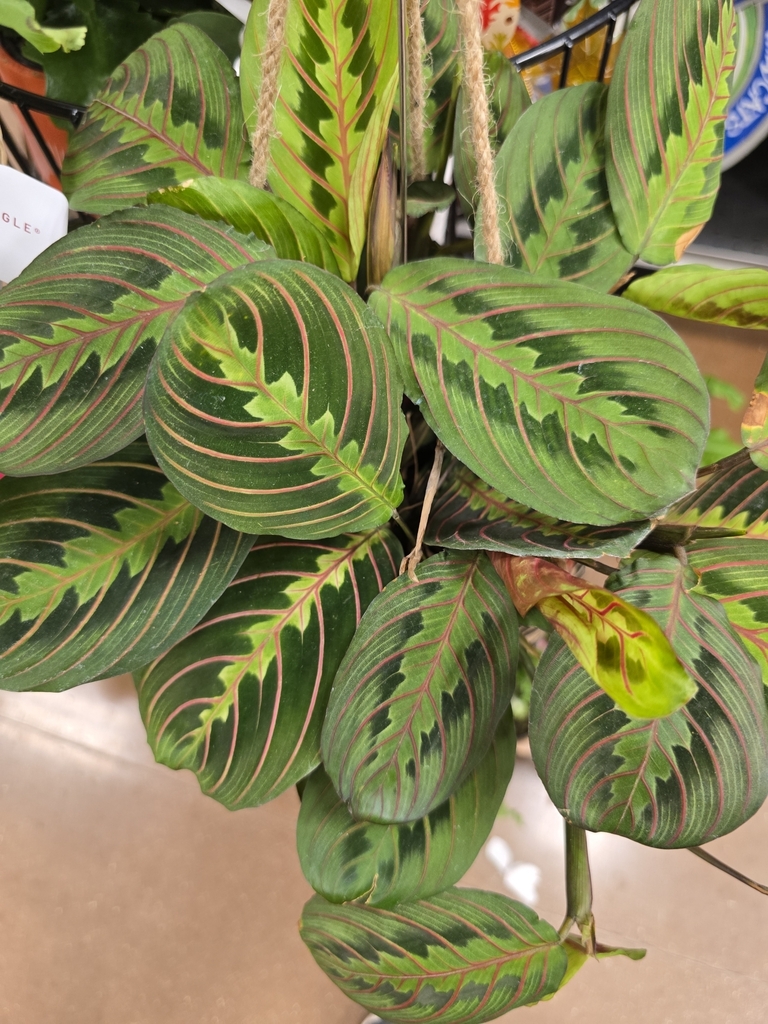 Prayer plant
Maranta leuconeura
Prayer plant
Maranta leuconeura- Maranta's leaf pattern is defined by contrasting veins, while peacock plant has the broad, patterned leaves described here.
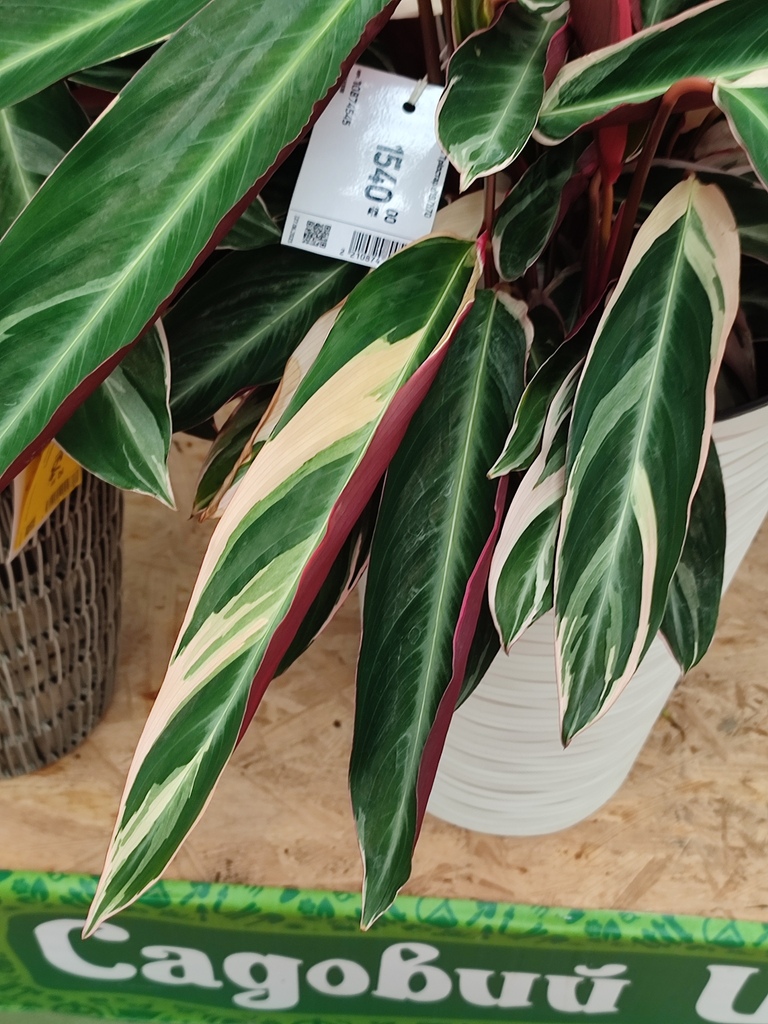 Stromanthe thalia
Stromanthe thalia
Stromanthe thalia- Stromanthe is easy to distinguish by its red leaf undersides, which are revealed at night, while peacock plant is distinguished by its broad, patterned leaves.
ZZ plant Zamioculcas zamiifolia
- Zamioculcas has stemlike compound leaves, while peacock plant has broad, patterned leaf blades.
Frequently asked questions
- Is peacock plant safe for cats and dogs?
- Yes, the plant is safe for cats and dogs.
- Why are the leaves curling?
- In the evening, this may be normal nyctinasty. If the leaves are curled during the day, check the moisture in the potting mix and the humidity.
- Why are the leaf edges drying out?
- Most often because of dry air, a dried-out potting mix, or sensitivity to minerals in tap water.
- Why are the leaves turning yellow?
- Yellowing tips are often linked to overwatering. If the potting mix stays wet for a long time, the risk of root rot increases.
- How do I propagate peacock plant?
- The most reliable method is to divide a mature clump into sections, each with growing points and its own root system.