Anthurium clarinervium
In aroids, the “flower” is often not a flower at all, but an inflorescence: a spadix with a spathe. Anthurium clarinervium is grown indoors primarily for its velvety leaves rather than its blooms.


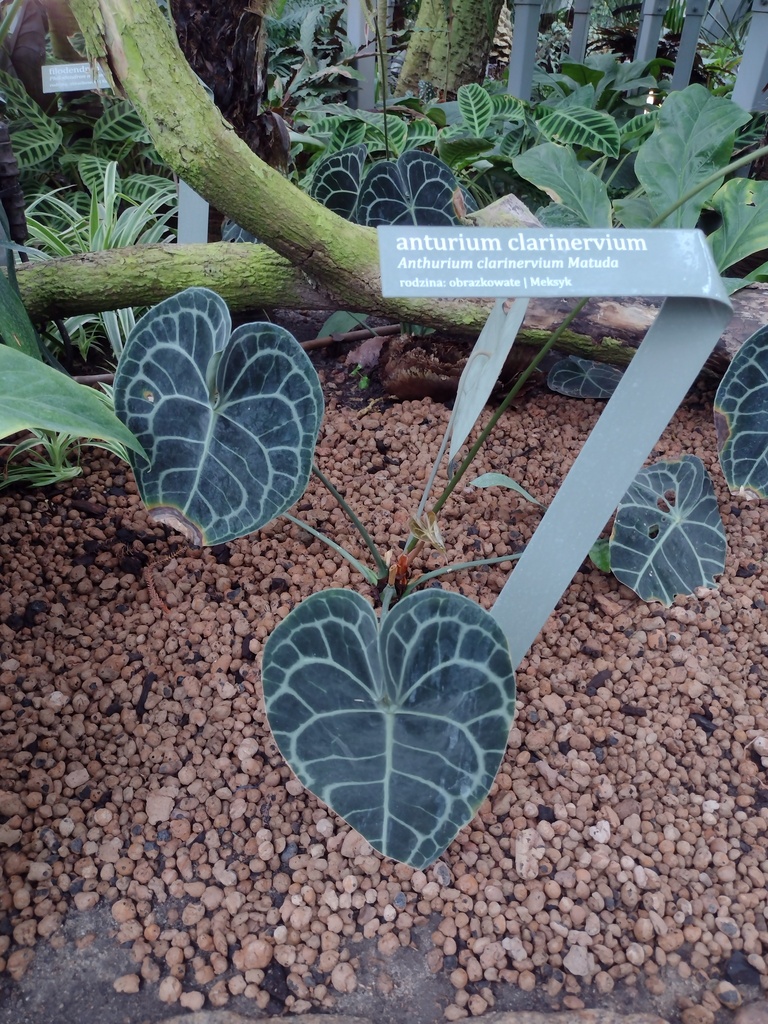
Leaf structure
The plant's main ornamental feature is its velvety leaf surface. The foliage usually defines the appearance of a mature plant; indoor flowering is not the main reason to grow it.
Origin and growing conditions
The species is native to Chiapas in southern Mexico. This origin explains its need for steady warmth, high humidity, and a potting mix that does not compact after a few waterings.
Indoors, it is important not to recreate the “tropics” by overwatering. An airy potting mix and watering after it has partially dried out are safer for the roots than a constantly wet mix in a heavy pot.
Light and placement
The plant does well in bright indirect light or partial shade. Direct sunlight can damage the velvety leaf surface, so a spot with gentle light and no midday sun is safer.
- bright indirect light
- partial shade without prolonged periods of low light
- protection from direct sunlight
In deep shade, the plant may retain its leaves, but growth usually slows. If a new leaf is smaller or takes a long time to unfurl, check the light first, then consider feeding.
Watering and potting mix
Water moderately, after the potting mix has partially dried out. Excess moisture is dangerous because it deprives the roots of air, and spots may appear on the leaves.
The potting mix needs to be light, airy, and well drained. Structure matters more than nutrient content: the mix should not quickly compact into a dense mass.
| Condition | What it means |
|---|---|
| Watering | After the mix has partially dried out |
| Potting mix | Light and airy |
| Drainage | No standing water around the roots |
Humidity and feeding
High humidity helps keep the leaves in good condition, especially during the heating season. Humid air does not replace proper watering: wet potting mix and high humidity are different conditions.
Feed once a month during the growing season, from spring through fall. More frequent fertilizing is unnecessary: for a plant with a moderate growth rate, excess salts in the potting mix can cause more problems than too little fertilizer.
Why leaf spots appear
Leaf spots are often linked to overwatering. If the potting mix stays wet for too long, the roots function less effectively, and the leaves are the first to show that the care routine needs adjusting.
- waterlogged potting mix
- direct sun on the leaves
- watering before the mix has partially dried out
Leaves drying out can have various causes, so do not automatically treat the problem with extra water. First check the light, the condition of the potting mix, and the humidity.
Propagation
Propagate the plant by sowing seeds or dividing it. Indoors, division is usually used once a plant has several growing points and a root system that can be separated without severe damage.
- assess the plant before dividing it
- separate a section with roots
- plant it in a light, airy potting mix
Division is usually done in March. After potting the divisions, keep them in indirect light and avoid overwatering, since freshly disturbed roots are sensitive to standing water.
Pet safety
The plant is mildly toxic to cats and dogs. Anthurium sap contains calcium oxalates, which irritate the mucous membranes of the mouth and throat when the plant is chewed.
There is no need to exaggerate the risk, but it is best to place the pot where pets cannot make a habit of chewing the leaves. If drooling or irritation occurs after contact with the plant, consult a veterinarian.
- Light
- bright indirect light
- Difficulty
- moderate
- Cats and dogs
- mildly toxic
- Native range
- southern Mexico (Chiapas)
Care
This anthurium needs an airy potting mix, humidity, and indirect light. The most harmful combination is too little light and constantly wet roots.
- Light
- Provide bright indirect light or partial shade. Direct sun can scorch the velvety leaves. Growth slows in deep shade.
- Temperature
- Keep at +16…+29 °C. This range supports active growth. Sudden temperature changes and a cold windowsill harm the roots.
- Watering
- Water when the mix has partially dried out. Water moderately. A constantly wet potting mix increases the risk of leaf spots and root problems.
- Soil
- Use a light, airy potting mix. The mix should let water and air pass through readily. Dense soil holds moisture around the roots for too long.
- Feeding
- Feed once a month from spring through fall. Feed only during the growing season. This species does not need more frequent fertilizing.
- Leaves
- Maintain high humidity. Humid air helps keep the leaves in good condition, but watering must still follow the condition of the potting mix.
Botany
- Family
- Araceae
- Genus
- Anthurium
- Species
- Anthurium clarinervium
- Author and year
- Matuda
Anthurium clarinervium belongs to the family Araceae and the genus Anthurium. An inflorescence consisting of a spadix with a spathe is typical of this family, so the everyday term “flower” is botanically inaccurate for anthuriums.
The species is native to Chiapas in southern Mexico. Indoors, this is reflected in its need for warm temperatures, indirect light, humid air, and a well-aerated potting mix.
The plant is mildly toxic to cats and dogs. Calcium oxalates in the sap cause irritation, so keep the leaves out of reach of pets that chew houseplants.
Frequently asked questions
- How often should I water it?
- Water after the potting mix has partially dried out. A constantly wet mix can cause leaf spots and root problems.
- What light does it need?
- Bright indirect light or partial shade is suitable. Direct sun can damage the velvety leaves.
- Why are spots appearing on the leaves?
- Overwatering is often the cause. Check whether the potting mix is staying wet for too long.
- Can I keep it at home if I have a cat?
- The plant is mildly toxic to cats and dogs: calcium oxalates in the sap irritate mucous membranes.
- What potting mix does it need?
- Use a light, airy, well-drained potting mix. Dense soil is unsuitable because it holds water around the roots for too long.


