Lipstick plant
The most common mistake is watering lipstick plant (Aeschynanthus radicans) "just in case": its origins in the Malay Archipelago do not mean it needs constantly wet potting mix. The plant responds better to even moisture without water pooling around the roots.
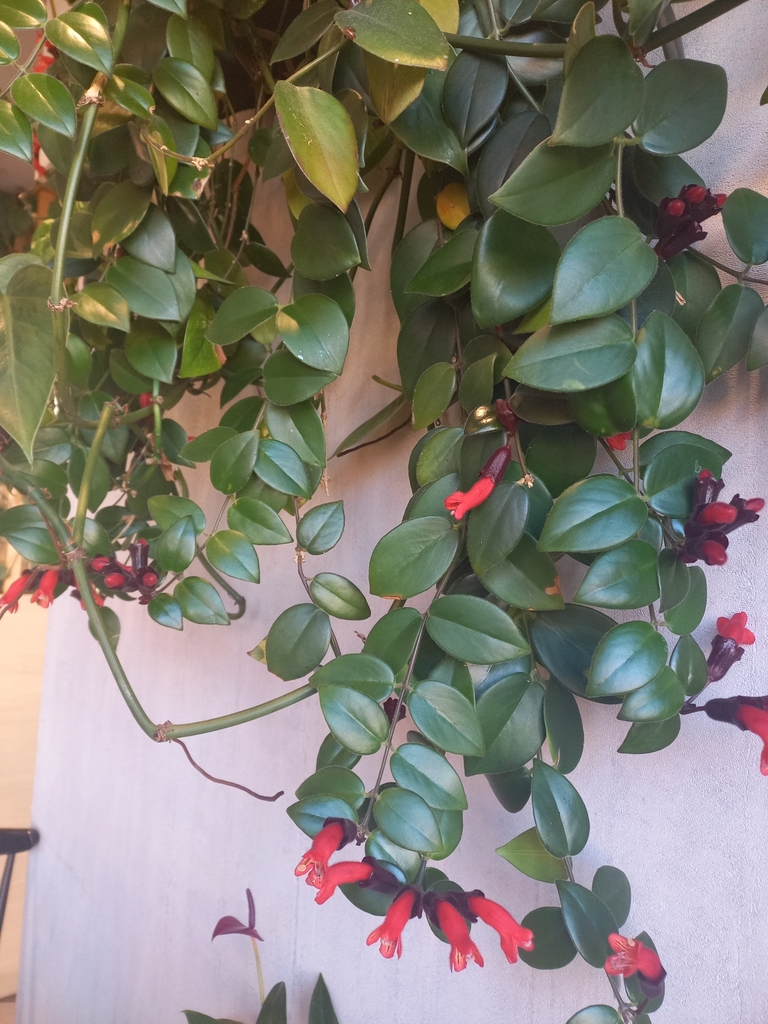
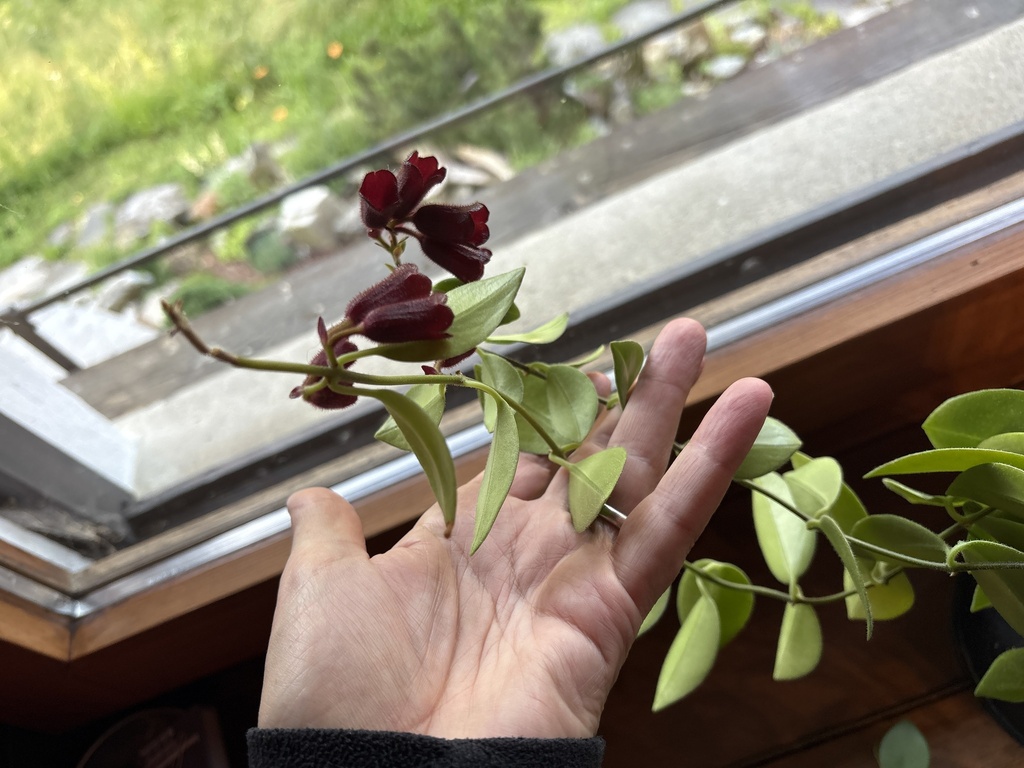
What most often harms the plant
The main mistake is keeping the potting mix constantly wet, as though coming from the Malay Archipelago automatically means the plant likes standing water. Lipstick plant needs a more even routine: water should pass through the mix rather than linger around the roots.
Problems often start subtly: leaves lose firmness, some stems become bare, and buds may drop. These signs do not always mean the plant needs water, so watering again without checking the mix can make things worse.
- constantly wet potting mix
- water left in a decorative outer pot
- a cold windowsill after watering
- an abrupt move while buds are forming
- a heavy mix that keeps air from the roots
The most reliable guide is the condition of the potting mix and the plant itself, not the calendar. If the pot sits inside an outer pot, do not leave water inside after watering.
Origin and classification
Lipstick plant belongs to the family Gesneriaceae and the genus Aeschynanthus. The species is native to the Malay Archipelago, so stable conditions without sudden changes are important when growing it indoors.
Its origins explain the need for gentle, consistent care, but do not make it a bog plant. In a pot, the roots depend much more on the quality of the potting mix than they do in their natural habitat, where water does not collect in an enclosed space.
The plant is safe for cats and dogs. Its long stems are easily damaged, however, so choose a spot where pets cannot pull or break them while playing.
Light and placement
Bright indirect light is best. In deep shade, stems become leggy, the gaps between leaves become more noticeable, and flowering is less frequent.
Harsh direct sun can damage the leaves, especially if the plant is close to the glass. Choose a bright spot where the pot will not overheat and there are no cold drafts.
| Sign | What to check |
|---|---|
| Stems become leggy | The plant is too far from the light source |
| Buds drop | The plant may have been moved abruptly or watered unevenly |
| Leaves lose firmness | Check the moisture in the potting mix and the condition of the roots |
Once the plant has formed buds, avoid moving it unless necessary. A sudden change in light often has a greater effect than gradual adjustments to care.
Watering and potting mix
Water after the top layer of potting mix has dried. Water must pass through the pot rather than remain in the saucer or decorative outer pot.
The potting mix needs to be loose and airy. If it compacts after every watering, the roots receive less air, and the risk of rot increases even without excessive watering.
- check moisture before watering
- empty water from the saucer
- use a loose potting mix
- avoid heavy potting mix
- water cautiously during cool periods
Dry potting mix around the edge does not mean the entire root ball has dried out. Before watering, assess not only the surface but also the weight of the pot and the plant's overall condition.
Flowering and dormancy
Flowering indoors is not guaranteed. It depends on light, a consistent location, healthy roots, and the absence of sudden changes in care.
Growth may slow after a period of active growth. At this stage, the plant responds poorly to excess watering and unnecessary feeding, so ease back on care without letting it dry out completely.
Once buds appear, do not move or turn the pot unnecessarily. Avoid sudden changes to watering as well, since stress at this stage often shows up in the buds.
Yellowing, spots, and leaf drop
Yellowing leaves have more than one possible cause. Start by checking watering, standing water, compacted potting mix, and the temperature of the surface beneath the pot.
| Problem | Likely cause | What to change |
|---|---|---|
| Leaves turn yellow | Standing water or cold roots | Let the potting mix dry slightly and empty water from the outer pot |
| Leaf tips dry out | Uneven watering or dry air around the plant | Keep watering consistent and avoid placing the plant in a stream of hot air |
| Buds drop | Moving the plant, drafts, or a sudden change in watering | Restore stable conditions without stress |
Do not immediately assume that leaf spots are caused by infection. Sometimes they result from wet leaves in cool conditions, overheating in the sun, or contact with cold glass.
Propagation and repotting
Indoors, the plant is usually propagated vegetatively by cuttings. Successful rooting depends on clean tools, a healthy stem, and moist but not wet potting mix.
Repot when the roots are crowded or the potting mix has lost its structure. Repotting too often without a reason damages the roots and may stop growth.
- compacted potting mix
- slow drying after watering
- roots near the drainage holes
- a noticeably depleted mix
- the plant is unstable in its pot
Give the plant time to recover after repotting. Delay feeding and shaping the stems until visible growth resumes.
- Light
- bright indirect light
- Watering
- after the mix has dried slightly
- Soil
- loose potting mix
- Difficulty
- moderate
- Cats and dogs
- safe
- Native range
- Malay Archipelago
Care
Lipstick plant grows best in stable conditions: a bright spot, loose potting mix, and watering that leaves no standing water. Most problems start not with a brief dry spell, but with constantly wet roots.
- Light
- Provide bright indirect light. Place near a bright window out of harsh midday sun. In deep shade, stems become leggy and fewer buds form.
- Temperature
- Keep consistently warm. During the growing season, provide steady warmth without cold drafts. In winter, do not place the pot on a cold windowsill.
- Watering
- Water when the top layer dries. Water when the top layer of potting mix has dried. Empty the outer pot or saucer so the roots do not sit in standing water.
- Soil
- Use a loose potting mix. The mix should allow air through and resist compaction after watering. Loosen a heavy mix with suitable ingredients.
- Feeding
- Feed during active growth. Feed only during active growth. Excess fertilizer cannot replace light and may harm the roots.
- Support
- Use a hanging planter. Let the stems trail down or train them along a light support. Avoid abruptly moving or turning the pot while buds are forming.
- Leaves
- Clean gently. Remove dust carefully without leaving water trapped among the dense stems. After wet cleaning, the plant should dry quickly.
- Repotting
- Repot when roots are crowded. Repot when the potting mix has lost its structure or the roots have filled the pot. Do not disturb the plant unnecessarily.
Botany
4 ill.- Family
- Gesneriaceae
- Genus
- Aeschynanthus
- Species
- Aeschynanthus radicans
- Author and year
- Jack


Lipstick plant belongs to the family Gesneriaceae, and its botanical name is Aeschynanthus radicans. For indoor care, it is important not to confuse family membership with watering requirements: related plants do not all need the same conditions.
The species is native to the Malay Archipelago. These origins explain its sensitivity to sudden environmental changes: the plant responds better to consistent light, moderate moisture in the potting mix, and the absence of cold drafts.
Lipstick plant is safe for cats and dogs. The main risk at home is not toxicity but damage to the stems if the pot is within easy reach.
Frequently asked questions
- Is lipstick plant safe for cats and dogs?
- Yes, the plant is safe for cats and dogs.
- Why are the leaves turning yellow?
- Most often because of watering mistakes, standing water, or cold roots. Check the potting mix and drainage first.
- Why isn't it flowering?
- Usually, too little light, abrupt moves, or inconsistent watering prevent flowering. Flowering indoors is not guaranteed.
- How should I water lipstick plant?
- Water after the top layer of potting mix has dried; do not leave water standing in the outer pot or saucer.
- When should I repot?
- When the roots are crowded or the potting mix has compacted and dries poorly.


