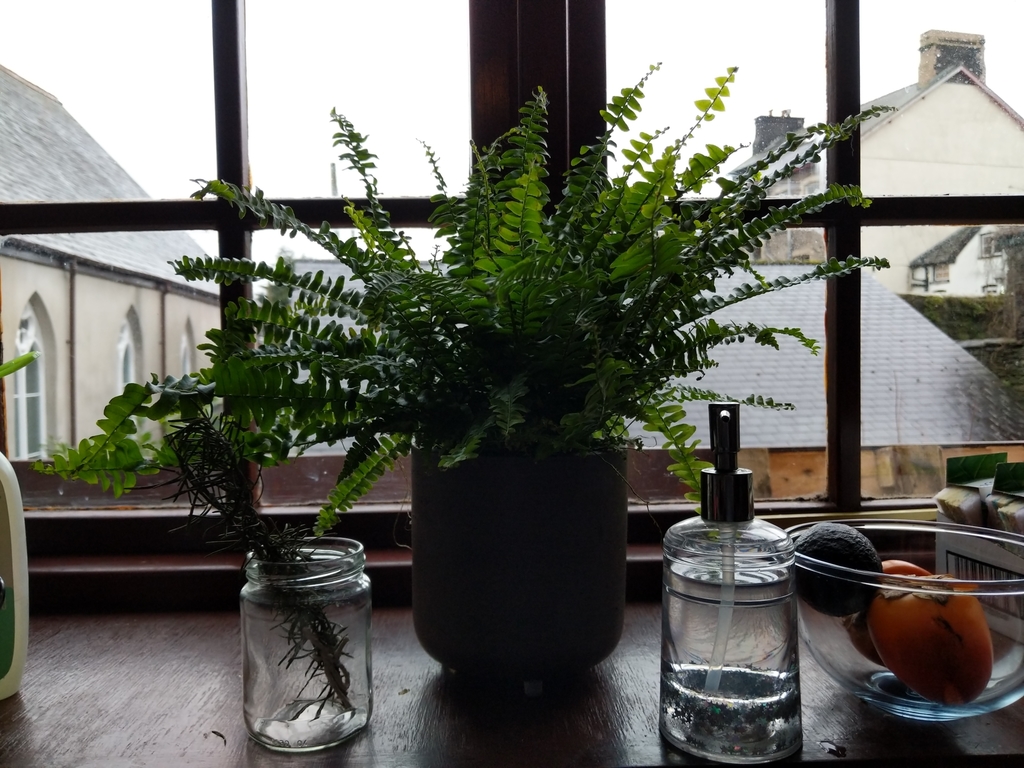
Delta maidenhair fern
Delta maidenhair fern has no conventional flowers and produces no seeds: its delicate fronds provide its ornamental appeal, and it reproduces by spores. This makes humidity and stable conditions especially important to its care.


A plant without flowers
This plant's ornamental appeal comes not from flowers but from its fronds—the fern's leaflike shoots. They create an airy outline that sets delta maidenhair fern apart from most houseplants with substantial leaf blades.
- no buds or fruit
- reproduction by spores rather than seeds
- slender stalks with finely divided frond segments
The Ukrainian common name meaning “Venus's hair” refers to the slender, dark stalks, which have been compared to hair. It is a folk name, not a botanical characteristic of the species.
Origin and indoor conditions
The species is native to tropical America. For indoor growing, this is not simply an exotic detail but an explanation of its needs: the plant stays firmer where there is no hot, dry air or sudden change in conditions.
| In its natural habitat | Indoors |
|---|---|
| Tropical America | Needs consistently humid air |
| Sheltered places without direct sun | Indirect light is best |
| Water does not linger for long | The potting mix must be loose |
Tropical conditions cannot be replicated exactly in an apartment, but consistency matters more than occasional treatments. Even a brief spell of drying out or overheating often shows on the fronds sooner than it would on plants with fleshy leaves.
Light and placement
Delta maidenhair fern needs bright indirect light without direct midday sun. In a spot that is too dark, new fronds develop weakly, while harsh sun quickly spoils the appearance of their delicate segments.
- a bright spot behind a sheer curtain
- an east- or north-facing window
- a position away from radiators and hot air currents
Avoid frequently moving the pot between very different conditions. This fern needs consistency: steady light, no drafts, and no dry air near window glass or heating.
Watering and humidity
The potting mix should stay evenly moist, but not waterlogged. Drying out quickly affects the fronds, while water constantly surrounding the roots reduces their access to air.
- a dry top layer of potting mix
- young fronds losing their firmness
- a pot that feels light
Adjust watering to the condition of the potting mix rather than the calendar. Water is used up faster in warm, bright conditions and more slowly in a cooler spot, so the same schedule will not work in every room.
Potting mix and repotting
Use a loose, moisture-retentive potting mix that does not clump after watering. If the mix compacts, the root zone stays wet longer even though the surface may already look dry.
- a loose texture
- moisture retention without waterlogging
- drainage holes in the pot
Repot carefully, without unnecessarily breaking up the root ball. After repotting, the plant needs consistent conditions: gentle light, stable moisture, and no feeding until growth resumes.
Why fronds dry out and turn yellow
Dry edges are most often caused by dry air, overheating, or uneven watering. Yellowing may follow overwatering, an abrupt change of location, or the aging of individual fronds.
- dry air near heating
- potting mix that has dried out
- waterlogging after watering
- direct sun
- frequent moves
Damaged fronds do not fully regain their green color, so assess them alongside new growth. If new fronds emerge healthy, the problem has already been resolved or has become less severe.
- Light
- indirect light
- Watering
- even moisture
- Soil
- loose and moisture-retentive
- Difficulty
- moderate
- Cats and dogs
- safe
- Native range
- tropical America
Care
Delta maidenhair fern is sensitive not to any single factor, but to instability: drying out, dry air, overheating, and abrupt moves between different conditions. Care comes down to even moisture and gentle light.
- Light
- Provide bright indirect light. Direct sun can damage the delicate fronds, while deep shade weakens new growth.
- Temperature
- Stable room conditions are suitable, without cold drafts, overheating near radiators, or sudden fluctuations.
- Watering
- Keep the potting mix evenly moist. Water when the top layer begins to dry, without letting the mix dry out completely or leaving water in the cachepot.
- Soil
- Use a loose, moisture-retentive potting mix. The mix should hold moisture while allowing air through; compacted potting mix increases the risk of waterlogging.
- Feeding
- Feed lightly during active growth. Feed only during active growth; pause feeding after repotting or stress.
- Support
- No support needed. The fronds are supported by their own stalks; no support is needed. Consistent light and moisture matter more.
- Leaves
- Do not mist to treat dry fronds. Misting will not restore dried fronds; instead, stabilize watering and move the plant away from hot air.
- Repotting
- Repot when the pot is crowded. Repot carefully, disturbing the root ball as little as possible, using a loose potting mix and a pot with drainage holes.
Botany
4 ill.- Family
- Pteridaceae
- Genus
- Adiantum
- Species
- Adiantum raddianum
- Author and year
- C.Presl


Adiantum raddianum belongs to the family Pteridaceae and the genus Adiantum. It is a fern, so its ornamental appeal comes from the structure of its fronds and slender stalks rather than from flowering.
The species is native to tropical America. When grown indoors, its origin explains its sensitivity to dry air and abrupt changes in conditions.
The plant is safe for cats and dogs. Normal care hygiene still applies: remove damaged parts and keep the potting mix out of reach so pets cannot dig in it.
How it differs from similar plants
ZZ plant Zamioculcas zamiifolia
- Zamioculcas has upright compound leaves, while delta maidenhair fern is recognizable by its delicate fern fronds.
Rex begonia Begonia rex
- Begonia stands out for its large, asymmetrical leaves, while delta maidenhair fern has delicate fronds rather than conventional leaf blades.
Snake plant Dracaena trifasciata
- Sansevieria has long, stiff leaf blades, while delta maidenhair fern has delicate fern fronds.
Frequently asked questions
- Why are the fronds drying out?
- Most often because of drying out, dry air, direct sun, or waterlogging in the potting mix.
- Does delta maidenhair fern flower indoors?
- No, it is a fern; it does not produce flowers, and its ornamental appeal comes from its fronds.
- Can I keep it at home if I have a cat?
- Yes, the plant is safe for cats and dogs.
- How often should I repot it?
- When the roots become crowded or the potting mix has compacted. Repot carefully.
- Can I put it in a sunny window?
- It is best to avoid direct sun: the delicate fronds can dry out and lose their color.