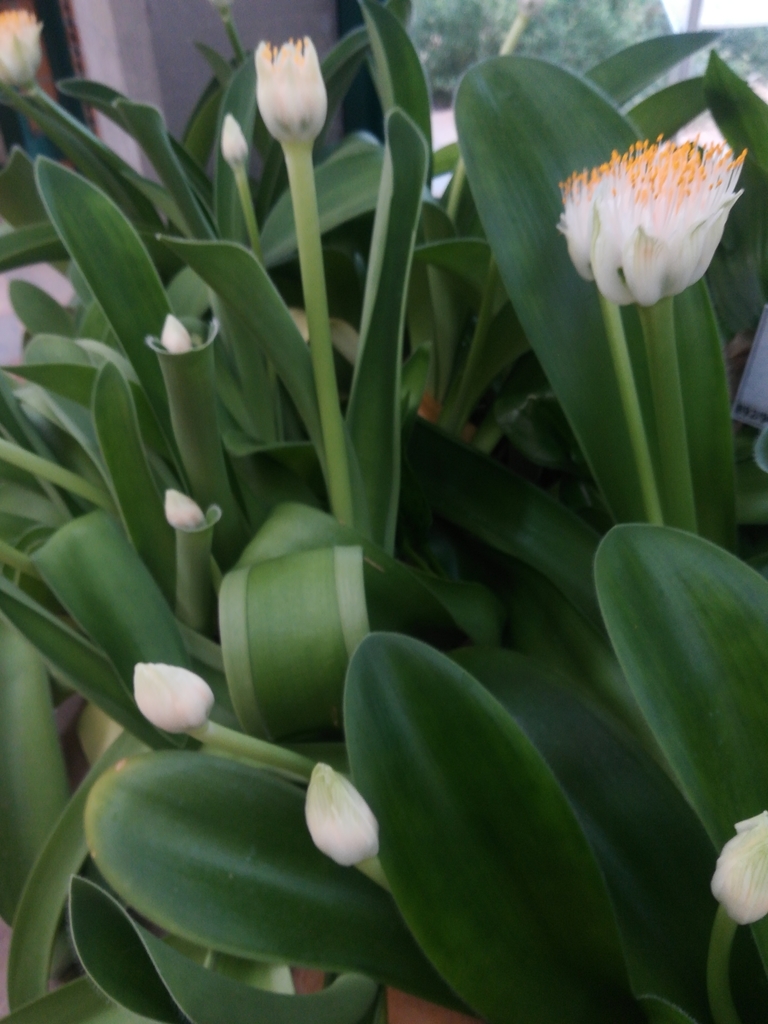
White rain lily
In the moderately warm regions of Argentina and Uruguay, white rain lily (Zephyranthes candida) follows a seasonal rhythm: the bulb waits out dry spells in the soil, then quickly produces leaves and a flower stalk when moisture returns.

Origin and seasonal rhythm
The species is native to Argentina and Uruguay. Rather than constant conditions, this plant needs alternating periods of active growth and shorter periods of dormancy, when the bulb uses less water.
Wild species in the genus often spend dry periods without leaves: the growth above ground disappears, while the bulb remains in the soil. This explains why an indoor plant can quickly resume growth and produce a flower stalk after dormancy.
Bulb and leaf structure
White rain lily belongs to the family Amaryllidaceae, so its main nutrient reserves are stored in the bulb. The bulb produces new basal leaves and flower stalks when watering resumes or the season changes.
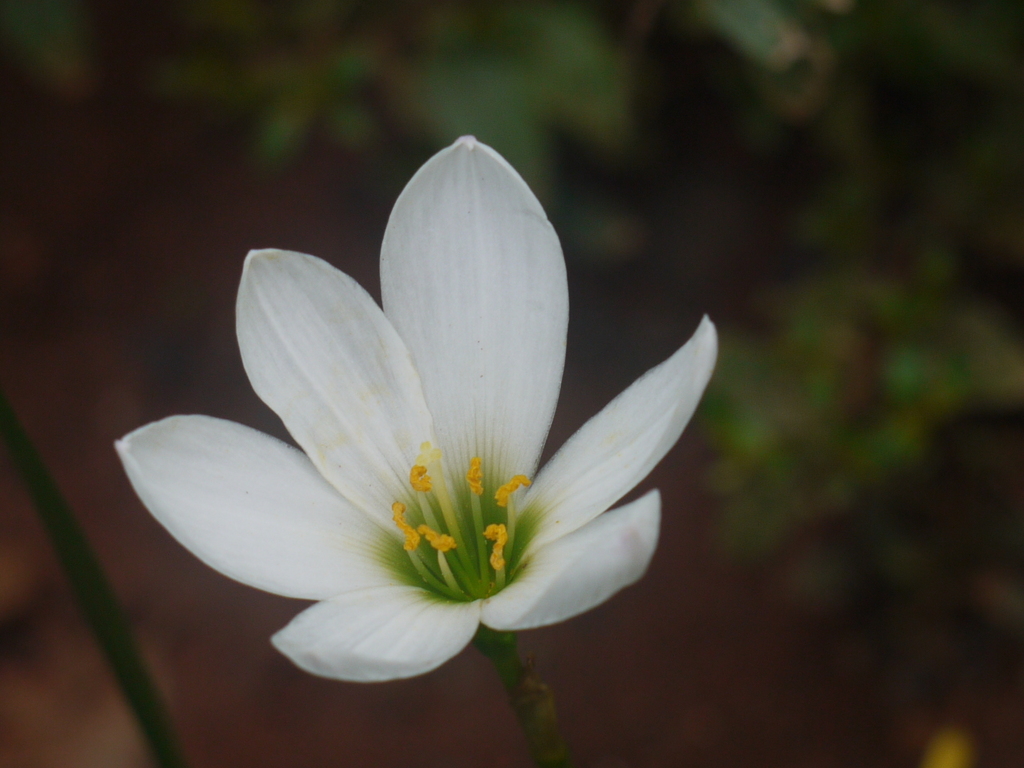
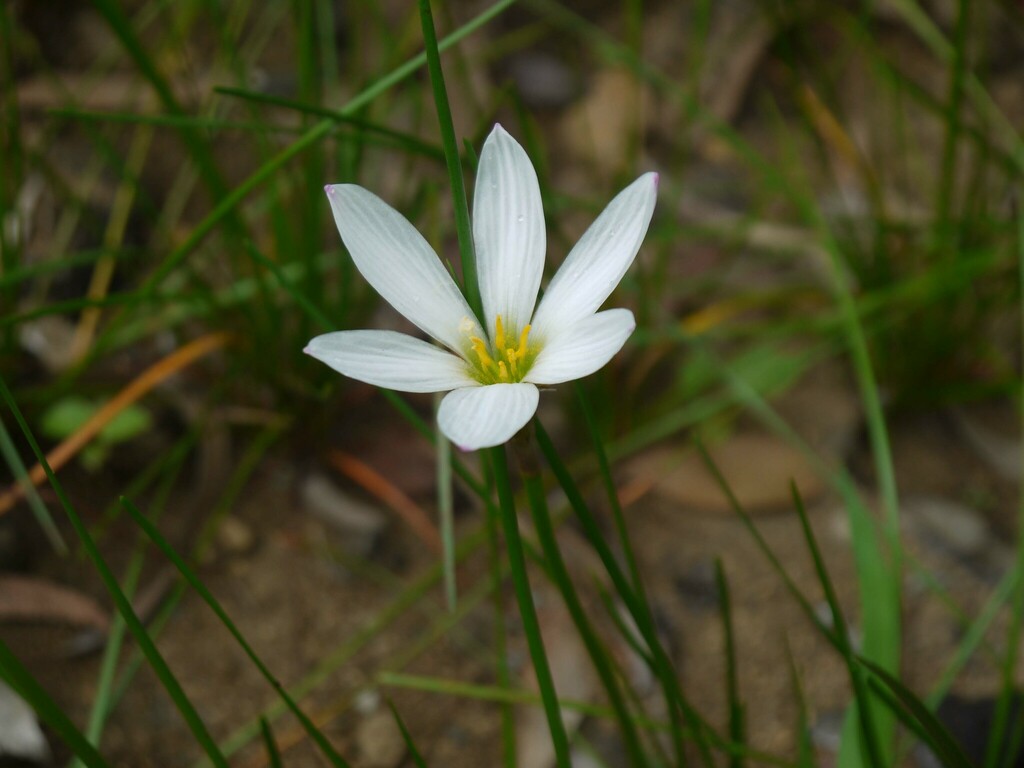
The genus is characterized by narrow basal leaves up to 30-40 cm long, flower stalks 25-30 cm tall, and solitary crocus-like flowers 8-10 cm in diameter. The bulbs are rounded, covered in brown scales, and 1-5 cm in diameter.
- leaves attached near the base of the bulb
- narrow leaf blades without a distinct leaf stalk
- a separate flower stalk for each flower
- brown protective scales on the bulb
- offsets forming in a snug pot
Light and placement
The plant needs bright conditions during active growth to develop flower stalks. Constant deep shade does not kill the bulb immediately, but it weakens the leaves and reduces the reserves that support the next flowering period.
When grown outdoors in the ground during summer, Zephyranthes plants usually flower more abundantly than indoors. You can partly recreate these conditions in a pot on a bright windowsill or a sheltered balcony, without letting the potting mix overheat.
Watering and potting mix
Adjust watering to the condition of the leaves. When the plant is actively growing, water after the top layer of potting mix begins to dry; when the leaves die back or growth stops, reduce watering considerably.
The bulb should not sit in constantly wet conditions. A loose potting mix and drainage holes matter more than a large pot: excess moisture around the base of the bulb quickly becomes a problem.
| Plant condition | Watering |
|---|---|
| Actively growing leaves | Water moderately after the mix begins to dry |
| Start of dormancy | Gradually reduce watering |
| Leafless | Water infrequently, without overwatering |
Repotting and clump growth
Repot at the start of dormancy when offsets fill the pot. Avoid an oversized container: the plant grows better in moderately snug conditions, where the mix does not stay wet for long.
The Ukrainian folk name, meaning "upstart," refers to how quickly the flower stalk appears, seemingly springing suddenly from a clump of leaves or from the bulb after a pause in growth.
When repotting, you can leave the offsets together or separate them for vegetative propagation. Remove damaged scales and soft areas from the bulbs to avoid introducing rot into the fresh potting mix.
Flowering and dormancy
Each flower develops on its own stalk, and a single bulb can produce several flower stalks. This makes flowering occur in waves: individual flowers appear in succession rather than in one large flower cluster.
Do not confuse dormancy with the death of the plant. If the bulb is firm, with no soft areas or unpleasant smell, the absence of leaves may be a normal part of its seasonal cycle.
Toxicity and common problems
The plant is toxic to cats and dogs. The bulbs are especially dangerous: in members of this genus, they contain poisonous substances, so do not place the pot where a pet can dig into the mix.
- a soft bulb caused by overwatering
- lack of flowers caused by insufficient light
- weak leaves after planting in an oversized pot
- growth stopping during natural dormancy
- bulb damage from careless repotting
Most problems involve the bulb rather than the leaves. If it loses firmness, adjust care immediately: reduce watering, check the potting mix, and remove rotting tissue.
- Light
- bright indirect light
- Watering
- moderate during growth
- Soil
- loose potting mix
- Difficulty
- moderate
- Cats and dogs
- toxic
- Native range
- Argentina and Uruguay
Care
This bulbous member of the amaryllis family has a distinct seasonal rhythm. Its care rests on three things: light during growth, careful watering, and a small pot.
- Light
- Provide bright indirect light. A bright spot keeps the leaves actively growing and helps the bulb build reserves; flowering declines in constant shade.
- Temperature
- Keep moderately warm. Reduce watering during dormancy; do not combine cooler conditions with wet potting mix.
- Watering
- Water after the mix begins to dry. Water moderately during growth. Reduce watering when the leaves die back or growth stops.
- Soil
- Use a loose potting mix. The bulb needs drainage holes and a mix that does not hold excess water around its base.
- Feeding
- Feed during growth. Feed only when the leaves are actively growing; a dormant bulb does not need extra nutrients.
- Leaves
- Remove dry leaves. Remove yellowed leaves once they have dried, without pulling them forcibly from the bulb.
- Repotting
- Repot at the start of dormancy. Repot when offsets fill the pot; an oversized container is not needed.
Botany
4 ill.- Family
- Amaryllidaceae
- Genus
- Zephyranthes
- Species
- Zephyranthes candida
- Author and year
- Herb.


White rain lily (Zephyranthes candida) is a member of the genus Zephyranthes in the family Amaryllidaceae. The plant forms a bulb that produces narrow basal leaves and separate flower stalks.
The species is native to Argentina and Uruguay. Its seasonal cycle in the wild explains its behavior in cultivation: after a drier pause, the bulb can quickly resume growth and begin flowering.
The genus name comes from Zephyrus, the god of the warm west wind, and a Greek word related to flowers. In a botanical description, its bulbous structure matters more than the flower's outward resemblance to a crocus.
How it differs from similar plants
Clivia Clivia miniata
- Clivia is recognizable by its dense rosette of strap-shaped dark green leaves and an umbrella-shaped cluster of orange flowers, whereas white rain lily is described as a bulb that quickly produces leaves and a flower stalk when moisture returns.
Amazon lily Urceolina amazonica
- Eucharis differs in having broad, glossy leaf blades and a tall flower stalk bearing white flowers; the description of white rain lily emphasizes the rapid seasonal emergence of leaves and a flower stalk when moisture returns.
Frequently asked questions
- Can I keep it at home if I have a cat?
- Yes, but the plant is toxic to cats and dogs, especially its bulbs. It is best to keep the pot out of pets' reach.
- Why isn't it flowering?
- The most common causes are insufficient light, an oversized pot, or a lack of dormancy. The bulb needs to build reserves before flowering.
- When should I repot it?
- Repot at the start of dormancy, when offsets have filled the pot. Avoid using a large pot.
- Why have the leaves disappeared?
- If the bulb is firm, this may be a normal transition into dormancy. If it is soft, check the potting mix and reduce watering.
- Can I propagate it from bulbs?
- Yes, separate offsets during repotting. Remove damaged or soft parts before planting.