Flaming sword
The naming discrepancy is apparent even on the label: this plant is often sought under Vriesea, but its current Latin name is Lutheria splendens. It is a bromeliad from northern South America.

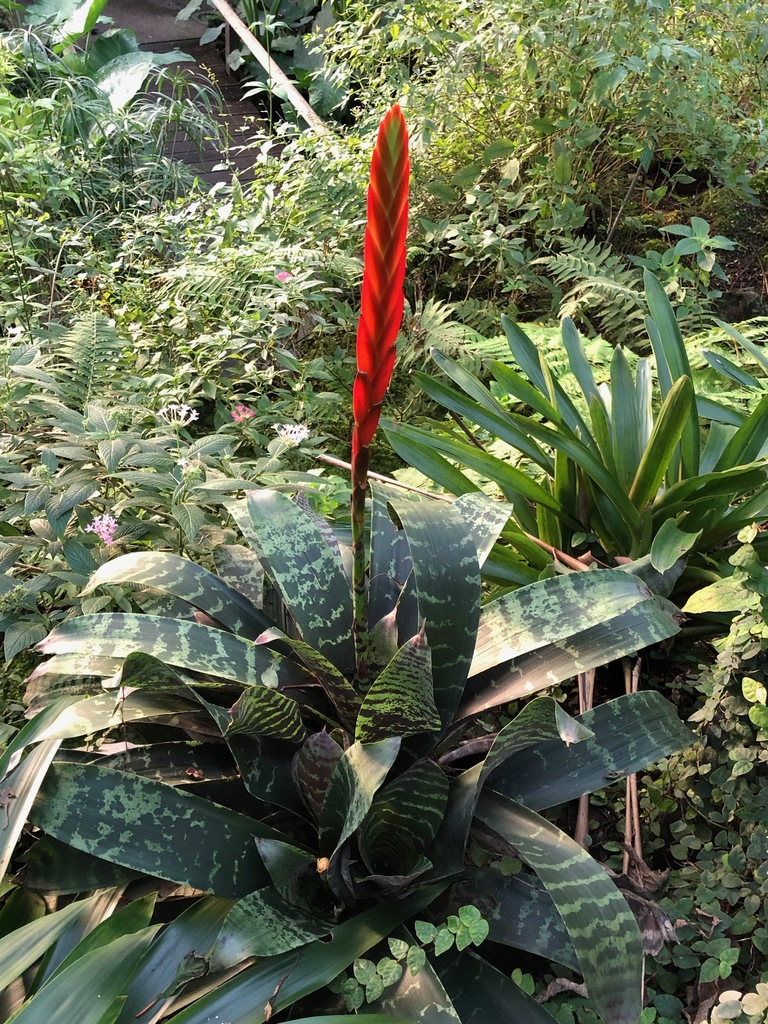
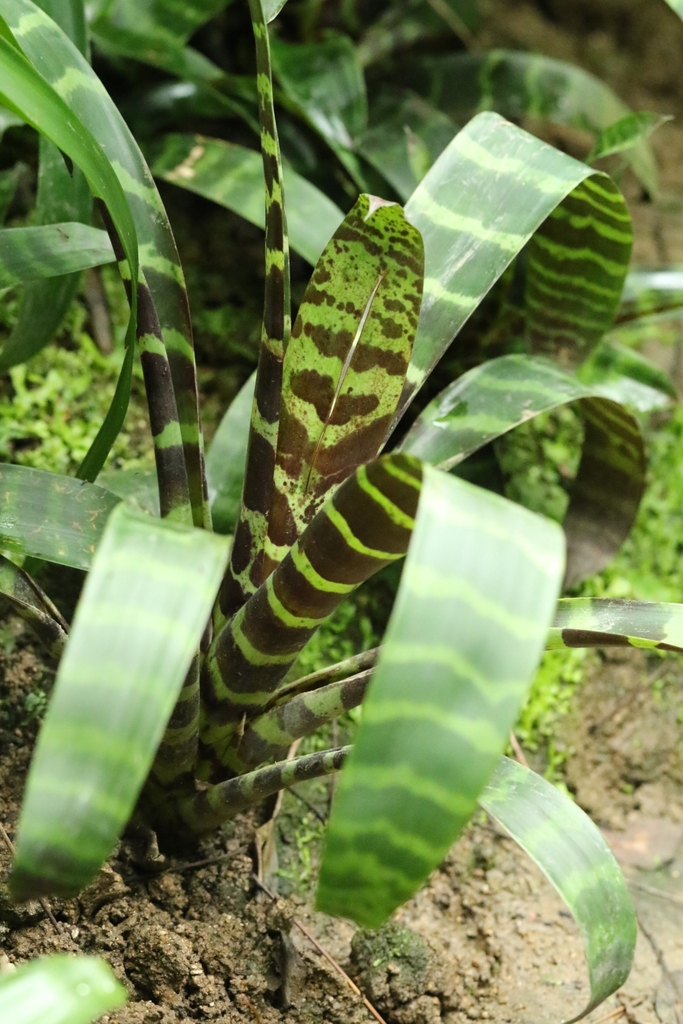
Name and classification
This species belongs to the family Bromeliaceae and the genus Lutheria. The Latin name Lutheria splendens reflects its current placement in the genus, although older names still frequently appear on houseplant labels.
The name “Vriesea” persists in everyday use and in the trade because the plant was formerly placed in Vriesea; in botanical nomenclature, this species is assigned to the genus Lutheria.
| Characteristic | Value |
|---|---|
| Family | Bromeliaceae |
| Genus | Lutheria |
| Native range | northern South America |
| Safety for cats and dogs | safe |
Origin and growing conditions
The species is native to northern South America. This matters for care: the plant responds better to stable conditions than to sudden changes in light, potting mix moisture, or location.
- consistent light without abrupt moves
- watering once the potting mix has partially dried
- airy potting mix that resists compaction
Indoors, the aim is not to recreate nature exactly, but to avoid extremes. Constantly wet roots and drying out to the point of wilting are equally harmful to the plant.
Light and placement
This species suits a bright spot with indirect light. Harsh direct sun can overheat the leaves, while deep shade reduces the energy available for growth.
Do not place the pot right against cold glass or near a source of hot, dry air. A stable, draft-free location helps prevent stress, which often shows in the condition of the leaves.
- an east- or west-facing window with indirect light
- set back from south-facing glass during sunny hours
- supplemental lighting in a dark corner
Watering and potting mix
Water moderately: allow the potting mix to dry partially, but do not let the plant remain wilted for long. Excess water is more dangerous than a short delay in watering, because roots quickly lose access to air in dense, wet potting mix.
The potting mix should be light and airy. If water sits in the pot for a long time after watering or the surface stays wet, replace the mix with a looser one.
- heavy potting mix after purchase
- a pot without a drainage hole
- watering on a schedule without checking moisture
- water collecting in the cachepot
- compaction of the mix after prolonged use
Repotting and feeding
Repot when the potting mix has compacted, dries poorly, or no longer provides suitable conditions for the roots. There is no need for much extra room in the pot: excess mix holds water longer.
Feed cautiously, avoiding excessive doses. For bromeliads, regular dilute feeding during active growth is better than occasional concentrated doses.
- a loose potting mix structure
- free drainage after watering
- a pot without excess room
Common problems
The most common problems stem not from a single mistake but from a combination of conditions: too little light, dense potting mix, and excessive watering. Under these conditions, the plant grows slowly and the leaves become less attractive.
- yellowing leaves from overwatering
- dry edges after drying out or exposure to dry air
- a soft base from standing water
- pale color from insufficient light
- stalled growth after an abrupt change of location
Check the potting mix and light first rather than increasing feeding. Fertilizer cannot make up for insufficient light or help roots in wet potting mix.
Pet safety
The plant is safe for cats and dogs. This means it is not classified as a houseplant that is toxic to pets.
Even so, the leaves are not food. If a pet regularly chews the plant, physically restrict access: damage spoils its appearance and can provide an entry point for rot.
- Light
- bright indirect light
- Watering
- moderate, without standing water
- Soil
- airy potting mix
- Difficulty
- moderate
- Cats and dogs
- safe
- Native range
- northern South America
Care
This species grows best in stable conditions, without abrupt moves, standing water, or compacted potting mix. Care comes down to balancing light, moisture, and airflow around the roots.
- Light
- Provide bright indirect light. Choose a bright spot without harsh direct sun. Growth slows in deep shade.
- Temperature
- Keep warm. Avoid sudden temperature changes. Do not place the pot near cold glass or a source of hot, dry air.
- Watering
- Water moderately; avoid standing water. Water once the potting mix has partially dried. Do not leave water sitting in the cachepot for long.
- Soil
- Use an airy potting mix. The mix should drain quickly and resist compaction. Heavy, wet potting mix increases the risk of rot.
- Feeding
- Feed cautiously. Feed only during active growth. Concentrated doses are not advisable for bromeliads.
- Support
- No support needed. Support is not an essential part of care. A stable location and suitable potting mix matter more.
- Leaves
- Remove dust from the leaves. Dust reduces the light reaching the leaf surface. Gently wipe the leaves with a soft, damp cloth.
- Repotting
- Repot when the mix deteriorates. Repot when the mix becomes compacted or dries poorly. Avoid an oversized pot.
Botany
2 ill.- Family
- Bromeliaceae
- Genus
- Lutheria
- Species
- Lutheria splendens
- Author and year
- (Brongn.) Barfuss & W.Till


Lutheria splendens belongs to the family Bromeliaceae. The current genus name Lutheria is important for this plant profile because the plant often retains an older everyday name associated with Vriesea.
The species is native to northern South America. For indoor growing, this suggests a general approach: steady warmth, careful watering, and airy potting mix without standing water.
The species is considered safe for cats and dogs. Toxicity is not the main risk, but physical damage to the leaves or waterlogging caused by improper care can weaken the plant.
How it differs from similar plants
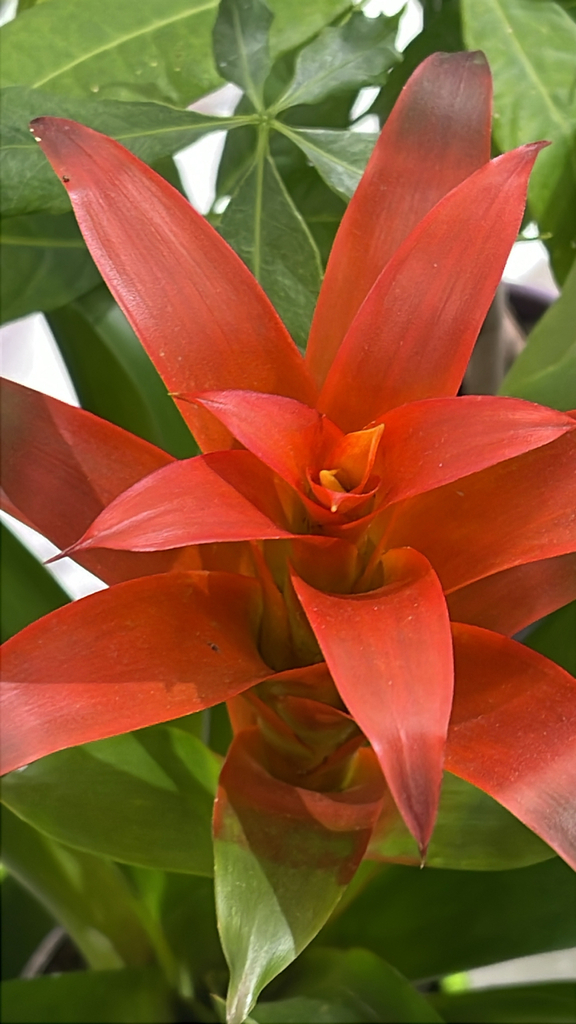 Scarlet star
Guzmania lingulata
Scarlet star
Guzmania lingulata- Flaming sword needs bright indirect light, while guzmania is described as needing simply indirect light.
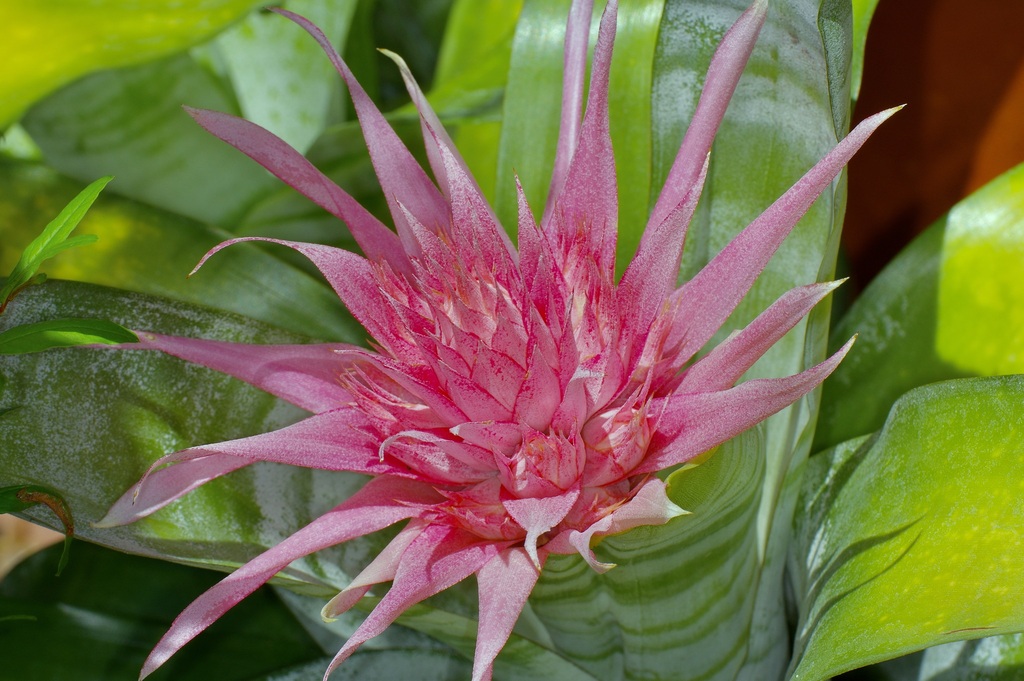 Urn plant
Aechmea fasciata
Urn plant
Aechmea fasciata- Flaming sword favors bright indirect light, while aechmea is described as needing indirect light without an emphasis on brightness.
Frequently asked questions
- Can I keep it at home if I have a cat?
- Yes, the plant is safe for cats and dogs. If your pet chews the leaves, restrict access to prevent damage to the plant.
- Why are the leaves turning yellow?
- The most common cause is overwatering or dense potting mix. Check whether water is sitting in the cachepot after watering.
- How often should I water?
- Go by the condition of the potting mix: it should partially dry before the next watering. Avoid keeping the mix constantly wet.
- What light does it need?
- It needs a bright spot with indirect light. In deep shade, the plant usually grows more slowly.
- Does it need repotting after purchase?
- Yes, if the potting mix takes too long to dry, has compacted, or the pot does not drain properly. After purchase, assess the condition of the mix first.
