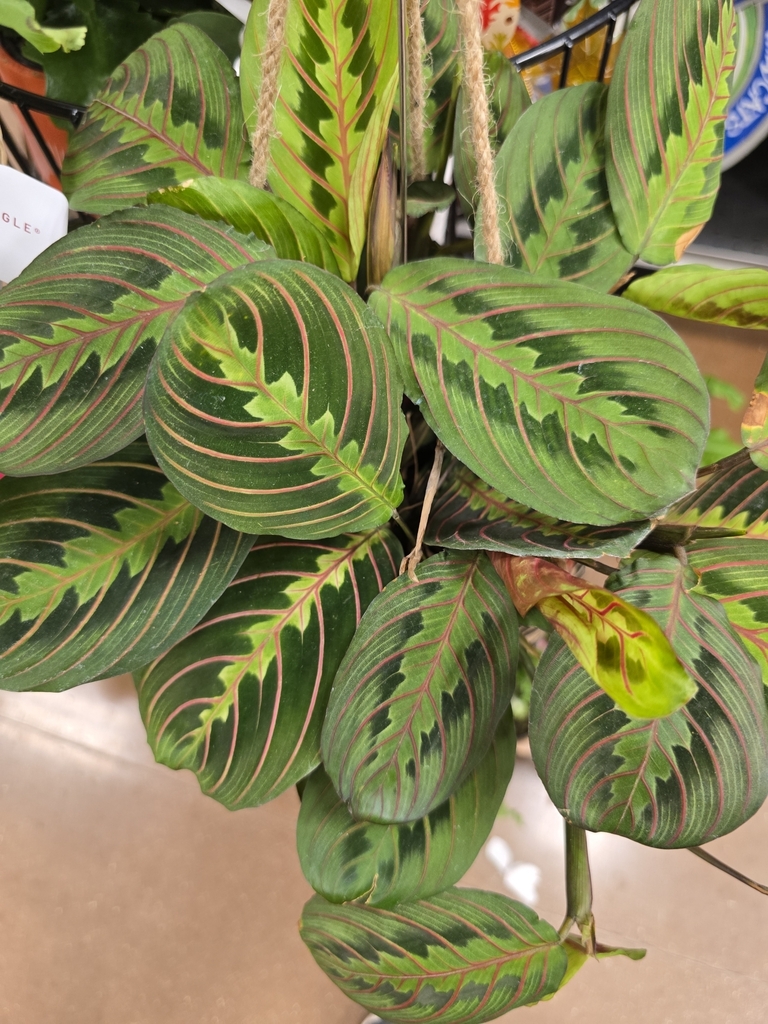
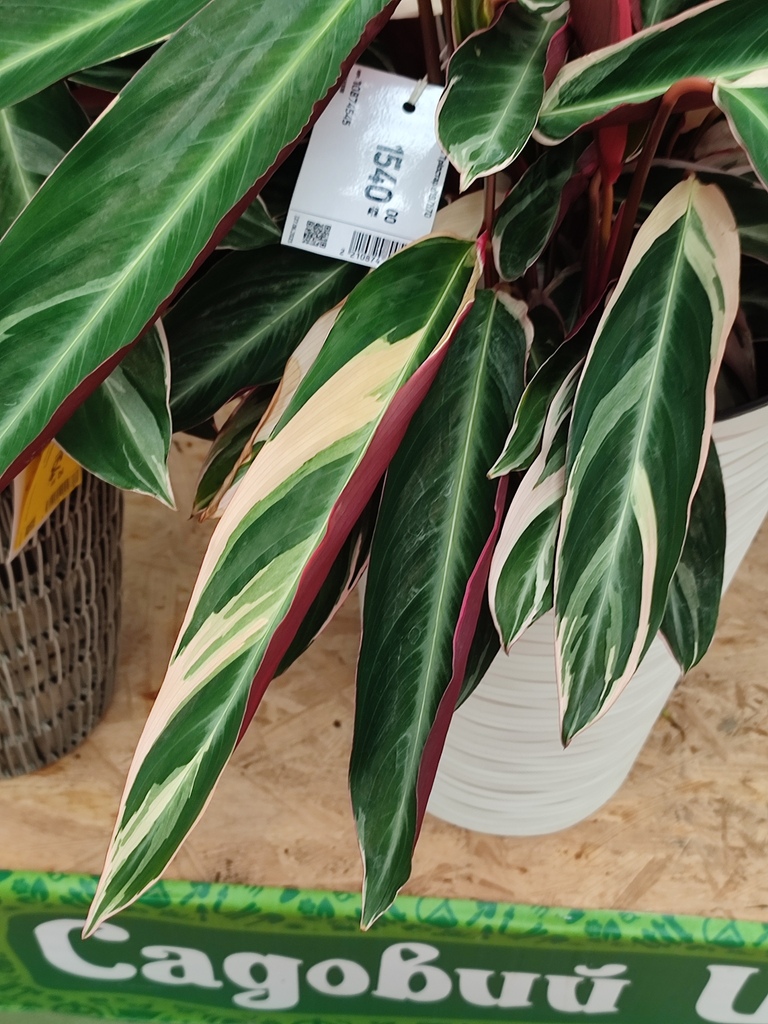
Goeppertia roseopicta
The most common mistake with Goeppertia roseopicta is moving it closer to the sun to “intensify” its pink pattern. Direct sunlight does not make the leaves brighter; it dries them out and damages them.


Leaves and color
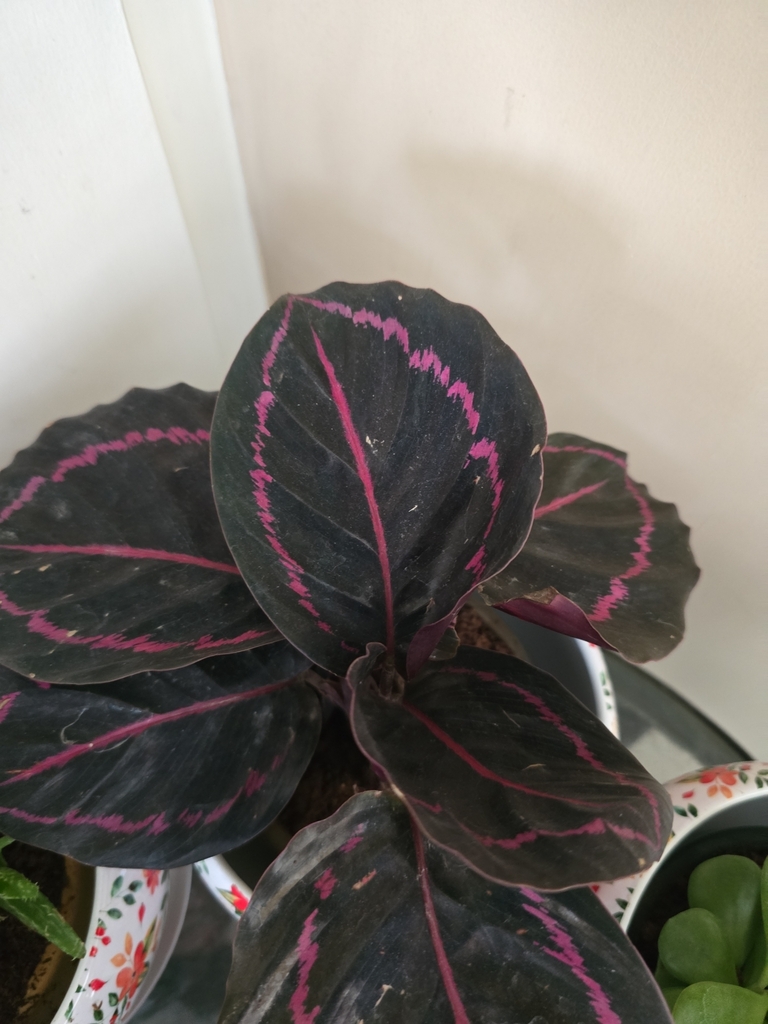
As a houseplant, this species is valued mainly for its leaves. In forms such as Crimson, the pattern consists of concentric zones: a darker edge, a pink-red center, and a burgundy-purple underside.
Flowering indoors is rare, so leaf condition is a better indicator of whether the growing conditions suit the plant. A faded pattern, dry edges, or drooping leaf stalks are usually linked to light, water, or humidity rather than the plant’s “age.”
- clear contrast across the leaf
- even edges with no dry margin
- firm leaf stalks after watering
Origin and natural conditions
The species is native to Colombia, Ecuador, Peru, and northern and central-western Brazil. In this part of tropical America, members of Marantaceae grow in warmth and moisture, sheltered from direct sun beneath the forest canopy.
These conditions are not copied exactly indoors, but the same care principles apply: indirect light, soft water, and a potting mix that does not stay waterlogged. The contrast between the leaves’ need for humidity and the roots’ sensitivity to excess moisture is the most common source of problems.
The trade name Calathea roseopicta has remained in use since many former calatheas were botanically reclassified into the genus Goeppertia; it is still commonly used for this plant.
Light and placement
The plant needs a bright spot out of direct sunlight. Direct sun can damage the leaves, while a spot that is too dark makes their coloring less distinct.
Focus on the quality of the light rather than which room the plant is in. If the leaves fade, the plant is not getting enough light; if the edges dry out quickly as the plant overheats, move it to a more sheltered spot.
- indirect daylight
- protection from direct sun
- a consistently warm spot
Watering, water, and potting mix
Water regularly, but not on a fixed schedule: let the top layer of potting mix dry before watering. Use soft water; hard water often causes dry brown leaf edges.
A loose, peat-based potting mix with added perlite is suitable. It should hold moisture without becoming waterlogged, because excess water around the roots leads to rot.
| Sign | Likely cause |
|---|---|
| Drooping leaves | Lack of water |
| Brown edges | Low humidity or hard water |
| Root rot | Overwatering |
Humidity and leaf care
Consistent growth requires high humidity; aim for above 60 percent. In dry air, leaf edges deteriorate more quickly, even when watering seems adequate.
Wipe the leaves with a damp cloth to remove dust and spot pests early. This also makes spider mites less likely to go unnoticed; they often cause small yellow spots and webbing.
- low humidity
- hard water used for watering
- spider mites on the leaves
Repotting and propagation
Repot every 2-3 years or when the roots have filled the pot. The fresh potting mix must stay loose; otherwise, the roots will remain wet for too long after watering.
The main method of vegetative propagation is division in late spring, during active growth. Each division should retain roots and leaves. After planting, maintain high humidity and regularly ventilate any cover used.
- Remove the plant from its pot
- Shake off some of the old potting mix
- Divide the plant into sections with roots
- Plant the divisions in a peat-based potting mix
- Maintain humid air after planting
Pests and diseases
Spider mites, whiteflies, aphids, scale insects, and thrips can affect the plant. Some pests are first noticed through yellow spots, sticky residue, or weakened young leaves rather than by seeing the pests themselves.
- spider mites
- whiteflies
- aphids
- scale insects
- thrips
Overwatering causes root rot, while fungal infections cause leaf spots. Remove damaged areas, adjust the growing conditions, and reduce watering so the potting mix stays moist but not constantly wet.
- Light
- bright indirect light
- Temperature
- +18…+24 °C
- Watering
- when the top layer is dry
- Soil
- peat and perlite
- Difficulty
- moderate
- Cats and dogs
- safe
- Size indoors
- 30-60 cm
- Native range
- Colombia, Ecuador, Peru, northern and central-western Brazil
Care
This species needs consistency rather than complicated care: warmth, humid air, soft water, and indirect light. The most harmful extremes are direct sun and constantly wet potting mix.
- Light
- Provide bright indirect light. Direct sunlight can damage the leaves; in a dark spot, the pattern becomes less distinct.
- Temperature
- Keep at +18…+24 °C. This is the range for active growth. The plant dislikes sudden temperature changes.
- Watering
- Water when the top layer is dry. Water at the base with soft water that is not cold. The potting mix should be moist but not waterlogged.
- Soil
- Use peat with perlite. A loose potting mix holds moisture while allowing air to reach the roots.
- Feeding
- Feed once a month. Feed in spring and summer, when the plant is actively producing leaves.
- Leaves
- Wipe with a damp cloth. This removes dust and helps you spot pests early, including spider mites.
- Repotting
- Repot every 2-3 years. Also repot when the roots have filled the pot.
Botany
- Family
- Marantaceae
- Genus
- Goeppertia
- Species
- Goeppertia roseopicta
- Author and year
- (Linden ex Lem.) Borchs. & S.Suárez
Goeppertia roseopicta belongs to the family Marantaceae and the genus Goeppertia. Many species formerly classified as calatheas were moved to this genus following genetic and botanical research.
The genus Goeppertia is native to the New World tropics. It was named after Heinrich Goeppert, a German botanist and paleontologist.
Indoors, this species is grown for its leaves rather than its flowers. It needs indirect light, soft water, and humid air without constantly wet potting mix.
Frequently asked questions
- Why are the leaf edges drying out?
- The most common causes are low humidity or hard water used for watering. Keep humidity above 60 percent and use soft water.
- How often should I water?
- Water when the top layer of potting mix is dry. Use soft water that is not cold.
- Can I keep it at home if I have a cat?
- Yes, the plant is safe for cats and dogs.
- Why are the leaves losing their vivid pattern?
- Fading is usually linked to insufficient light. Move the plant to a brighter spot out of direct sun.
- How do I propagate it?
- The easiest method is division in late spring. Each division must have roots and leaves.