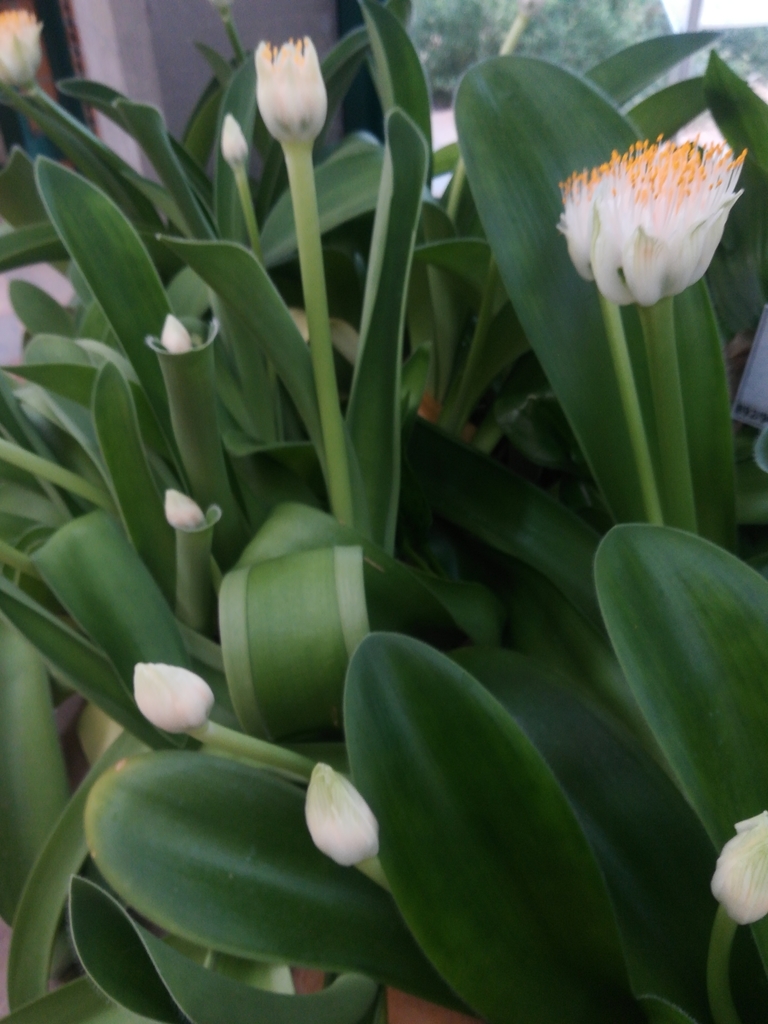
Amazon lily
Broad, glossy leaves and a tall flower stalk bearing white flowers identify Amazon lily (Urceolina amazonica), a member of the amaryllis family from the western Amazon region of Peru.

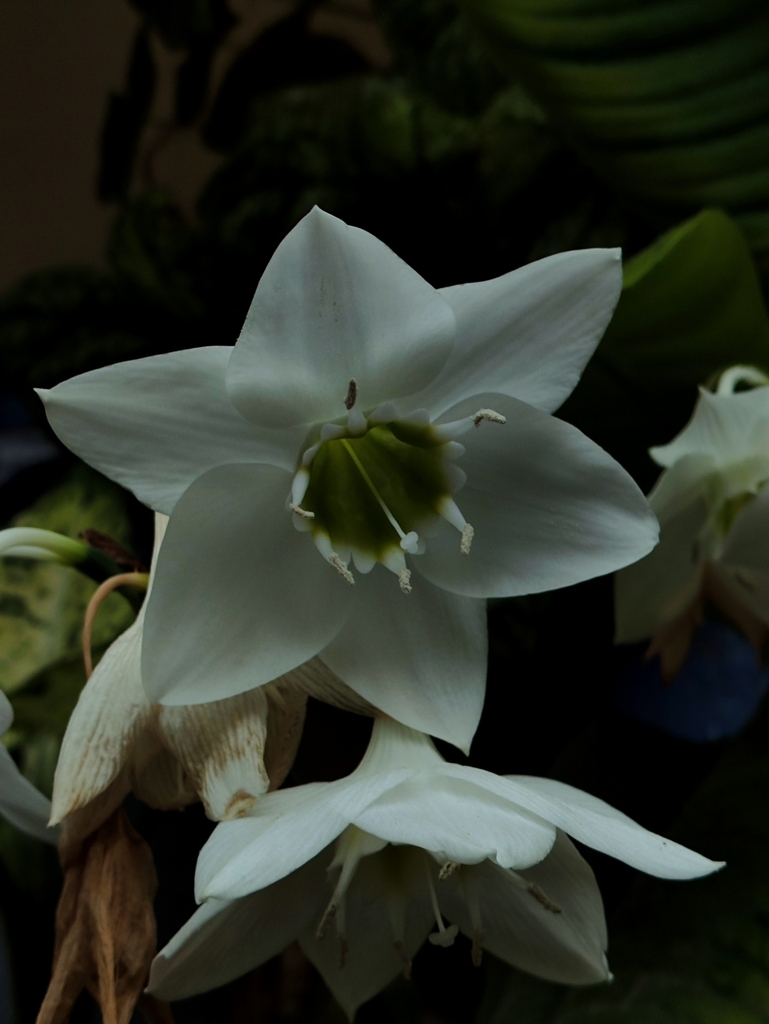
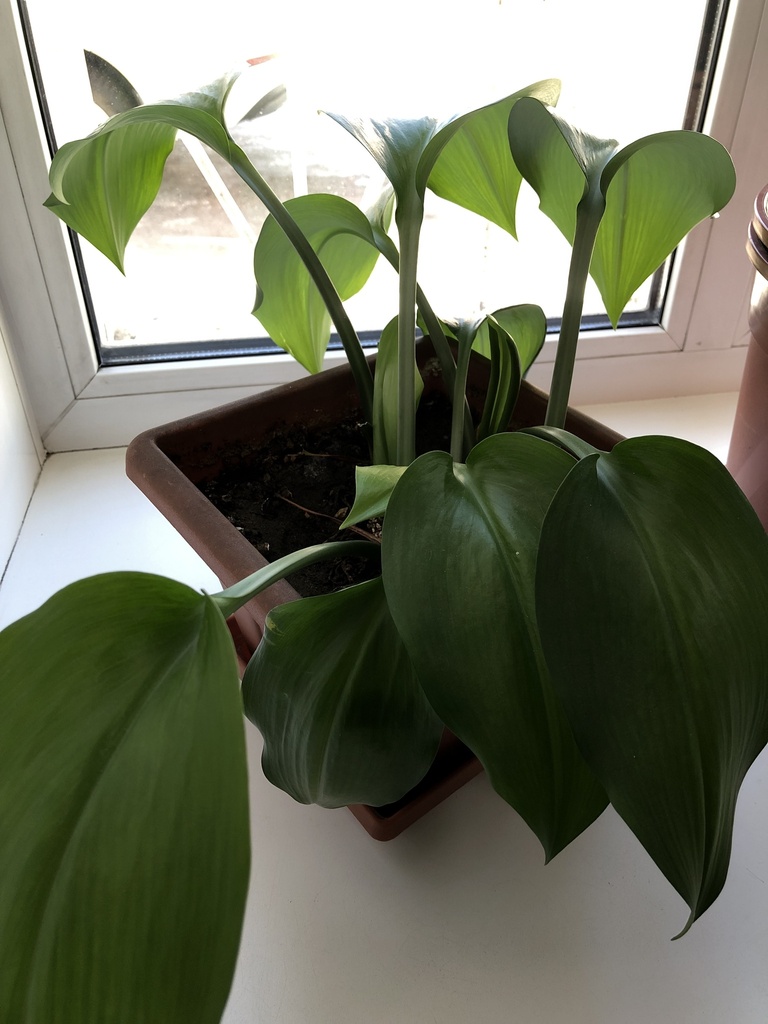
Leaves and flower clusters
Indoors, the plant is easy to recognize by the contrast between its broad, glossy leaves and tall flower stalk. The flowers are grouped at the top of the stalk, so it is more accurate to call this a flower cluster rather than a single ‘flower.’
The foliage remains the main ornamental feature when the plant is not in bloom. If a leaf becomes dull, misshapen, or quickly turns yellow, the cause is usually traced to light, watering, or conditions around the roots.
Origin and name
The species is native to the western Amazon region of Peru. This explains its general need for warmth, gentle light, and more consistent moisture than plants from habitats with dry seasons.
The name ‘Eucharis’ survives from the former botanical name, while ‘Amazon lily’ is a trade name referring to its origin and the resemblance of its flowers to lilies. Botanically, it is not a lily: the species belongs to the family Amaryllidaceae.
Light and placement
Steady growth requires a bright spot where the leaves will not overheat. In deep shade, the plant may retain its leaves, but growth and flower stalk formation often decline.
- bright indirect light
- protection from midday sun
- a warm spot out of drafts
- a consistent position while buds are forming
- distance from cold window glass
An abrupt move does not always cause harm, but it can disrupt the growth cycle while buds are forming. It is better to change conditions gradually: light first, then watering and feeding.
Watering and potting mix
Watering should keep the root zone moist, but not wet. Water left standing in a cachepot or saucer is more dangerous than briefly allowing the top layer of potting mix to dry.
The potting mix needs to be loose and airy. If it stays heavy and cold for a long time after watering, the roots receive less air, and the leaves may turn yellow for no obvious reason.
- compacted potting mix
- standing water in the saucer
- watering when the roots are cold
- letting the mix dry out during active growth
- excess fertilizer in dry potting mix
Water more cautiously after flowering, but do not let the mix dry out completely. The leaves indicate the plant’s condition: widespread wilting after watering is more often linked to root problems than to a lack of water.
Repotting and propagation
Repot when the potting mix has lost its structure or the plant has clearly filled the pot. Avoid unnecessary root disturbance, especially before flowering is expected.
Propagate vegetatively by dividing an overgrown clump during repotting. Each division must have its own roots and enough stored reserves; otherwise, recovery takes longer.
After division, water moderately until the plant begins growing more actively. Excess moisture is dangerous at this stage because damaged roots function less effectively.
Flowering and dormancy
Indoors, flowering depends on the plant’s energy reserves, light, and watering cycle. If leaves grow but no flower stalks appear, the cause is often a spot that is too dark or a lack of change in care after the previous growth phase.
Dormancy should not be confused with drying the plant out completely. Growth should slow, but the plant should not lose all its foliage through stress.
| Sign | What it may mean |
|---|---|
| Leaves grow, but no flower stalk appears | insufficient light or no established rest cycle |
| Many leaves turn yellow at once | possible overwatering or root damage |
| Buds stop developing | conditions changed while buds were forming |
Toxicity and common problems
The plant is toxic to cats and dogs. Leaves, flower stalks, and other parts should not be chewed, so it is best to place the pot out of pets’ reach.
Problems are most often visible in the leaves. An individual old leaf may die back naturally, but widespread yellowing, soft shoot bases, or loss of firmness call for a check of the potting mix and watering.
- yellowing after frequent watering
- wilting in wet potting mix
- no growth in a dark spot
- drying leaf edges in dry air
- buds stop developing after the plant is moved
- Difficulty
- moderate
- Cats and dogs
- toxic
- Native range
- western Amazon region, Peru
Care
This plant is sensitive to standing water and sudden changes in conditions, but responds well to steady warmth and indirect light. The condition of the leaves and how quickly the potting mix dries are the main guides to care.
- Light
- Provide bright indirect light. Avoid deep shade and harsh direct sun, especially while buds are forming.
- Temperature
- Keep warm and out of drafts. Sudden temperature changes and a cold windowsill weaken the roots; no winter minimum is specified.
- Watering
- Water when the surface starts to dry. Keep the potting mix moderately moist, without water standing in the saucer or prolonged waterlogging.
- Soil
- Use a loose, airy potting mix. Choose a mix that holds its structure, drains excess water quickly, and does not compact after watering.
- Feeding
- Feed only during active growth. Feed during active growth; do not apply fertilizer to dry potting mix.
- Support
- Support only if needed. The flower stalk usually supports itself; it needs support only if it leans under the weight of the flower cluster.
- Leaves
- Wipe dust off the leaves. Clean leaves receive more light; remove damaged or yellowed leaves once they have died back.
- Repotting
- Repot when the pot is crowded. Combine repotting with division of an overgrown clump, taking care to minimize root damage.
Botany
4 ill.- Family
- Amaryllidaceae
- Genus
- Urceolina
- Species
- Urceolina amazonica
- Author and year
- (Linden ex Planch.) Christenh. & Byng


Urceolina amazonica belongs to the family Amaryllidaceae and the genus Urceolina. The species is associated with the western Amazon region of Peru, where humid tropical conditions prevail and light is often filtered through layers of vegetation.
In current taxonomy, the former genera in this group have been brought together under Urceolina. As a result, older names in catalogs, books, and on labels may differ from the current name.
Members of this group readily hybridize in the wild, which has complicated classification. As a result, different plants or cultivated forms are sometimes grown indoors under similar names.
How it differs from similar plants
Hippeastrum Hippeastrum vittatum
- Amazon lily is recognizable by its broad, glossy leaves, while Hippeastrum leaves are described as long and much narrower — 50–70 × 4–5 cm.
Clivia Clivia miniata
- Clivia is distinguished by an umbel of orange flowers above a dense rosette of strap-shaped leaves; Amazon lily has white flowers on a tall flower stalk and broad, glossy leaves.
Frequently asked questions
- Why are the leaves turning yellow?
- The most common causes are overwatering, compacted potting mix, or a sudden change in conditions. A single old leaf may turn yellow naturally.
- Can I keep it at home if I have a cat?
- Yes, but the plant is toxic to cats and dogs. It is best to keep the pot out of pets’ reach.
- Why isn’t it flowering?
- The cause is often insufficient light or the lack of a period of slower growth. Do not try to encourage flowering by overwatering.
- How often should I repot it?
- Repot when the potting mix has compacted or the plant has clearly filled the pot. Avoid frequent, unnecessary repotting.
- Can it be propagated by division?
- Yes, vegetatively, by dividing an overgrown clump during repotting. Each division must have its own roots.