Urn plant
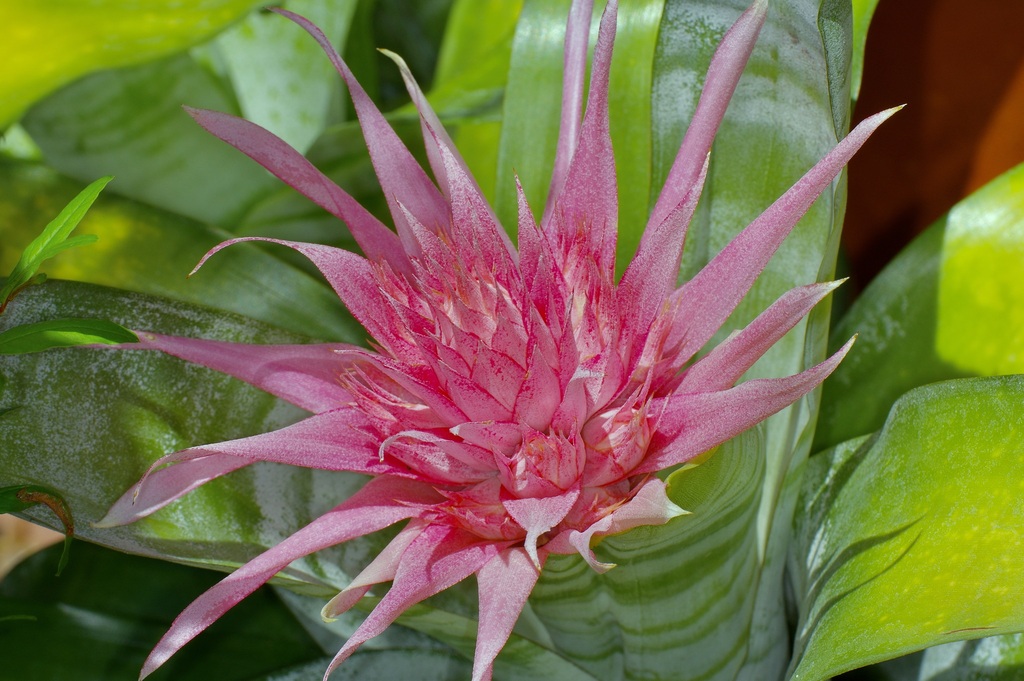
Silvery bands across firm leaves are the main feature that identifies the urn plant (Aechmea fasciata). Its rosette has a sculptural shape that holds even without an inflorescence.
Rosette and leaves
The leaves form a dense, funnel-shaped rosette. Silvery bands across the green leaves are clearly visible and make the species recognizable even without an inflorescence.
- dense rosette
- stiff leaves
- silvery bands across the leaves
- central funnel
- individual offsets
In bromeliads, this structure is linked to their way of life: the rosette not only holds the leaves but also forms a hollow in the center. Indoors, avoid loosening the plant or burying its base when repotting.
Origin and growth habit
The species is native to Brazil. The genus Aechmea belongs to the family Bromeliaceae and is broadly distributed across Central and South America.
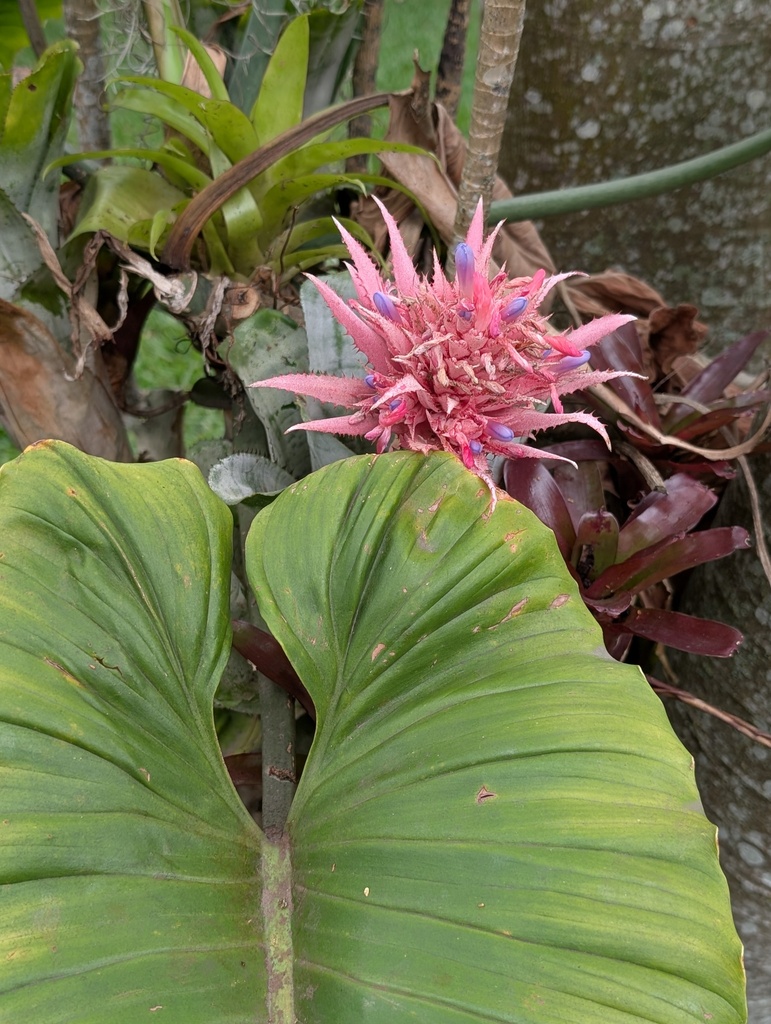
Members of the genus are mostly epiphytes, with fewer terrestrial species. An epiphyte does not parasitize a tree: it uses the tree for support and receives moisture and organic debris from its surroundings.
No distinct folk or trade name has become established for this species: reference works call the plant Aechmea or use its Latin name, Aechmea fasciata.
Light and placement
The bands on the leaves are more visible with enough indirect light. In deep shade, the rosette remains intact, but new growth may be weaker and less distinctive.
Avoid direct midday sun: firm leaves do not mean the plant is fully resistant to overheating. A spot near a bright window with filtered light is usually better than a dark corner of the room.
| Condition | Plant response |
|---|---|
| Indirect light | The rosette retains its density and color |
| Too dark a spot | The bands become less noticeable |
| Harsh direct sun | Dry patches may appear on the leaves |
Watering and potting mix
Air reaching the roots is important for an epiphytic bromeliad. The potting mix should be light and should not compact into a dense mass after watering.
A constantly wet rosette base is more dangerous than briefly allowing the top layer of potting mix to dry out. Adjust watering to the plant's condition, the light, and how quickly the pot dries out.
- standing water around the base
- dense, heavy potting mix
- a cold, wet pot
- watering without allowing the mix to dry out
- burying the rosette when repotting
After watering, excess water should not sit in the cachepot for long. If the plant is in a decorative pot without drainage holes, remove the inner container to let it drain.
Inflorescence and offsets
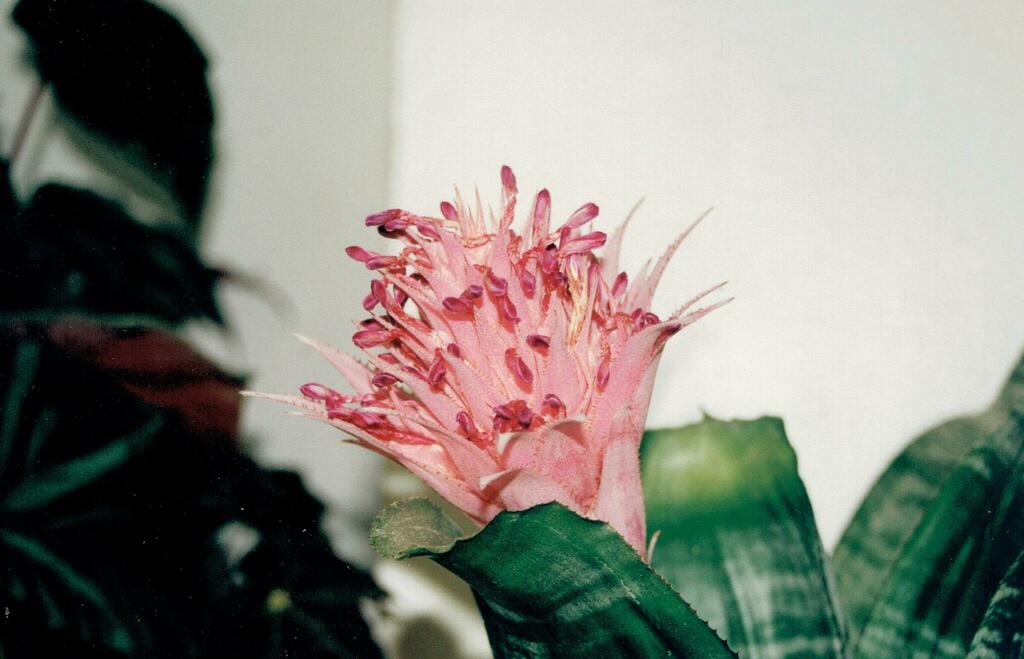
In bromeliads, the ornamental display often comes not only from the flowers themselves but also from the bracts and inflorescence. It is therefore more accurate to speak of an inflorescence rather than a single “flower.”
Once the central rosette has developed, the plant may produce vegetative shoots. In the genus Aechmea, these shoots root readily, which is why they are used for vegetative propagation.
- wait for an offset to appear
- separate it without damaging the base
- plant it in an airy potting mix
- water moderately
- keep it in indirect light
Common problems
Most problems are linked not to the leaves themselves but to conditions around the base of the rosette. Dense potting mix, cold and damp conditions, and insufficient light are dangerous for an epiphytic plant.
- yellowing lower leaves
- fading silvery bands
- dry patches after harsh sun exposure
- a soft rosette base
- no new offsets
If the base has become soft, reduce watering and check the potting mix. If the leaves have simply lost their contrast, gradually move the plant to a brighter spot without harsh sun.
- Light
- indirect light
- Watering
- moderate
- Soil
- light potting mix
- Difficulty
- moderate
- Cats and dogs
- safe
- Native range
- Brazil
Care
The urn plant slowly forms a dense rosette and needs no support. The essentials of care are indirect light, an airy potting mix, and no standing water around the base.
- Light
- Provide bright indirect light. With enough light, the bands on the leaves are more distinct. Shade the plant from harsh direct sun.
- Temperature
- Keep warm and out of the cold. The plant does best in stable indoor conditions. Cold, wet potting mix increases the risk of damage to the base of the rosette.
- Watering
- Water moderately. Allow the potting mix to dry out a little between waterings. The base of the rosette should not stay wet, especially in low light.
- Soil
- Use a light potting mix. This epiphytic bromeliad needs an airy mix that does not compact after watering.
- Feeding
- Fertilize sparingly. Excess fertilizer is unnecessary: the dense rosette grows slowly, and the roots are sensitive to heavy potting mix with a buildup of salts.
- Support
- No support needed. The rosette supports the plant. It is more important not to bury the base or loosen the plant when repotting.
- Leaves
- Wipe off dust. Dust reduces the contrast of the silvery bands. Clean the leaves with a soft, damp cloth without leaf polish.
- Repotting
- Repot once the rosette has grown larger. Repot when the potting mix has compacted or offsets have appeared. The pot must not retain excess water.
Botany
4 ill.- Family
- Bromeliaceae
- Genus
- Aechmea
- Species
- Aechmea fasciata
- Author and year
- (Lindl.) Baker


The urn plant (Aechmea fasciata) belongs to the family Bromeliaceae. It is a member of the genus Aechmea, which includes 250 to 300 described species of herbaceous perennials.
The species is native to Brazil. The genus typically has an epiphytic growth habit, although some members can be terrestrial.
Vegetative offsets of Aechmea root readily. This explains why the plant is propagated indoors by separating developed offsets rather than by seed.
How it differs from similar plants
 Scarlet star
Guzmania lingulata
Scarlet star
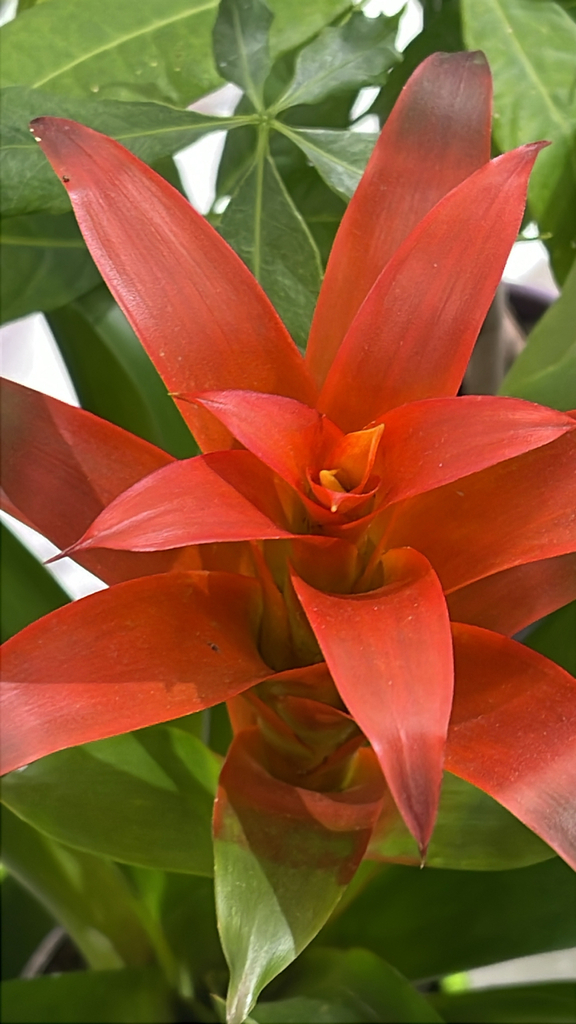
Guzmania lingulata- The urn plant is easy to recognize by the silvery bands across its firm leaves, while Guzmania is distinguished by its drooping inflorescence.
Air plant Tillandsia ionantha
- Tillandsia needs bright indirect light, while the urn plant needs only indirect light.
Flaming sword Lutheria splendens
- Vriesea and the urn plant differ in their light requirements: the former needs bright indirect light, while the latter needs indirect light.
Frequently asked questions
- Is the urn plant safe for cats and dogs?
- Yes, the urn plant is safe for cats and dogs.
- Why are the silvery bands fading?
- Most often, this is due to insufficient indirect light. Move the plant to a brighter spot without harsh direct sun.
- How do I propagate an urn plant?
- Use vegetative offsets, which root readily in Aechmea.
- Why is the base of the rosette soft?
- Check the potting mix and watering: a dense, wet mix around the base of the rosette often leads to rot.
- Is the urn plant an epiphyte?
- Yes, members of the genus are mostly epiphytes, with fewer terrestrial species. An epiphyte is not a parasite.